A slipping bar can ruin a strong set fast. If you’re chasing cleaner reps, better control, and less hand fatigue, workout gloves for lifting grip can make a real difference – but only if you choose the right pair for the way you train.
Why workout gloves for lifting grip matter
Grip is one of those limits that shows up before people expect it. You may have the back strength for heavier rows, the leg drive for stronger deadlifts, or the stamina for longer kettlebell intervals, but if your hands start giving out, the set is over. That is where gloves earn their place.
The best gloves do three jobs at once. They add traction between your hand and the handle, reduce friction that causes hot spots and calluses, and create a more stable feel when sweat starts building. That matters in a commercial gym, but it matters just as much in a garage gym where you’re moving from dumbbells to pull-up bars to cable handles without a break.
There is a catch, though. Not every glove improves grip. Some are too bulky, too slick, or too padded, which can make a bar feel less secure instead of more secure. If your goal is performance, you want gloves that help you hold on without making the weight feel disconnected from your hand.
What actually improves lifting grip
When shoppers look at workout gloves for lifting grip, they often focus on padding first. Comfort matters, but grip comes down to surface design, fit, and material more than thickness.
A palm with textured silicone, grippy synthetic leather, or reinforced anti-slip zones usually does more for control than a thick foam layer. Too much padding can bunch up when you close your hand, especially around the barbell knurling. That bunching creates movement, and movement is the enemy of a confident grip.
Fit is just as important. Gloves should feel snug through the palm and fingers without cutting circulation. If they shift during a set, you lose that locked-in contact. If they are too tight, your hands fatigue faster and the glove becomes annoying halfway through your workout.
Breathability matters more than people think, too. Sweat is one of the biggest reasons grip falls apart on high-volume days. A glove with vented mesh on the back and moisture-managing material around the fingers can keep your hands drier, which helps your grip hold up longer across the full session.
The best glove style depends on your training
There is no single best option for everyone. The right pick depends on what ends up in your hands most often.
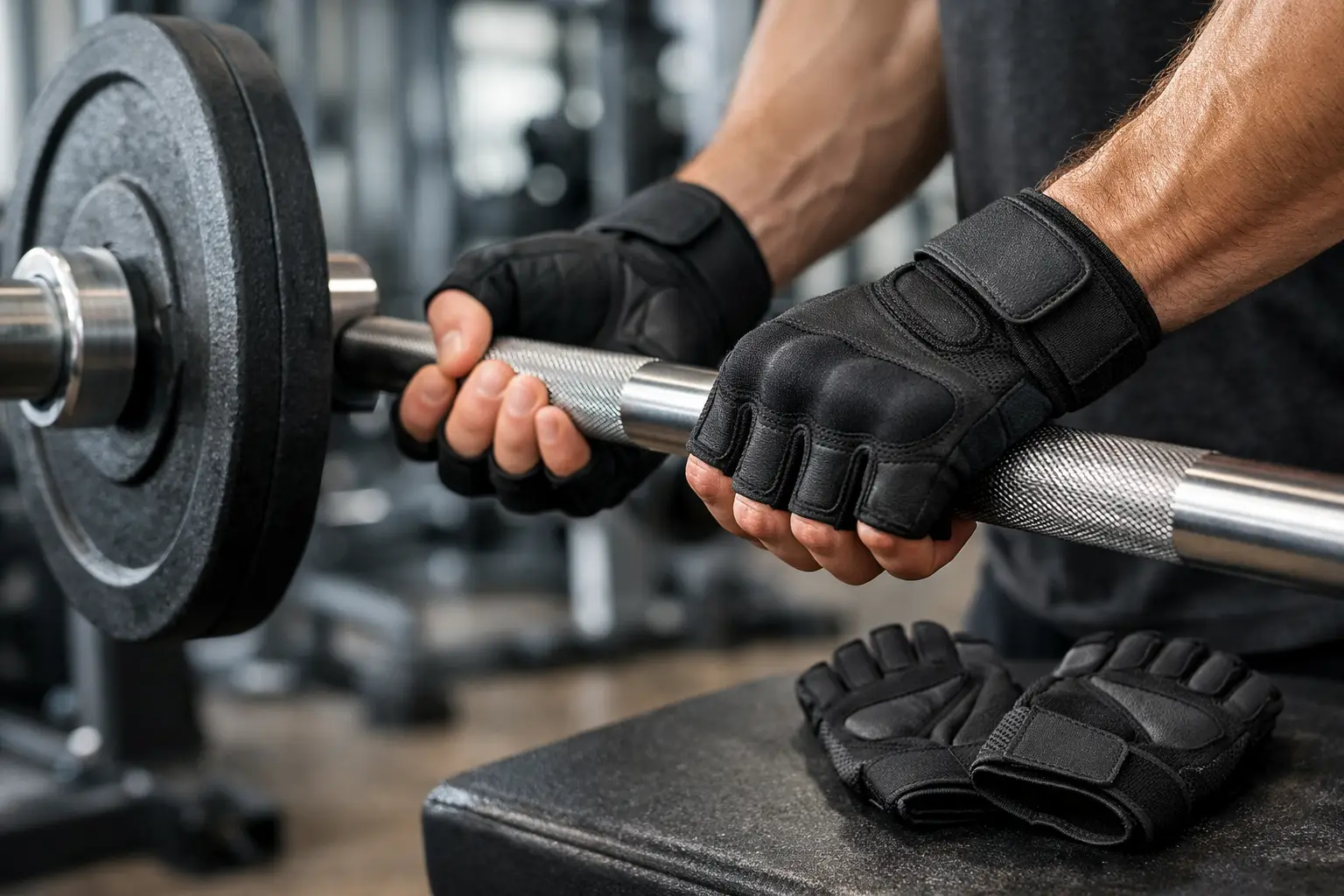
If you spend most of your week on barbells and dumbbells, a streamlined half-finger glove usually makes the most sense. It gives you traction and skin protection without muting your feel for the bar. For lifters focused on hypertrophy, upper-body volume, and accessory work, that balance is usually the sweet spot.
If your training leans into circuits, rowing, pull-ups, battle ropes, or kettlebells, flexibility becomes a bigger deal. You need a glove that moves well and does not create pressure points when your grip changes quickly. A lighter glove with reinforced palm zones tends to perform better than a stiff, heavily built pair.
If you’re using gloves mainly because sweat is wrecking your sets, prioritize anti-slip palm texture and breathable construction over heavy cushioning. If you’re using them because your hands are getting chewed up by frequent training, then a bit more palm protection can be worth it.
That trade-off is the whole game. More padding can mean more comfort, but less direct bar feel. More minimal design can mean better control, but less protection on high-friction movements. The best buy is the one that matches your actual sessions, not the one with the longest feature list.
Features worth paying for
Plenty of gloves look good in photos and disappoint in the gym. A few details separate the pairs that end up in your regular rotation from the pairs that get tossed in a drawer.
Look first at the palm. Reinforced wear zones around the base of the fingers and center of the palm usually last longer, especially if you train with knurled bars, cable attachments, and textured handles. If the grip surface is smooth and glossy, that is a red flag.
Next, check the wrist area. Some lifters like an integrated wrap for extra support during pressing and overhead work. Others find it bulky and restrictive. If you already wear wrist wraps or prefer a fast on-and-off glove, a simpler closure is often better.
Finger pull tabs sound minor, but they save time and frustration after hard sessions. The same goes for terry cloth thumb panels if you train in a warm space and need a quick sweat wipe between sets.
Durability is another place where cheap options fall apart. Double stitching, quality seams, and material that does not peel after a few sessions are worth watching. A low price feels good at checkout, but not if the palm starts separating after two weeks.
When gloves help – and when they do not
Gloves can absolutely improve your training, but they are not a fix for every grip issue.
If your hands are slipping because of sweat, poor handle traction, or skin discomfort, gloves can be a smart upgrade. They can also help beginners stay more comfortable while building confidence with free weights. For home-gym users piecing together a setup, gloves are often one of the easiest accessories to add because they work across multiple tools – dumbbells, pull-up bars, resistance stations, and cardio handles.
But if your grip is failing because your forearm strength is undertrained, gloves will not solve the root problem. They may buy you a little more control, but they are not a replacement for improving grip strength with carries, hangs, deadlifts, and rows.
The same goes for technique. If the bar is sitting poorly in your hand or your wrist position is off, a glove cannot fully clean that up. Gear should support good mechanics, not cover for bad ones.
How to choose without overthinking it
A good buying decision comes down to three questions. What do you lift most, how much do your hands sweat, and do you want more protection or more feel?
For general strength training, choose a close-fitting half-finger glove with a textured palm and moderate padding. That gets most people where they need to go. For high-sweat workouts, move breathable materials and anti-slip grip to the top of the list. For frequent pull work or high-volume training, give extra weight to palm reinforcement and durability.
If you are between sizes, be careful about sizing up too quickly. A slightly snug glove often breaks in well, while a loose glove rarely gets better. You want secure contact from day one.
And if you train across different categories – lifting, functional work, home cardio, and recovery circuits – skip the overbuilt glove designed only for heavy power movements. Versatility tends to win for busy schedules and mixed training weeks.
A smart add-on for a more complete setup
Workout gloves are one of those smaller upgrades that can make the rest of your setup work harder. They pair naturally with dumbbells, cable stations, pull-up equipment, rowing sessions, and even treadmill incline work if sweaty hands are a constant issue. For shoppers building momentum, they are also an easy cart add because the payoff shows up fast in day-to-day training.
That is why gloves often land in the best-value category of fitness accessories. They are practical, relatively affordable, and useful across more than one goal – muscle building, consistency, comfort, and confidence under load. If you are already investing in better equipment, activewear, or recovery tools, adding grip support is a pretty efficient move.
FitwellGoods shoppers usually want gear that solves a problem right away, not another product that sounds good and sits unused. The right gloves do exactly that. They help you hold your reps together when your palms get slick, your sets run long, or your hands start feeling beat up.
Choose for your training style, not just the trend. When your grip feels secure, everything from rows to presses to carries feels more controlled – and that is the kind of upgrade you notice from the first workout onward.