
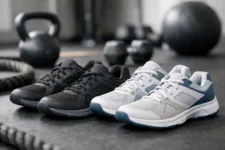
A tough workout gets a lot harder when your shoes pinch by minute ten. If you need cross training shoes for wide feet, the right pair can change everything – better stability on lifts, fewer hot spots during circuits, and a more confident feel when you move from squats to sled pushes to short treadmill bursts.
That matters because cross-training is demanding in a way running or casual gym sessions are not. You are asking one shoe to handle lateral movement, quick transitions, loaded strength work, and enough comfort for general conditioning. If your foot runs wide, standard-width trainers often fail in the same predictable ways: cramped toe boxes, pressure on the outer edge of the foot, sloppy lockdown after sizing up, or a midfoot that feels fine standing still but turns restrictive once you start moving.
What makes cross training shoes for wide feet different?
A good wide-foot training shoe is not just a regular trainer made longer. Length and width solve different problems. Going up half a size might ease toe pressure, but it can also leave too much empty space in front, which hurts control during lunges, jumps, and change-of-direction work.
The better answer is shape. Cross training shoes for wide feet need enough room in the forefoot for toe splay, secure midfoot hold so the shoe does not drift under load, and a platform stable enough for strength work. You want space where your foot naturally expands, not a loose fit everywhere.
This is where many shoppers get frustrated. Some shoes are marketed as versatile but still run narrow through the toe box. Others offer width but lose structure, which can make them feel unstable on heavier lifts. The win is finding a pair that balances both – comfort up front, security through the middle, and a planted ride underfoot.
The fit features that actually matter
Start with the toe box. During cross-training, your forefoot needs room to spread, especially in squats, deadlifts, and loaded carries. A rounded or foot-shaped forefoot usually feels better than a sharply tapered design. If your pinky toe always rubs first, that is usually the warning sign.
Midfoot lockdown comes next. Wide-foot athletes often think they need maximum room everywhere, but too much volume in the middle of the shoe can create sliding and instability. A solid lacing system, supportive overlays, and a heel that holds without rubbing make a big difference.
Outsole width matters more than most shoppers expect. A shoe can fit wide on top but still sit on a narrow platform underneath. For training, a broader base often feels more secure during split squats, presses, kettlebell work, and side-to-side drills.
Cushioning should match your training style. If your sessions are mostly lifting and functional strength, firmer foam is usually the better call. If you mix in circuit work, rowing, and short cardio intervals, moderate cushioning can feel more forgiving. Plush softness sounds comfortable on paper, but too much compression can reduce stability under load.
How to choose based on your training style
Not every wide-foot gym goer needs the same shoe. The best pick depends on what your week actually looks like.
For strength-focused training
If your routine leans heavy on squats, deadlifts, presses, and controlled accessory work, prioritize a flatter platform and firmer midsole. You want a grounded feel, minimal wobble, and enough structure to stay stable when weight goes up. In this case, roomy forefoot space is still critical, but soft cushioning is less important than platform security.
For HIIT and circuit sessions
If your workouts combine dumbbells, bodyweight work, sled pushes, box step-ups, and short bursts on cardio machines, you need more versatility. Look for moderate cushioning, strong grip, and flexibility in the forefoot. Too stiff, and the shoe can feel clunky. Too soft, and it may feel unstable during fast movement.
For hybrid gym days
A lot of people want one pair for everything – strength, machines, classes, and some treadmill time. That is realistic, but there is a trade-off. The more all-purpose a shoe becomes, the less specialized it will feel for heavy lifting or faster running. If hybrid training is your norm, choose balance over extremes.
Common mistakes when shopping wide-fit trainers
The biggest mistake is buying for comfort while standing, not training. A shoe can feel great in the living room and still fail once you lunge, cut, or load a barbell. Your foot expands under effort, and movement exposes pressure points quickly.
The second mistake is assuming every brand defines width the same way. They do not. One standard-width trainer may feel generously shaped, while another “wide” version still runs snug through the toe area. That is why product comparisons and shopper feedback matter when narrowing your options.
The third mistake is ignoring socks and use case. If you train in thicker athletic socks, that changes fit. If you use orthotics, that changes volume. If you do mostly machine work with occasional free weights, your support needs are different from someone doing explosive functional sessions five days a week.
How to test cross training shoes for wide feet at home
When your new pair arrives, do more than try them on and glance in the mirror. Put them through a quick movement check. Walk, squat, do calf raises, step laterally, and hold a split squat. If your toes feel cramped, your heel slips, or the arch area presses too hard, those issues usually get worse in a real workout.
Pay attention to where your foot sits on the platform. You should feel centered, not like you are spilling over the edge of the sole. During bodyweight squats, your forefoot should have enough room to spread without the upper pulling tight across the sides.
A good pair should feel secure without demanding painful break-in time. Mild stiffness in a training shoe can soften slightly, but persistent width pressure is not something to “push through.” Better fit means better sessions – and fewer returns.
Signs you found the right pair
You know a shoe is working when you stop thinking about it. Your foot feels planted on lower-body lifts, your toes are not fighting for space, and fast transitions do not create sliding inside the shoe. That blend of comfort and control is the target.
You should also feel more confident during side-to-side movement. Narrow shoes often make wide-foot athletes compensate, either by reducing force or changing foot position to avoid pressure. The right trainer lets you move naturally, which helps performance and comfort at the same time.
If you train often, durability matters too. Look for uppers that hold their shape, outsoles with solid traction, and construction that does not collapse after a few weeks of circuits. A bargain price can be tempting, but if the shoe loses support fast, it is not really a deal.
When one pair is enough – and when it is not
For many gym-goers, one versatile pair of cross training shoes for wide feet is enough. If your routine is mostly strength and conditioning with short cardio bursts, a solid all-around trainer can cover a lot of ground and keep your gear setup simple.
But if you lift heavy and also run regularly, splitting your footwear can make more sense. A stable trainer for the gym and a separate running shoe for mileage usually delivers better results than one compromise pair trying to do both jobs. That is especially true for wide-foot athletes, since fit needs often change by activity.
If you are building out your setup, this is the kind of upgrade that pays off quickly. Better shoes can improve comfort from the first workout, support cleaner movement, and help you train longer without those small annoyances that add up. At FitwellGoods, that is the whole point of a smart gear pick – less friction, more progress, and a better shot at staying consistent while the hot picks are still worth grabbing.
The best training plan is the one you can stick with, and the best shoe is the one that helps every rep feel more stable, more comfortable, and more worth showing up for tomorrow.







%20|%20Non-Slip%20Moistureproof%20Yoga%20Block%20Sleeve%20|%20Eco-Friendly%20&%20Washable%20|%20Durable%20&%20Supportive%20|%20Blocks%20Not%20Included&url=https://fitwellgoods.com/shop/yoga/yoga-blocks/silicone-protective-cover-for-yoga-blocks-9x6x3-4-foam-cork-blocks-non-slip-moistureproof-yoga-block-sleeve-eco-friendly-washable-durable-supportive-blocks-not-included/&media=https://m.media-amazon.com/images/I/31mv6hQbRFL._SS1024_.jpg)


