

You can have the perfect dumbbells, a shiny new barbell, and the motivation of a Monday morning – and still hate your strength sessions if your bench wobbles, pinches your shoulders, or forces weird angles. A weight bench is one of those unglamorous home-gym buys that decides whether pressing feels powerful or sketchy.
If you’re shopping for the best weight bench for home workouts, you’re really shopping for two things: confidence under load and convenience in your space. The “best” bench is the one that fits your training style, body size, and the reality of your living room, garage, or spare bedroom – without making you compromise on safety.
What “best” means for a home bench
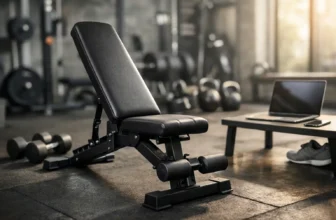
A home bench has to do more jobs than a gym bench. In a commercial gym, you can bounce between a flat bench, incline bench, decline bench, and a dedicated heavy press station. At home, one bench often has to cover presses, rows, split squats, step-ups, hip thrusts, and even accessory work like curls and skull crushers.
So the best bench for home use is typically the one that balances three traits: stable enough to load heavy, adjustable enough to keep your program interesting, and compact enough that you’ll actually keep it accessible instead of burying it behind storage bins.
Best weight bench for home workouts: start with your training goal
Before you compare specs, decide what you’re really training for.
If your goal is pure strength – heavy dumbbell pressing, barbell work with a rack, progressive overload every week – your priority is stability and a high weight rating. A “simple” flat bench that doesn’t move can beat a flimsy adjustable bench every day.
If your goal is physique and variety – incline pressing, shoulder-friendly angles, higher-rep supersets – an adjustable bench usually wins because it multiplies your exercise options in the same footprint.
If your goal is weight loss and conditioning, you may do more full-body circuits than max pressing. You still need stability, but portability and quick adjustments matter more because you’ll be changing positions fast.
Flat bench vs adjustable bench (and when each is the right call)
A flat bench is the no-drama option. It’s usually more rigid, often cheaper for the same quality, and tends to feel rock-solid for heavy dumbbell presses, chest-supported rows (with dumbbells), and hip thrusts. The trade-off is obvious: fewer angles.
An adjustable bench (often called FID for flat, incline, decline) gives you incline presses, seated shoulder presses, and supported accessory work that can take stress off your lower back. The trade-off is that more moving parts can mean more wobble if the bench is poorly built. Good adjustable benches are excellent. Cheap adjustable benches are the ones that make people hate adjustable benches.
A smart middle ground for most home gyms is a flat-incline bench (FI) that skips decline. Decline is nice, but many lifters rarely use it at home. Skipping it can mean less complexity, fewer parts, and a sturdier feel for the price.
The specs that actually matter (and the ones that don’t)
Product pages love big numbers. Here’s what’s worth caring about when you’re choosing the best weight bench for home workouts.
Stability and frame build
Look for a bench that sits planted, with wide contact points and minimal side-to-side play. A wider base often feels better under dumbbell setup and heavy reps.
Steel gauge and frame design matter more than fancy paint. In practice, you’re looking for a bench that doesn’t flex when you bridge slightly on presses or drive your feet into the floor.
Weight capacity – but use it correctly
Benches often list a “total” capacity. That’s typically your bodyweight plus the load. If you weigh 200 and press 80s (160 total), that’s already 360 before you count any dynamic movement. A higher rating usually signals better build quality, but don’t treat it like a dare.
Also, if you train explosively or do movements like heavy hip thrusts, choose more capacity than you think you need. Home benches see more awkward loading than gym benches.
Pad width, firmness, and comfort under the shoulders
A pad that’s too soft can make your upper back sink, changing your pressing position and stability. A pad that’s too narrow can feel fine for some lifters but annoy broader shoulders.
Most people do well with a “grippy” vinyl cover and a firm pad that doesn’t compress excessively. Comfort matters, but support matters more, especially if pressing is a key lift for you.
Bench height and the “foot drive” test
Bench height affects leg drive for pressing. Too high and shorter lifters can’t get stable foot contact. Too low and you can feel cramped.
If you can, aim for a standard-feeling height that lets you plant your feet and create tension without scooting around. This is one of those details you only notice after week three – so it’s worth getting right upfront.
Back pad angles and seat angles (for adjustable benches)
More angles are not automatically better. What you want are the angles you’ll actually use, with a ladder system or pop-pin system that locks in securely.
If your program includes incline pressing, make sure the bench hits a true moderate incline (many lifters love the 30-45 degree range). If you do seated shoulder presses, you’ll also want a higher incline setting that feels stable.
Portability and storage
Home workouts live or die by friction. If your bench is annoying to move, you’ll use it less.
Wheels and a front handle sound like small details, but they matter when you’re dragging equipment around a small space. If you need the floor clear after training, consider foldable designs – just know that folding mechanisms can introduce extra movement, so quality matters even more.
Match the bench to your setup: dumbbells, rack, or all-in-one
A bench doesn’t exist in isolation. It’s the center piece between your other gear.
If you train mostly with adjustable dumbbells, you’ll appreciate an adjustable bench for incline work, rows, and supported movements. Your limiting factor becomes comfort and angle variety rather than rack compatibility.
If you have a power rack and plan to bench press with a barbell, pay attention to bench width and stability. A flat bench that lines up cleanly with your rack and doesn’t shift when you unrack is a big deal.
If you’re building an all-in-one home station – bench plus bands, kettlebells, and accessories – think about how fast you can switch exercises. A bench that adjusts quickly keeps your heart rate up and your session efficient.
Quick “buy once” checklist for the best weight bench for home workouts
If you want one simple filter that prevents buyer’s remorse, prioritize these features in this order: a stable frame, a firm pad, secure adjustment hardware, and then convenience features like wheels or folding.
If you’re torn between two benches, choose the one that feels more stable and better built, even if it has one fewer angle setting. The bench is the place you put your body under load. That’s not where you want to “hope it’s fine.”
Common home-bench mistakes (and how to avoid them)
The most common mistake is buying for “maximum versatility” and ending up with a bench that’s mediocre at everything. If the bench wobbles, you’ll avoid heavy pressing and your progress slows.
The second mistake is ignoring your space. A long bench with a huge footprint might be amazing, but if it blocks your dumbbell rack or makes you dread setup, it becomes a coat rack.
The third mistake is forgetting that your bench should match your body. Shoulder comfort, pad width, and height are personal. When in doubt, optimize for the movements you repeat every week: presses, rows, split squats, and hip thrusts.
Make your bench purchase work harder with smart add-ons
A bench becomes more valuable when you pair it with the right supporting gear. If fat loss is your focus, a bench plus resistance bands and a pair of adjustable dumbbells can carry months of progressive training without needing a full room of machines.
If muscle gain is your focus, consider how your bench fits into your “stack” – strength tools plus recovery and nutrition. A bench that supports consistent heavy pressing pairs nicely with basics like lifting straps for rows, a belt if you’re loading compounds, and a protein routine that makes your workouts count.
If you like to shop by what’s trending, bundle-friendly categories can save time and money. FitwellGoods is built for that kind of cart-building – equipment, accessories, and performance support in one place at https://fitwellgoods.com.
Choosing between budget, mid-tier, and premium
Budget benches can be fine for light dumbbell work, beginners learning movement patterns, or apartment setups where you’ll never load heavy. The risk is that the bench becomes the weak link as soon as you get stronger.
Mid-tier is the sweet spot for most home gyms. You can get real stability, reliable adjustments, and a pad that feels good for high-volume training.
Premium benches are worth it if you’re strong, you train frequently, or you just don’t want to think about your equipment ever again. The return is confidence – you set up, you lift, you progress.
The final decision: pick the bench that removes excuses
The best weight bench for home workouts is the one that makes you want to train. Not because it’s fancy, but because it feels solid, adjusts the way you need it to, and fits your space without drama.
When your bench is right, you stop negotiating with your setup. You just put your hands on the weights, plant your feet, and get the work done – and that’s where results start showing up fast.








&url=https://fitwellgoods.com/shop/yoga/yoga-mats/gaiam-kids-yoga-mat-exercise-mat-yoga-for-kids-with-fun-prints-playtime-for-babies-active-calm-toddlers-and-young-children-60-l-x-24-w-x-3mm-thick/&media=https://m.media-amazon.com/images/I/31b-wGOXsqS._SS1024_.jpg)


&url=https://fitwellgoods.com/shop/yoga/yoga-foam-wedges/small-wedge-pillowyoga-wedge-pillow-for-sleeping-resting-and-reading-in-bed-with-firm-supportair-layer-wedge-cover-bed-wedge-pillow-with-memory-foam-top-white/&media=https://m.media-amazon.com/images/I/21MWzn2smBL._SS1024_.jpg)