
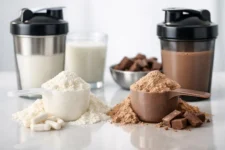
You finish a workout, open your shaker, and hit the same question a lot of active people do: should this be whey, or would casein actually work better for your goal? When it comes to casein vs whey protein, the better pick depends less on hype and more on what you want from each scoop – faster recovery, more fullness, easier digestion, or a smarter routine that fits your day.
Protein powders can look almost identical on the shelf, but they do different jobs. Both casein and whey come from milk, both can support muscle growth, and both can help you hit your daily protein target without turning every meal into a prep project. The difference is how quickly they digest, how they feel in your stomach, and when they make the most sense.
Casein vs whey protein: the real difference
Whey is the fast-moving option. It digests quickly, delivers amino acids into the bloodstream at a faster rate, and is often the first choice after training. That quick absorption is why whey has become the standard post-workout protein for lifters, athletes, and busy professionals who need something easy on the go.
Casein is slower. It forms more of a gel-like texture in the stomach, which means amino acids are released more gradually over several hours. That slower digestion is why casein often gets positioned as a nighttime protein or a hunger-control option between meals.
Neither one is automatically better. If your main focus is immediate recovery after lifting, whey usually has the edge. If you want a protein that sticks with you longer and helps bridge a long gap without food, casein can be the stronger play.
How whey protein works for muscle recovery
Whey protein is rich in essential amino acids and particularly high in leucine, the amino acid most associated with stimulating muscle protein synthesis. That matters if you’re trying to recover from hard sessions, maintain lean mass during a cut, or support muscle gain while training several times per week.
The biggest advantage of whey is convenience paired with speed. After a workout, especially if your next full meal is a few hours away, whey gives you a quick way to get protein in without much effort. It mixes easily, tends to have a lighter texture, and works well in shakes, oats, or smoothies.
For a lot of people, whey also feels more versatile. It can be used in the morning when you are rushing out the door, after training, or as a simple protein boost during the day. If your schedule is packed and consistency matters more than perfection, whey often wins because it is easier to use regularly.
That said, fast digestion is not always a huge advantage. If you already eat a solid meal soon after training, the urgency around fast-absorbing protein gets overstated. Whey still works well, but it is not magic.
Where casein protein stands out
Casein shines when slower digestion is a benefit, not a drawback. If you go long stretches between meals, train at night, or tend to raid the kitchen before bed, casein can help because it is generally more filling than whey.
That fuller feeling is a big reason people use casein during a fat-loss phase. A protein shake that actually holds you over can make calorie control easier. It can also work well as a dessert-style option when mixed thicker into yogurt, pudding, or a shake bowl.
Casein also has a place for overnight support. The logic is simple: you are not eating for several hours while sleeping, so a slower-digesting protein may help maintain amino acid availability longer. That does not mean you must take casein before bed to make progress. It means it can be a useful tool if nighttime hunger or long fasting windows are part of your routine.
The trade-off is texture and digestion speed. Some people like the thicker, creamier feel. Others find it heavy, especially if taken right before training or when they want something lighter.
Muscle gain: is one better than the other?
For building muscle, total daily protein matters more than choosing a single “perfect” powder. If your daily intake is strong and your training is dialed in, both casein and whey can support progress.
Whey may be slightly more practical around workouts because of how quickly it digests and because many people find it easier to drink. Casein may be more useful when the challenge is staying full and hitting protein later in the day. Over time, adherence beats theory. The best protein is the one you will actually use consistently.
This is where shoppers often overcomplicate the choice. If you train hard, miss meals, and need a quick post-gym option, whey is usually the better first buy. If your nutrition is solid during the day but evenings are when cravings hit, casein can deliver more value. If both situations sound familiar, there is a good case for keeping each on hand.
Fat loss, fullness, and appetite control
If your goal is cutting body fat without losing muscle, both proteins can help because protein in general supports satiety and lean mass retention. Still, casein often gets the nod for fullness.
That does not mean whey is a poor choice during a cut. In fact, whey can be ideal when calories are tight and you want high protein with minimal hassle. It is quick, portable, and easy to track. But if you find yourself hungry an hour after a shake, casein may fit better.
A lot of this comes down to behavior. The person who needs a fast breakfast before work may do better with whey. The person who needs help staying out of the pantry at 10 p.m. may do better with casein. Results follow habits, and habits get easier when your supplement matches the pressure points in your day.
Digestion, lactose, and tolerance
This is the part people should pay more attention to. Not every protein feels the same once you drink it.
Whey concentrate usually contains more lactose than whey isolate, so people with lactose sensitivity sometimes tolerate isolate better. Casein can also be an issue for those who are sensitive to dairy proteins or simply do not like a heavier shake. If you regularly feel bloated, gassy, or uncomfortable, the protein type and formula matter just as much as the grams per scoop.
Texture also changes tolerance. Whey is usually lighter and thinner. Casein tends to be thicker and more pudding-like, especially with less liquid. Some people love that because it feels like a snack. Others want something they can drink fast and move on.
If digestion has been hit or miss, do not assume all proteins are the same. The smarter move is to match the formula to your body, not just your macros.
When to take whey or casein
The best timing is the one you can repeat. Still, there are clear patterns that make sense.
Whey is a strong choice after workouts, at breakfast, or anytime you need protein quickly. It works especially well when you are on the move and want something light.
Casein fits later in the evening, between meals, or anytime you want a slower, more filling option. It is also useful when you want a thicker shake or snack that feels more substantial.
Can you use both?
Yes, and for many people that is the sweet spot. Whey covers speed and convenience. Casein covers fullness and slower release. If your training and schedule have different demands across the day, using both can make your nutrition setup more complete.
This does not have to be complicated or expensive. Start with the one that solves your biggest problem first. If recovery and convenience are the priority, go whey. If hunger control and nighttime snacking are the issue, go casein.
How to choose the right one for your goal
If you want the simplest answer, buy based on use case, not marketing. Whey is the go-to for post-workout recovery, quick protein intake, and all-day versatility. Casein is the go-to for satiety, longer gaps between meals, and evening use.
Also consider price per serving, taste, mixability, and whether you will actually look forward to taking it. A protein powder can have a great label and still end up untouched if the flavor is weak or the texture gets old fast. The smart shopper looks at performance and repeat use.
For goal-driven buyers building a routine around training, recovery, and body composition, this is one of those choices that can clean up your whole nutrition plan. FitwellGoods serves a lot of shoppers who want fewer guesswork purchases and more products that actually match the job, and protein is a perfect example of that mindset.
A good protein should make your day easier, not more confusing. Pick the one that supports how you train, how you eat, and what usually gets in your way. That is where progress starts to feel a lot more repeatable.
















&url=https://fitwellgoods.com/shop/yoga/yoga-mat-bags/cosmos-exercise-yoga-mat-carrying-shoulder-strap-bag-with-internal-and-outside-storge-pocket-yoga-mat-is-not-included/&media=https://m.media-amazon.com/images/I/41-KtCWTK4L._SS1024_.jpg)


