
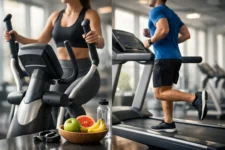
You can spend 30 hard minutes on an elliptical, glance at the console, then hop on a treadmill another day and see a totally different calorie number. That is why elliptical vs treadmill calories is such a common question – and why the answer is not as simple as picking the machine with the bigger screen number.
If your goal is fat loss, better conditioning, or getting more out of your home cardio setup, the smarter question is this: which machine helps you burn the most calories for your body, your effort level, and your consistency? That is where the real results live.
Elliptical vs treadmill calories: which burns more?
In many cases, the treadmill burns more calories than the elliptical when intensity is matched. Running is weight-bearing, demands more total-body stabilization, and usually drives heart rate up faster than steady elliptical work. If you run at a challenging pace, the calorie burn can climb quickly.
But that does not mean the treadmill wins for everyone. A hard elliptical workout with strong resistance, fast cadence, and moving handlebars can absolutely compete, especially if you tend to coast less and stay in a higher effort zone. Some people can actually sustain a tougher session longer on an elliptical because it feels easier on the joints, and that can narrow the gap or even flip the result.
The short version: treadmill usually has the higher calorie-burning ceiling, while elliptical often has the better comfort-to-burn ratio.
Why calorie numbers vary so much
The machine itself is only part of the story. Calories depend on body weight, workout intensity, duration, fitness level, and how honestly you are working. Two people can use the same treadmill for 30 minutes and finish with very different numbers.
Heavier individuals generally burn more calories because moving a larger body requires more energy. Intensity matters even more. A brisk walk with incline on a treadmill may out-burn a casual elliptical session, while a tough interval workout on an elliptical may out-burn a flat treadmill walk.
Machine readouts also are not perfect. They estimate. If you do not enter your age, weight, or profile data, the displayed calorie burn can be pretty rough. That is one reason people get frustrated comparing workouts machine to machine.
Treadmill calories: where it shines
The treadmill is strong for one main reason – it lets you walk, jog, sprint, and climb in ways that feel familiar and scalable. That makes it a favorite for anyone chasing visible calorie burn.
Walking on a treadmill can be surprisingly effective, especially when incline is added. You do not need to run to make it count. A steep incline walk recruits the glutes, hamstrings, and calves while pushing heart rate up without the impact of faster running.
Running raises the ceiling further. If you are able to run comfortably, treadmill workouts tend to produce higher calorie totals in less time. Intervals make that even stronger. Short bursts of speed mixed with recovery periods can increase the challenge without turning your entire session into a grind.
There is a trade-off, though. The treadmill is higher impact. For some people, that means shin discomfort, knee irritation, or just more recovery demands. If that cuts your sessions short or makes you avoid cardio altogether, the theoretical calorie advantage stops mattering.
Best fit for treadmill training
The treadmill tends to be the better pick if you want to train for running, prefer walking workouts, or like a straightforward way to progress through speed and incline. It is also a strong choice for those who want short, intense sessions with high calorie output.
Elliptical calories: where it wins people over
The elliptical earns its place by being low impact and easier to stick with consistently. Your feet stay in contact with the pedals, which reduces pounding on the joints. For beginners, heavier users, and anyone dealing with aches, that can be a huge advantage.
The big mistake people make on an elliptical is letting momentum do too much of the work. If resistance is too low and posture gets sloppy, calorie burn drops fast. But when you drive through the legs, keep your core engaged, and use the handles actively, the elliptical becomes a serious conditioning tool.
Another plus is sustainability. Many users can stay on an elliptical longer than they can run on a treadmill. That matters. A machine that lets you complete four or five solid sessions a week often beats the one that looks better on paper but leaves you dragging.
Best fit for elliptical training
The elliptical makes a lot of sense if you want joint-friendly cardio, longer steady-state sessions, or a machine that supports recovery days without feeling like a throwaway workout. It is also a strong home-gym option for households where different users want a forgiving but effective machine.
Elliptical vs treadmill calories for weight loss
If weight loss is the goal, calorie burn matters, but adherence matters more. The best machine is the one you will use hard enough and often enough to create a calorie deficit over time.
For some people, that is the treadmill because it feels athletic, measurable, and efficient. For others, it is the elliptical because they can train longer, recover faster, and avoid the stop-start pattern that comes with sore joints or dreading the next session.
This is where a lot of shoppers get hung up. They want the single best fat-loss machine. Realistically, the better buy is the one that matches your body and schedule. If you are a busy professional squeezing in 25-minute sessions before work, a treadmill with incline and intervals can be a hot pick. If you want dependable evening cardio while protecting your knees, the elliptical may deliver more weekly burn simply because you will actually use it.
How to burn more calories on either machine
The fastest way to improve results is not switching machines every week. It is using the one you have with more intention.
On a treadmill, incline is the upgrade most people underuse. You can turn a basic walk into a high-output session without needing to run. Intervals also work well – think short rounds of faster effort followed by controlled recovery.
On an elliptical, resistance and effort quality are everything. Push and pull with purpose. Avoid leaning heavily on the handles. Keep the pace honest. If the workout feels easy enough to scroll your phone the whole time, the calorie number is probably flattering you.
Heart rate tracking can help on both machines. Not because the number is magic, but because it keeps effort grounded in reality. If you train by feel alone, it is easy to drift into comfortable territory and assume you worked harder than you did.
What about muscle involvement and afterburn?
Treadmill workouts, especially running and incline work, tend to place high demand on the lower body. Ellipticals spread some of the effort more evenly, particularly when the upper-body handles are engaged. That can change how a workout feels, though it does not automatically mean one machine has a massive calorie edge.
As for afterburn, harder sessions on either machine can raise post-workout calorie use somewhat, especially interval-based training. But this effect is often oversold. The bigger win is still the workout itself and the habit it helps build.
Which machine should you buy?
If your top priority is maximum calorie burn potential, the treadmill usually gets the nod. It supports walking, incline hiking, jogging, and running, which gives you more ways to increase intensity over time.
If your top priority is low-impact consistency, the elliptical is tough to beat. It is easier on the body, friendly for longer sessions, and often the better choice for users who want a machine they can hit frequently without feeling beat up.
If you can only choose one, think less about the best-case calorie chart and more about your next six months. Which machine fits your joints, your motivation, your available space, and your style of training? That answer is usually more valuable than a generic calories-per-hour estimate.
For shoppers building a smarter home setup, pairing cardio equipment with the right support tools can stretch results further. Good shoes, recovery basics, and a realistic nutrition routine often do more for progress than obsessing over whether one machine burned 40 more calories on Tuesday.
The winning move is simple: choose the machine that keeps you showing up, push the intensity with purpose, and let consistency do what flashy calorie numbers cannot.






&url=https://fitwellgoods.com/shop/yoga/yoga-towels/bobor-gym-towels-set-microfiber-sports-towel-for-men-and-women-super-soft-and-quick-drying-3-pack-set-towel-for-tennis-yoga-cycling-swimming-1blue1purple1gray-14-x-29/&media=https://m.media-amazon.com/images/I/41E-hsnCCoL._SS1024_.jpg)
&url=https://fitwellgoods.com/shop/speed-agility/sports-reaction-balls/reaction-ballhexagonal-agility-ball-for-towards-training-improvement-of-hand-eyereaction-and-agility-coordination-reflex-exercise-sportscan-improve-the-concentration-of-teenagers-and-adults2-pcs/&media=https://m.media-amazon.com/images/I/41aPbbvDAjS._SS1024_.jpg)

