
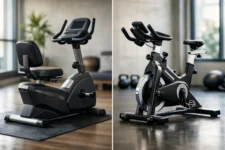
The right cardio machine should make it easier to train on busy mornings, rainy evenings, and every day your gym plans fall apart. In the exercise bike vs spin bike decision, the biggest difference is not just price or appearance. It is how each bike feels when you ride, how hard you want to train, and whether the machine fits the way you actually live.
A traditional exercise bike is usually built for comfortable, steady cardio. A spin bike is built to recreate the demanding feel of a studio cycling class or road ride. Both can support fat loss, heart health, endurance, and lower-body conditioning. The better choice comes down to your goals, your body, and the kind of workout you will want to repeat next week.
Exercise Bike vs Spin Bike: The Core Difference
Exercise bikes typically include upright bikes and recumbent bikes. Upright models place you in a more relaxed, vertical position, while recumbent models use a larger seat with back support and position the pedals in front of you. They are designed for approachable, low-impact cardio at a pace you can sustain.
Spin bikes have a more athletic setup. The seat is smaller, the handlebars are positioned to let you lean forward, and the riding posture is closer to an outdoor road bike. Most spin bikes use a weighted flywheel and resistance system that can create a smooth, challenging pedal stroke. You can ride seated, stand on the pedals, push through intervals, and build workouts around speed or simulated climbs.
Neither option is automatically better. A bike that looks intense but sits unused is never the best deal. The best machine is the one that supports consistent training without making your knees, back, or schedule feel like an obstacle.
Choose an Exercise Bike for Comfortable, Consistent Cardio
An exercise bike is often the smart first purchase for beginners, people returning to fitness, and anyone who wants cardio without a steep learning curve. The seat is usually wider and more padded than a spin saddle, which matters when you are getting used to longer rides. The upright posture can also feel more natural if you spend your workday at a desk and do not want another aggressive forward-leaning position.
For weight-management goals, steady rides are highly effective when paired with a realistic nutrition routine. A 20- to 45-minute session can fit before work, during a lunch break, or while watching a show at night. You can raise resistance gradually as your conditioning improves without turning every workout into a max-effort challenge.
Recumbent exercise bikes are particularly useful for riders who want extra support. The backrest, larger seat, and easier entry can make movement feel more secure for older adults, people managing joint discomfort, or anyone rebuilding an exercise habit after time away. They may not deliver the same out-of-the-saddle intensity as a spin bike, but comfort can be a powerful training advantage.
Traditional exercise bikes also tend to be easier to share in a household. A partner with different fitness experience can step on, adjust the seat, and start pedaling without worrying about riding technique. If your goal is to create a home gym that every member of the family can use, that versatility is worth considering.
Choose a Spin Bike for High-Energy Training
A spin bike earns its place when you want your cardio to feel like training, not simply movement. Its setup lets you create high-intensity intervals, hill climbs, cadence drills, and long endurance sessions. By adding resistance and standing from the saddle, you can recruit more muscles through your legs and core while raising your heart rate quickly.
That makes spin bikes a favorite for experienced exercisers, former studio riders, runners who need a lower-impact conditioning option, and busy professionals who want a hard workout in less time. A focused 30-minute interval ride can be demanding enough to challenge your legs and lungs without the pounding of running.
The trade-off is comfort. Spin saddles are typically narrow because they are designed to allow efficient pedaling and movement, not lounging. New riders may need time to adapt, especially during longer sessions. Proper seat height, handlebar position, and resistance settings matter more on a spin bike than many people expect. A poorly adjusted bike can lead to avoidable knee pain, wrist pressure, or lower-back discomfort.
If you love music-driven classes and compete with yourself to beat last week’s output, a spin bike can keep your routine exciting. Look for adjustable resistance, a stable frame, secure pedals, and enough seat and handlebar adjustments to fit your height. A monitor that tracks time, distance, cadence, or estimated calories can add extra motivation, but it should not replace good form or smart recovery.
Resistance and Ride Feel Matter More Than the Label
Do not buy based on the word “spin” alone. The resistance system has a major effect on how a bike performs. Many home bikes use magnetic resistance, which is quiet, smooth, and low-maintenance. That makes it a strong option for apartment living, early-morning workouts, and shared spaces where noise is a concern.
Friction resistance can create a more traditional studio-style feel, but it may require more maintenance over time. Some bikes also use different flywheel designs. A heavier flywheel can feel fluid and momentum-driven, while a lighter system may be easier to move and still provide plenty of resistance for casual riders.
For most home gym shoppers, smooth resistance and reliable adjustment are more valuable than chasing the heaviest flywheel. You want a bike that responds predictably when you increase effort. If the resistance jumps too sharply or the frame rocks during faster intervals, the workout becomes frustrating instead of productive.
Consider Your Space, Noise Level, and Setup
A cardio machine only helps if it fits your home and your routine. Before you shop, measure your floor space and leave room to get on and off the bike comfortably. Spin bikes often have a relatively compact footprint, but you will need additional clearance if you plan to stand and move through harder rides. Recumbent bikes may take up more room because of their longer frame.
Check the machine’s weight capacity and overall bike weight as well. A heavier bike is often more stable during intense riding, though it can be harder to relocate. Transport wheels are a useful feature if your workout area doubles as a living room, office, or guest space.
Noise is another real-world factor. Magnetic resistance is generally the better choice for quiet training, but pedal and drivetrain quality also affect sound. If you plan to ride while others sleep, a quiet bike can make the difference between consistent workouts and skipped sessions.
Match the Bike to Your Goal
For general fitness, daily movement, and lower-impact calorie burn, an exercise bike is usually the easier match. It is comfortable, approachable, and well suited to consistent moderate-intensity sessions. Pair those rides with strength training two or three times per week, and you have a practical foundation for body-composition progress.
For performance, high-energy cardio, and interval-based conditioning, a spin bike usually brings more room to progress. You can make a short ride harder by increasing resistance, pushing cadence, or alternating seated and standing efforts. It is especially useful if you get bored with slow, steady workouts and need variety to stay committed.
For knee-sensitive riders, the answer depends on fit and intensity. Cycling is generally low impact, but high resistance with poor setup can still stress the knees. A recumbent bike may feel best if support and comfort are the priority. An upright exercise bike can work well for controlled rides, while a properly fitted spin bike can also be a great option for riders who want more challenge without impact.
For fat loss, do not expect either machine to do all the work alone. The bike creates a convenient way to increase activity and improve fitness. Sustainable results also come from nutrition habits, adequate protein, strength work, sleep, and recovery. Choose the bike that makes you more likely to train consistently, then build the rest of your routine around it.
Buy Features You Will Actually Use
Skip the pressure to buy every premium add-on. Start with the essentials: a stable frame, adjustable seat, comfortable handlebar reach, dependable resistance, and a fit that supports your body. If you are tall, short, or sharing the bike with someone of a different height, expanded adjustment ranges become even more valuable.
Extras can be worth it when they solve a real problem. A device holder is useful for guided classes or entertainment. A water bottle holder helps during longer rides. Heart-rate compatibility may appeal to riders who train in specific intensity zones. Pedals with toe cages can suit casual use, while clip-in compatibility may appeal to dedicated cyclists.
When you are ready to build out your setup, FitwellGoods makes it easier to pair a new cardio machine with training essentials like supportive activewear, floor mats, foam rollers, and recovery-focused wellness picks. Shop by the goal you are working toward, not just the deal tag.
The right choice is the bike that turns “I should work out” into “I can ride for 20 minutes right now.” Choose comfort if it keeps you consistent. Choose intensity if it makes you excited to train. Then set the seat, fill your water bottle, and put your next ride on the calendar.











&url=https://fitwellgoods.com/shop/yoga/yoga-mats/gaiam-yoga-mat-premium-5mm-print-thick-non-slip-exercise-fitness-mat-for-all-types-of-yoga-pilates-floor-workouts-68-x-24-x-5mm/&media=https://m.media-amazon.com/images/I/314BMyuGnGL._SS1024_.jpg)