
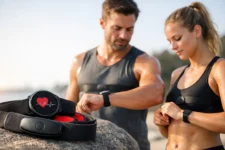
A hard workout is not always a productive workout. If you are guessing whether you are pushing hard enough on the bike, running too hot on the treadmill, or recovering between strength sets, this guide to heart rate monitors gives you a clearer way to train. The right monitor turns effort into usable feedback, so every session can support a real goal: fat loss, endurance, performance, or smarter recovery.
Why Heart Rate Tracking Changes Your Workouts
Heart rate is your body’s response to effort. It rises when your muscles demand more oxygen, and it falls as you recover. Tracking it helps you see what pace, resistance, incline, or workout format is actually asking of you.
That matters when time is tight. A 30-minute home workout can feel intense without delivering the training effect you wanted. On the other hand, a session that feels manageable may place you in an excellent aerobic zone that builds endurance without leaving you drained for tomorrow’s lift.
Heart rate data is not a score to chase every day. It is a decision-making tool. Use it to keep easy cardio easy, make intervals appropriately hard, and spot days when sleep, stress, dehydration, or accumulated training fatigue may be affecting your output.
Guide to Heart Rate Monitors: Pick the Right Type
The best monitor depends on what you train, how much detail you want, and how comfortable you are wearing a sensor. Price matters, but accuracy and consistency matter more than extra features you will never use.
Chest Straps: Best for Reliable Training Data
A chest strap sits around the rib cage and reads the heart’s electrical activity. For running, cycling, intervals, rowing, and serious zone-based cardio, this is usually the most responsive and dependable option. It catches quick changes in effort better than most wrist-based trackers, which is useful when you are sprinting, climbing, or working through short intervals.
The trade-off is obvious: some people simply do not like the feeling of a strap. It also needs proper fit and lightly moistened contact points to read consistently. If precision is your priority, though, a chest strap is a strong upgrade for a treadmill, exercise bike, rowing machine, or outdoor run.
Wrist Monitors: Best for Everyday Convenience
Wrist-based watches and fitness trackers use optical sensors that shine light into the skin to estimate pulse. They are easy to wear all day, making them useful for tracking workouts, steps, resting heart rate, sleep trends, and daily activity in one place.
They can be very useful for steady walks, incline treadmill sessions, easy runs, and general wellness tracking. Accuracy can slip during kettlebell work, battle ropes, heavy gripping, rapid intervals, or any workout where the watch shifts on your wrist. A snug fit, worn about one finger above the wrist bone, gives the sensor its best chance to perform.
Arm Bands: A Comfortable Middle Ground
Optical arm bands sit higher on the arm, where there is often less movement and better blood flow than at the wrist. Many athletes find them more comfortable than chest straps while getting more stable workout readings than a watch alone.
This option can make sense for functional training, strength circuits, and cardio sessions where a wristwatch feels bulky. It is also a smart choice if you want to pair a sensor with gym equipment or a training app without committing to a chest strap.
Smart Equipment Sensors and Gym Displays
Some cardio machines display pulse through handlebar sensors or connect with compatible wearables. Handlebar readings are fine for a quick check during a steady walk, but they are rarely ideal for continuous tracking. You have to keep your hands in place, which can change your natural posture and limit your workout.
For a better training experience, look for equipment and monitors that communicate through Bluetooth or ANT+. Compatibility lets your heart rate show up where you need it: on a bike console, treadmill display, phone, watch, or connected training platform.
Know Your Training Zones Without Overcomplicating Them
Training zones are ranges of heart rate tied to different intensity levels. They are often calculated from a percentage of your estimated maximum heart rate. A common rough estimate is 220 minus your age, but it is only a starting point. Individual maximum heart rate can vary widely, so treat the number as a guide, not a medical measurement.
For most people, five-zone models are enough to organize training:
- Zone 1 is very easy movement, ideal for warmups, cooldowns, and recovery.
- Zone 2 is controlled aerobic work. You can usually speak in short sentences, and it is excellent for building an endurance base.
- Zone 3 is moderate, sustained effort. It has a place, but too much can feel tiring without being truly easy or truly hard.
- Zone 4 is challenging threshold work, often used for longer intervals and performance gains.
- Zone 5 is near-max effort for short bursts, sprints, and high-intensity intervals.
If those labels feel technical, use the talk test. During easy aerobic work, conversation should be possible. During hard intervals, you should only manage a few words at a time. Your monitor adds a number to that feeling, helping you repeat successful sessions and avoid turning every workout into a grind.
Match Your Monitor to Your Goal
For fat-loss-focused cardio, a wrist monitor may be all you need to keep brisk walks, incline treadmill sessions, and bike rides consistent. The goal is not to chase a magic calorie number. It is to build a routine you can repeat while supporting it with strength training, nutrition, sleep, and recovery.
For endurance goals, choose a monitor that reads reliably during longer steady efforts. A chest strap or quality arm band can help you stay patient in an aerobic range instead of starting too fast and fading. This is especially useful for runners and cyclists who tend to let excitement set the pace.
For HIIT and performance training, fast response is more valuable. Chest straps are usually the better fit when your sessions include sprints, hard rowing intervals, hill repeats, or aggressive bike efforts. You want the monitor to reflect rapid changes, not lag behind them.
For strength training, heart rate is secondary to good form, progressive overload, and appropriate rest. Still, tracking can reveal how demanding circuits, supersets, and conditioning finishers really are. Do not judge a lifting session solely by calories burned or peak heart rate. A powerful strength workout does not need to look like a cardio class.
Features Worth Paying For
Start with signal compatibility. Bluetooth is common for phones and many machines, while ANT+ is popular in performance-focused fitness devices. If you use more than one screen or app, a monitor that supports both gives you more flexibility.
Look for battery life that fits your routine. Rechargeable models are convenient, while replaceable coin-cell batteries can last months or longer. Water resistance is valuable for sweaty sessions and outdoor training, but check whether a device is rated for swimming if pool workouts are part of your plan.
Comfort is not a small detail. A monitor you leave in a drawer has no value. Adjustable straps, washable bands, easy controls, and a display you can read mid-workout are often more useful than advanced metrics. Compare devices by the features that will actually change how you train.
Get Better Readings From Day One
Wear the monitor correctly before assuming it is inaccurate. Chest straps should sit snugly below the chest muscles, with the electrodes lightly dampened. Wrist devices should be secure but not restrictive, placed above the wrist bone. Arm bands should sit firmly on the upper or lower arm according to the manufacturer’s placement guidance.
Give optical sensors a few minutes to settle during a warmup, especially in cold conditions. Clean the sensor after sweaty workouts, and wash fabric straps regularly. Sweat, skin oils, loose fit, tattooed skin, cold hands, and repeated wrist flexion can all affect optical readings.
Also watch the trend, not one strange number. A sudden spike or drop can be a sensor issue. But if your usual easy pace produces a noticeably higher heart rate for several days, that may be your cue to reduce intensity, hydrate, sleep more, or take a recovery day.
Make the Data Work for You
A heart rate monitor should make training simpler, not turn every workout into a spreadsheet. Set one practical target for each session. On a recovery day, stay comfortably easy. On an interval day, let the numbers confirm that work bouts are hard and recoveries are long enough. On a steady cardio day, resist the urge to surge every time your heart rate looks lower than expected.
Build your setup around the workouts you will actually do. Pair a dependable monitor with supportive activewear, a home cardio machine, recovery tools, and nutrition that fits your routine. FitwellGoods makes it easier to shop those training essentials by goal, whether you are building a first home gym or upgrading the gear that keeps your progress moving.
Use your first two weeks as a learning phase. Notice how your heart rate responds to walking, lifting, cycling, poor sleep, and true rest. Then let that information guide the next workout. Better training is rarely about doing more. It is about knowing when to press, when to pace yourself, and when to recover well enough to come back stronger.











&url=https://fitwellgoods.com/shop/yoga/yoga-mat-bags/magnilay-yoga-mat-bag-for-women-and-men-yoga-bag-with-pockets-and-adjustable-strap-yoga-mat-carrier-fits-mats-blocks-and-yoga-accessories-for-workouts-32l-x-9-diameter/&media=https://m.media-amazon.com/images/I/41dHLNAXX3L._SS1024_.jpg)

