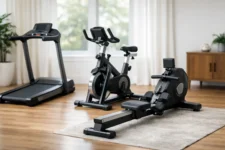
You do not need a spare room, a luxury budget, or pro-athlete discipline to make cardio stick. You need the right machine for the way you actually live. This guide to home cardio machines is built for busy people who want real progress at home – fat loss, conditioning, steady energy, or more weekly movement without wasting money on a machine that turns into a clothes rack.
The biggest mistake shoppers make is buying for aspiration instead of habit. A hardcore treadmill with top speed you will never use can be a worse buy than a compact bike you will ride four times a week. The best machine is not the one with the longest feature list. It is the one that matches your joints, your floor space, your noise tolerance, and your training style.
How to use this guide to home cardio machines
Start with your goal, not the product category. If you want the highest calorie burn and walk or run comfortably, a treadmill usually makes sense. If you want lower-impact training that is easy to recover from, an exercise bike or elliptical often wins. If you want a full-body conditioning tool that feels athletic and efficient, a rower deserves a hard look.
Then get honest about logistics. Apartment dwellers need to think about noise and footprint. Lifters who already train hard need cardio that supports recovery instead of crushing their legs. Beginners often do better with equipment that feels simple and approachable on day one. Small frictions matter. If setup is annoying, if the seat hurts, if the motion feels awkward, usage drops fast.
Treadmills: best for walking, jogging, and familiar training
A treadmill is the easiest machine to understand because walking and running are already part of daily life. That familiarity matters. If your goal is weight loss, daily step count, incline walking, or run training, treadmills offer a direct path with very little learning curve.
They also give you range. You can walk during calls, push interval sprints, or grind through incline sessions that light up your heart rate without needing top-end running speed. For many home users, incline is more valuable than max speed. A brisk incline walk can be challenging, joint-friendlier than running, and easier to recover from.
The trade-off is impact and size. Treadmills usually take up more room than bikes, and they can be loud, especially in upstairs apartments. Cheaper models may also feel shaky at higher speeds. If multiple people will use the machine, pay attention to motor strength, running deck size, and user weight capacity. A treadmill that works for a casual walker may feel underbuilt for a taller runner doing intervals.
If you are choosing a treadmill, prioritize deck comfort, incline range, and stability over flashy screens. Those are the features that shape long-term use.
Exercise bikes: low impact, easy to use, and compact
Exercise bikes are often the smartest buy for people who want consistent cardio with minimal joint stress. They are beginner-friendly, usually quieter than treadmills, and fit smaller spaces more easily. If you work long hours, a bike can be the machine that turns 20 spare minutes into a real session instead of a skipped workout.
Upright bikes feel a bit more active and traditional. Recumbent bikes offer more back support and can be great for users who want comfort-first training. Indoor cycling bikes are the performance option. They tend to feel more like studio riding, with harder efforts, stronger training variety, and a more athletic setup.
The catch is that bikes are seat-dependent. If the saddle is uncomfortable, your enthusiasm fades fast. Some people also find bike workouts mentally tougher because there is less movement variety than on a treadmill. On the other hand, if you like structured intervals, heart-rate work, or stacking quick sessions several times a week, bikes are a strong value play.
For home shoppers chasing convenience, this is often the hot pick. It is easier to fit into a bedroom corner, easier to use early in the morning, and easier on the knees after leg day.
Rowing machines: full-body work with a learning curve
Rowers have a loyal following for good reason. They train legs, core, back, and arms while driving your heart rate up fast. If you want cardio that feels like training rather than just movement, rowing can be a standout option.
It is also a solid choice for people who want efficiency. A short rowing workout can feel productive in a hurry, especially for interval work. That makes rowers appealing for time-crunched professionals who want maximum output from limited workout windows.
But rowing is not plug-and-play for everyone. Technique matters more than on a treadmill or bike. Poor form can make the movement feel awkward and shift stress where you do not want it. Rowers also need more usable floor length during workouts, even if some store vertically afterward.
Resistance style matters here too. Air rowers feel dynamic and are favored by hard-training users, but they can be louder. Magnetic rowers tend to run quieter and smoother, which can be better for shared living spaces. Water rowers have a distinctive feel and sound that many people love, though they often come at a higher price.
If you like athletic training and do not mind a short learning phase, a rower can be one of the best-value machines in your home gym.
Ellipticals: low-impact training with steady rhythm
Ellipticals sit in a useful middle ground. They give you a lower-impact cardio session than running while still feeling more upright and flowing than seated biking. For users managing joint sensitivity, or anyone who wants sustained moderate-intensity cardio without pounding, ellipticals can be a strong match.
They are especially good for steady-state work. You can settle into a rhythm, get your heart rate up, and stay there without the discomfort some people feel on a bike saddle. Many also include moving handles, which adds some upper-body involvement.
The downside is size. Ellipticals can have a large footprint, and cheaper ones sometimes feel unnatural or choppy. Stride length matters more than many buyers expect. If the stride is too short for your height, the motion can feel cramped. If you are shopping in this category, smooth movement and fit matter more than extra workout programs.
What matters most before you buy
Budget matters, but value matters more. A low-priced machine that gets used is a better deal than a premium model that overwhelms you. At the same time, going too cheap can backfire if stability, comfort, or durability are weak. The sweet spot depends on how often you plan to train and who will use the machine.
Space should be measured twice. Not just storage space, but workout space. A foldable treadmill sounds great until you realize the running clearance still dominates the room when in use. A rower may store upright, but it still needs length when training. Small-space shoppers should think in both dimensions.
Noise is not a minor detail. Treadmills and some air rowers can be disruptive in apartments or family homes. Bikes and many magnetic rowers are usually quieter. If you train early or late, that factor can be the difference between occasional use and everyday consistency.
Comfort is another make-or-break issue. Cushioning, seat design, handle placement, pedal feel, and stride quality all affect adherence. Specs sell machines, but comfort keeps them in rotation.
Matching the machine to your goal
If your main goal is fat loss, the best machine is the one you will use often enough to create a weekly calorie burn you can sustain. For many people, that means treadmill walking, cycling, or elliptical sessions done consistently instead of punishing workouts done once in a while.
If performance is your goal, choose the machine that supports the style of conditioning you enjoy. Runners usually benefit most from treadmills. Cross-trainers often love rowers or indoor bikes. If recovery is a priority, lower-impact options like bikes and ellipticals usually make more sense than frequent hard running.
If you are building a complete home setup, think beyond a single machine. Cardio works better when it fits into a bigger routine. The strongest results usually come from pairing your machine with a few basics that support consistency – training shoes, comfortable activewear, a mat, recovery tools, and if it fits your routine, nutrition support that helps energy and recovery. That is where a broad retailer like FitwellGoods can simplify the process, especially when deal-driven bundles help you build smarter without overbuying.
The best choice is the one you will repeat
There is no universal winner in home cardio. The right answer depends on your body, schedule, and preferences. Treadmills win on familiarity. Bikes win on convenience and low impact. Rowers win on full-body efficiency. Ellipticals win on smooth, joint-friendly endurance work.
If you are stuck between two options, choose the one that feels easiest to start three times a week. That is usually the better long-term investment. Progress does not come from owning more equipment. It comes from removing excuses, building momentum, and making your next workout easy to say yes to.