A lifting belt should not be the thing that saves a bad rep. It should be the tool that helps a good lifter create a stronger, more repeatable brace when the load gets serious. This guide to lifting belts cuts through the gym myths so you can choose gear that supports your goals, whether you are building a first home gym, chasing a heavier squat, or training hard after a packed workday.
The right belt can make heavy barbell work feel more controlled. The wrong belt can pinch, slide, restrict your setup, or sit unused at the bottom of your gym bag. Shop with your training style in mind, not just the thickest belt on the rack.
What a Lifting Belt Actually Does
A lifting belt gives your midsection something firm to press against as you brace. Before a heavy rep, you take a deep breath into your abdomen and sides, tighten your trunk, and create pressure around your torso. That pressure can help your spine stay in a strong position under load.
The key word is help. A belt does not replace technique, core training, or smart loading. It does not make every lift safer automatically, and it cannot compensate for rushing through sloppy deadlifts. Think of it as performance equipment, much like stable training shoes or properly fitted wrist wraps. When used well, it gives experienced and progressing lifters a more solid platform to produce force.
Belts are most useful during heavy compound movements, especially squats, deadlifts, overhead presses, and variations where your torso must resist significant load. You may also like one for heavy carries, cleans, or strongman-style training. For warmups, lighter accessory work, walking lunges, or high-rep movements, many lifters prefer to train belt-free.
Guide to Lifting Belts: Pick the Right Style
The best lifting belt depends on the lifts you prioritize, your comfort preferences, and how much time you want to spend adjusting it between sets. There is no single must-have style for everyone.
Uniform-width belts
A uniform-width belt stays the same width around the full torso, often four inches for adult lifters. This style is a favorite for powerlifting because it offers consistent support in the front, sides, and back. If squats and deadlifts are central to your program, a four-inch leather or firm nylon belt is often a strong starting point.
The trade-off is mobility. A wide, stiff belt can feel awkward if you have a shorter torso or if you train Olympic lifts, conditioning circuits, and deep movements that require more freedom. It may also dig into your ribs or hips if the fit is wrong.
Tapered belts
Tapered belts are wider in the back and narrower in the front. They can feel more comfortable for general strength training because the narrower front leaves room to bend and breathe. Many beginners enjoy this style for machines, dumbbell work, moderate barbell lifts, and home-gym training.
That comfort comes with less uniform support around the abdomen. A tapered belt can still be useful, but serious powerlifters usually prefer a belt with the same width all the way around.
Leather belts
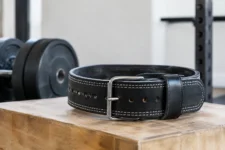
Leather belts are durable, stable, and built for lifters who want a firm feel under heavy weight. A quality leather belt may need a break-in period, but it can hold its shape and deliver dependable support for years. Look for a thickness that feels substantial without being so rigid that you avoid wearing it.
Leather is ideal for strength-focused programs, but it is not always the most comfortable choice for fast-paced workouts. If your training includes kettlebell circuits, intervals, and frequent transitions, a flexible option may fit your routine better.
Nylon and hook-and-loop belts
Nylon belts are lighter, easier to adjust, and generally more comfortable from day one. Hook-and-loop closures make it quick to change the tightness from one exercise to the next. That makes nylon a practical pick for CrossFit-style sessions, bodybuilding workouts, functional training, and lifters who want support without a long break-in period.
Their limitation is rigidity. A soft nylon belt may not feel as stable as thick leather during a near-maximal squat or deadlift. Some nylon belts use a reinforced back panel, which offers a useful middle ground for athletes who train across multiple styles.
Choose a Closure That Matches Your Training
A belt’s closure affects how fast it goes on, how precisely it fits, and how secure it feels under load.
Prong belts use one or two metal prongs and holes, similar to a traditional belt. They are straightforward, durable, and easy to trust. A single-prong design is usually faster to adjust than a double-prong design, with little practical loss of support for most lifters.
Lever belts use a buckle that locks into place quickly at a pre-set setting. They are popular with competitive powerlifters because they feel secure and are easy to release after a tough set. The downside is that changing the setting usually requires tools, so they are less convenient when your waist measurement or preferred tightness changes.
Hook-and-loop closures are fast and versatile. They work especially well when you want one belt for several movements or when you need small fit adjustments during a workout. For max-effort lifting, choose a well-made reinforced version rather than the thinnest budget option.
How Tight Should a Lifting Belt Be?
A belt should be snug enough that you can push your abdomen, sides, and lower back into it when you brace. It should not be cranked down so tightly that you cannot take a full breath. If you have to suck in hard just to fasten it, loosen it.
Place the belt where you can create the strongest brace. For many people, that is around the navel or slightly above it. Your ideal placement may shift between movements. Deadlifters often wear a belt a little higher or lower to avoid contact with their hips at the bottom of the setup, while squatters may prefer a position that feels more secure against the torso.
Test it with a light set before using it for working weight. Take a deep breath, expand your trunk in every direction, and feel whether the belt gives you a firm surface to brace into. If it pinches sharply, slides upward, or blocks your start position, adjust the placement or try a different style.
When to Wear a Belt and When to Skip It
There is no prize for wearing a belt on every set. Save it for the work that benefits from it. Many lifters put on their belt for top sets, heavy doubles and triples, or challenging sets of five or more when fatigue makes bracing harder.
Training without a belt still has value. Lighter sets let you practice bracing with your own trunk, refine positioning, and build confidence before the load rises. A smart approach is to warm up without the belt, use it for your heaviest work, then remove it for accessories unless a movement clearly benefits from support.
If you are new to barbell training, first learn to breathe and brace without equipment. Ask a qualified coach to check your squat and hinge mechanics if you are unsure. If you have ongoing back pain, numbness, or a medical condition that affects exercise, get guidance from a healthcare professional before relying on any training accessory.
Get the Most From Your Belt
A belt works best as part of a complete strength setup. Pair it with stable footwear, enough plates or adjustable dumbbells to progress gradually, and recovery habits that let you train consistently. Your belt is not a shortcut. It is one piece of gear that can make the hard work feel more locked in.
Before buying, measure around the area where you plan to wear the belt rather than choosing strictly from pant size. Review the brand’s sizing range, then leave room for normal changes from meals, hydration, and seasonal body-composition goals. A belt that fits only at its loosest or tightest setting will quickly become frustrating.
For lifters building out a home setup, prioritize versatility if your program includes more than barbell strength. A reinforced nylon belt can cover a wide range of workouts, while a firm leather belt is a smart upgrade when heavy squats and deadlifts become a regular part of your plan. FitwellGoods shoppers can build around the goal: pair strength essentials with recovery tools, supportive activewear, and the training nutrition that helps you show up ready for the next session.
Your best belt is the one you can brace into confidently, wear consistently, and use without changing the quality of your movement. Start with controlled reps, earn the heavier loads, and let your gear support progress that lasts.