
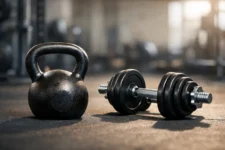
Picture your next home workout: one weight, a small patch of floor, and 30 minutes to make it count. That is where the kettlebell vs dumbbell training question gets real. Both tools can build muscle, raise your heart rate, and make a home gym feel a lot more useful, but they do not train the body in exactly the same way.
If you are trying to buy smarter, save space, and get visible results, the right answer depends less on hype and more on how you want to train. Some people need clean, simple strength progress. Others want fast-paced conditioning that also improves coordination. The best pick is the one you will actually use consistently.
Kettlebell vs dumbbell training: the core difference
A dumbbell puts the load evenly on either side of the handle, which makes it stable and predictable. That matters when you want clean reps on presses, rows, squats, lunges, and curls. It is easier to control, easier to learn, and easier to load progressively in a very straightforward way.
A kettlebell carries its mass below the handle. That offset load changes how the weight moves and how your body reacts to it. Swings, cleans, snatches, and Turkish get-ups feel dynamic because the bell keeps pulling away from your center of control. Your grip, core, shoulders, and hips all have to organize around that shifting force.
That is why dumbbells usually feel more natural for traditional strength work, while kettlebells often shine in power, conditioning, and movement-based training. Neither is better across the board. Each gives you a different training experience.
Where dumbbells usually come out ahead
If your main goal is muscle growth, dumbbells are hard to beat. They let you isolate muscles more easily, match familiar gym movements, and progress with less of a learning curve. Bench presses, shoulder presses, lateral raises, split squats, Romanian deadlifts, and chest-supported rows all fit naturally with dumbbells.
For beginners, this matters a lot. Stable loading makes it easier to feel the target muscle and practice good technique. If you are coming from machine training or barbell work, dumbbells also transfer well because movement patterns are familiar.
Dumbbells are also strong on versatility across fitness levels. A beginner can use light weights for basic strength. An experienced lifter can go heavy for serious hypertrophy or unilateral work. Adjustable dumbbells can make this even more practical for a home setup because they replace an entire rack without taking over the room.
There is also a recovery advantage. Because dumbbell exercises tend to be more controlled, it is often easier to manage fatigue and keep training volume where you want it. If you like measured progress, structured upper-body days, or classic push-pull-leg splits, dumbbells usually fit the plan better.
Where kettlebells usually come out ahead
Kettlebells bring a different kind of value. They are excellent for explosive hip-driven training, total-body sessions, and workouts that blend strength with conditioning. The swing alone trains power, posterior-chain strength, grip endurance, and cardio demand in a way that feels efficient when time is tight.
That makes kettlebells popular with busy professionals and home-gym users who want one tool to cover a lot of ground. A short kettlebell session can train legs, core, shoulders, and work capacity all at once. You are not just lifting the weight. You are managing momentum, resisting rotation, and staying connected through the trunk.
Kettlebells can also improve movement quality when used well. Front-rack carries, goblet squats, halos, and get-ups challenge posture, shoulder stability, and coordination. For people who sit a lot and want training that feels athletic, kettlebells often deliver more than basic up-and-down reps.
There is a trade-off, though. The learning curve is steeper. Dynamic lifts are effective, but they also punish sloppy mechanics. If you are brand new to training, a kettlebell swing done badly is not more advanced. It is just less safe.
Which is better for strength and muscle?
For pure strength and hypertrophy, dumbbells usually get the edge. You can isolate muscles more cleanly, control tempo more easily, and load many exercises with fewer technical barriers. That is especially true for chest, shoulders, arms, and controlled leg work.
Kettlebells can absolutely build muscle, especially in the glutes, hamstrings, shoulders, back, and core. Goblet squats, double kettlebell front squats, presses, and rows are no joke. But if your goal is to maximize bodybuilding-style training, dumbbells tend to give you more exercise variety and more precise overload.
So if your focus is bigger arms, fuller shoulders, stronger presses, or a classic strength split, dumbbells are usually the cleaner investment. If your focus is strong, lean, and capable, kettlebells make a powerful case.
Which is better for fat loss and conditioning?
This is where kettlebells often pull ahead. Because so many kettlebell movements are ballistic and full-body, they drive heart rate up quickly while still training strength. Swings, cleans, snatches, complexes, and circuits can create a lot of work in a short session.
That does not mean dumbbells are weak for fat loss. Dumbbell thrusters, snatches, man makers, and walking lunges can turn into tough conditioning fast. The difference is that kettlebells were almost built for smooth transitions and repeatable metabolic work.
If your workouts need to be short, intense, and effective, kettlebells often feel more efficient. If you prefer slower sets, focused strength blocks, and adding cardio separately, dumbbells may fit better.
Kettlebell vs dumbbell training for small home gyms
If space is limited, both tools can work, but they solve the problem differently. Adjustable dumbbells are excellent when you want broad load options without buying multiple pairs. They are practical, compact, and ideal for people who want one setup that can handle presses, rows, squats, and accessory work.
Kettlebells are space-friendly too, especially if you build around one or two bells. A single moderate kettlebell can support swings, goblet squats, presses, rows, carries, and core work. If your goal is minimalist training, that is a big win.
Budget matters here. Building a full fixed dumbbell set gets expensive fast. Building a full kettlebell range can also add up. For many shoppers, the smart move is not choosing a side forever. It is choosing the first tool that matches your current goal, then expanding later. That is usually a better value than buying random gear that looks good but does not fit your training style.
Who should choose dumbbells?
Dumbbells are the better pick if you are new to lifting, focused on muscle gain, or want flexible strength training without much technical friction. They are also ideal if you enjoy traditional gym programming and want a tool that supports nearly every major movement pattern in a familiar way.
They make a lot of sense for people building a balanced home gym piece by piece. If you want to pair weights with a bench, resistance bands, and straightforward upper- and lower-body sessions, dumbbells are an easy win.
Who should choose kettlebells?
Kettlebells are a strong choice if you want efficient workouts, athletic movement, and a blend of strength and cardio in one session. They fit people who like training hard in less time and do not mind investing in skill.
They are also great for home exercisers who want a compact setup with a high ceiling for progression. If you enjoy circuits, carries, swings, and movement-rich sessions, kettlebells can keep training fresh without needing a room full of equipment.
The smart answer for most people
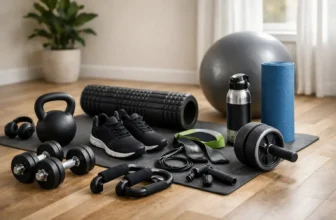
For most home gyms, this is not really an either-or decision. Dumbbells cover the basics with unmatched simplicity. Kettlebells add speed, flow, and conditioning. Together, they create a setup that can handle strength days, quick finishers, mobility-focused sessions, and full-body workouts without much wasted space.
If you are buying your first piece of strength equipment, start with the tool that matches your main goal right now. Muscle-building and easy progression point to dumbbells. Conditioning, power, and minimal-space efficiency point to kettlebells. If you are ready to build a setup with more range, shopping both categories in one place at FitwellGoods makes that upgrade a lot easier.
The best training tool is not the one with the loudest fan base. It is the one that turns your limited time, floor space, and budget into steady progress you can actually see.




![kiido Macrame Yoga Mat Carrying Strap [MAT NOT Included], Hand Woven Multi-Purpose Strap/Carrier](https://m.media-amazon.com/images/I/31p8soKH-AL._SS300_.jpg)




&url=https://fitwellgoods.com/shop/yoga/yoga-mat-bags/gym-bag-with-yoga-mat-holder%ef%bc%8cyoga-mat-bags-fits-all-your-daily-stuff-for-womenno-yoga-mat/&media=https://m.media-amazon.com/images/I/41Ej7u-wlqL._SS1024_.jpg)


&url=https://fitwellgoods.com/shop/activewear/mens-activewear/mens-track-jackets/puma-mens-track-jacket-blackmedium/&media=https://m.media-amazon.com/images/I/31CjVGlYtyL._SS1024_.jpg)


