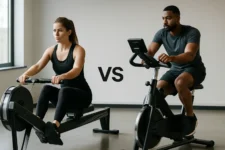
You have 25 minutes, a busy week, and a goal that is not vague: leaner waist, better conditioning, or a stronger heart without beating up your joints. That is exactly where the rower vs exercise bike decision matters – because both work, but they reward different bodies, different schedules, and different personalities.
If you are the type who buys gear to actually use it (not admire it), keep reading. This is the real-world breakdown: how each machine feels, what it trains, where it fits in a home setup, and which one tends to win for fat loss, knee comfort, and consistency.
Rower vs exercise bike: the difference you feel on day one
A rowing machine gives you a full-body rhythm: legs drive, core transfers, arms finish. When it clicks, it feels athletic – like you are doing something, not just “getting steps.” But it also asks for coordination. A sloppy stroke can turn into low-back fatigue or an awkward tug-of-war with the handle.
An exercise bike is immediate. Sit, pedal, adjust resistance, go. It is easier to do half-asleep at 6 a.m., and it is easier to stay in a steady zone for 30-60 minutes without your form falling apart. The trade-off is that the work is mostly lower body, so you are not getting the same total-body stimulus unless you add strength training separately.
The simplest truth: rowers often feel harder faster. Bikes often feel doable longer.
Calories and fat loss: what actually moves the needle
People love asking which burns more calories. The honest answer is: the one you can push harder, more often, for more weeks. That is the machine that wins.
Rowing can produce a high calorie burn because it recruits more muscle mass. If you are rowing with strong leg drive and steady power, your heart rate climbs quickly and stays honest. It is also easy to turn rowing into interval training – short, intense bouts with rest – which many people find effective for fat loss when time is tight.
Biking can match that burn when resistance is high, cadence is purposeful, or you commit to longer sessions. The bike’s superpower is consistency. If you are more likely to hop on for 40 minutes while watching a show, the bike can quietly stack a weekly calorie deficit without feeling like a fight.
If your weight-loss plan includes nutrition structure (higher protein, controlled calories, maybe a fat-loss supplement stack), the “best” machine is the one that helps you keep appetite and stress under control. For many, biking’s steady effort is easier on recovery and sleep. For others, rowing’s full-body demand reduces the urge to do extra “make up” workouts.
Joint comfort and injury history: knees, hips, and backs
Both machines are generally joint-friendly compared to running. But the stress shows up in different places.
When the bike tends to feel better
If you have cranky knees, a bike often feels predictable and smooth – especially with a proper seat height that lets you pedal without excessive knee bend at the top. It is also easier to keep impact low while still working hard.
If you have tight hips or limited ankle mobility, biking is usually forgiving. You can warm up quickly and stay moving without needing deep flexion or complex timing.
When the rower tends to feel better
If you dislike pressure on your knees under load (like heavy squats), rowing can feel surprisingly comfortable because the load is distributed across the stroke and includes a big hip hinge and upper-body finish.
But if you have a sensitive low back, rowing is a “form first” machine. The most common mistake is rounding the spine at the catch and yanking with the arms. A good row should feel like legs first, then torso, then arms – not all at once.
A simple rule: choose the bike if you need the lowest-skill path to pain-free cardio. Choose the rower if you are willing to learn a clean stroke and want a more athletic, full-body feel.
Muscle and strength carryover: what you build while you sweat
Rowing gives you meaningful work for glutes, hamstrings, quads, lats, mid-back, and core. It is not a substitute for strength training, but it is not “just cardio” either. Over time, rowing can improve posture endurance and posterior-chain stamina – the stuff that makes you feel capable outside the gym.
Biking heavily targets quads and glutes, with some hamstring contribution depending on position and resistance. It builds leg endurance in a very specific pattern. That is great if you also lift and want low-impact conditioning that does not destroy you for leg day. It is also great if your goal is to walk more, hike more, or simply move more without heavy fatigue.
If you want cardio that supports a total-body training identity, rowing is the stronger match. If you want cardio that plays nicely with lifting, biking is usually easier to “fit in” without interfering.
Space, noise, and home-gym reality
This is where buying decisions get real.
Rowers often take more floor length in use. Many models stand up for storage, but you still need enough room to slide the seat and fully extend. Noise depends on the resistance type. Some are whisper-quiet; others have a noticeable whoosh.
Exercise bikes have a smaller footprint and are easy to leave in place. They are also friendlier for apartment living. If you are working from home, a bike can become an “always there” option for quick rides between calls.
If your home setup is tight, the bike is the safer bet. If you have a dedicated corner and you want one machine that feels like a sport, the rower earns its space.
The motivation factor: which one you will actually use
This is the part most comparison articles miss: equipment is a behavior tool.
Rowing tends to be best for people who like structured workouts. Think intervals like 10 rounds of 1 minute hard, 1 minute easy. It is also satisfying for goal-chasers because you can track pace, distance, and split times and see progress quickly.
Biking tends to be best for people who need low-friction consistency. You can ride easy on recovery days, build a long aerobic base, or crank resistance for short efforts. It pairs well with entertainment, and that matters because adherence is everything.
If you are currently stuck in an on-again/off-again routine, choose the machine that matches your “default energy.” If you are usually wired and want a challenge, row. If you are often tired and need something you will not dread, bike.
How to choose in 60 seconds
If you want a practical decision, use these scenarios.
Choose a rowing machine if you want full-body conditioning, you like performance metrics, and you will commit to learning form. Rowing shines when time is limited and you want workouts that feel like training, not just movement.
Choose an exercise bike if you want the simplest setup, the most joint-friendly steady-state cardio, and a machine that is easy to use frequently. The bike shines when your main goal is weekly consistency and you also lift weights or walk a lot.
If you are truly split, consider what you will do on your worst day, not your best day. The best machine is the one you will still use when you slept six hours and your calendar is chaos.
Sample workouts that make each machine worth buying
You do not need a massive library of routines. You need two to three repeatable sessions you can rotate.
For rowing, a great starting point is 5 minutes easy, then 8-12 rounds of 30 seconds strong and 60 seconds easy, then 3-5 minutes cool down. Keep the “strong” part controlled – powerful legs, relaxed grip, tall posture.
For biking, try 5 minutes easy, then 20 minutes steady in a challenging but sustainable zone where you can speak in short sentences, then 5 minutes easy. If you want intervals, do 10 rounds of 20 seconds hard and 100 seconds easy.
The key is not variety. The key is repeatability. When you can repeat a workout, you can beat it – and that is where results show up.
Shopping mindset: build a setup that pulls you back in
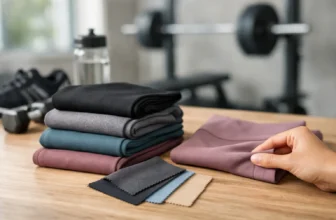
Cardio equipment sells itself on features, but your routine is what changes your body. Think in terms of a small “win stack”: a machine you like, comfortable activewear that does not distract you, and recovery support that keeps you consistent.
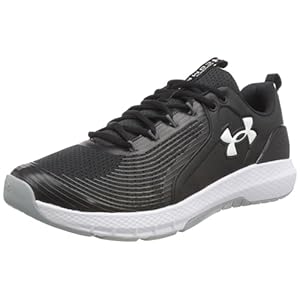
That might mean training shoes with stable support, a couple sets you actually want to wear, and basics like a foam roller for tight hips and quads. If fat loss is the mission, many people also like to pair cardio with a simple supplement routine like a pre-workout for energy and a protein powder to keep daily intake on track. You can put all of that in one cart at FitwellGoods when you are ready to compare options and catch deal-forward “Trending” picks.
The smart play is not buying the fanciest machine. It is buying the machine that makes you press start.
One last thing before you decide
Picture your next month, not your fantasy schedule. If you will be squeezing workouts between meetings, the bike’s simplicity may be your secret weapon. If you are craving a full-body challenge that makes 20 minutes feel like real training, the rower might be the spark you have been missing. Either way, your best results come from a choice that feels so realistic you can repeat it on your busiest week – because consistency is the only feature that never goes out of stock.