
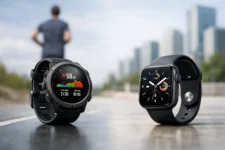
You notice it fastest on mile four. The wrist tech that looked great at checkout either starts proving its value or starts getting in the way. That is the real difference in the running watch vs smartwatch debate – one is usually built to improve training, while the other is built to do a bit of everything and keep up with daily life.
If you want one device that helps you hit pace targets, recover smarter, and still handle texts, payments, and music, the answer is not always obvious. Some runners need precision first. Others want convenience first. The best buy comes down to how you train, how often you run, and whether you want your watch to act more like a coach or a mini phone.
Running watch vs smartwatch: what changes in real use?
On paper, the gap can look small. Both categories may offer GPS, heart rate tracking, sleep data, notifications, and workout logging. In actual use, though, they prioritize very different outcomes.
A running watch is designed around performance. That means stronger battery life during GPS sessions, more detailed pace and cadence metrics, better workout programming, and training features that matter when you are trying to get faster or build endurance. It is the better fit if your week includes interval days, long runs, races, or structured plans.
A smartwatch is designed around convenience. It usually gives you a smoother app experience, more polished calls and notifications, better voice assistant features, and stronger day-to-day lifestyle tools. If you want your wearable to blend work, errands, sleep tracking, and occasional runs, this category often feels easier to live with.
That does not mean one is always better. It means one usually has a clearer job.
If running is the goal, a running watch usually pulls ahead
For runners who care about measurable progress, a dedicated running watch tends to justify its price faster. GPS accuracy is often more dependable, especially under trees, in dense neighborhoods, or on routes with lots of turns. The difference may seem minor until your splits keep reading off and your pace alerts stop matching effort.
Battery life is another separator. A running watch is more likely to survive long runs, race day, and regular weekly training without constant charging. That matters if you are stacking workouts, traveling, or using all-day health tracking too. A watch that dies halfway through a session is not helping your consistency.
Then there are the training tools. Many running watches go beyond distance and heart rate. They may track recovery time, VO2 max estimates, training load, race predictions, daily readiness, stride metrics, and guided workouts. Not every runner needs every metric, but even intermediate runners benefit from better pacing data and more useful post-run analysis.
This is where a lot of buyers save money long term by being honest. If you are already buying quality shoes, activewear, recovery tools, and supplements to support your training, a watch that actually improves workouts is often a smarter investment than one loaded with features you will barely use on the run.
Who should lean toward a running watch?
If you are training three or more days per week, preparing for a race, following a plan, or trying to improve speed and endurance, a running watch usually makes more sense. It is also a strong pick for treadmill owners, outdoor runners, and hybrid athletes who rotate between cardio and strength work but still want better session tracking.
It is especially useful if you like data with a purpose. Not endless stats – useful ones. The kind that help you back off when recovery is poor or push when fitness is trending up.
Where a smartwatch makes more sense
A smartwatch wins when your wearable needs to do everything reasonably well, not one thing exceptionally well. For many buyers, that is enough.
If your runs are casual, your workouts vary a lot, and you care just as much about responding to messages, taking calls, controlling music, or using digital payments, a smartwatch can be the more practical choice. It fits the lifestyle of busy professionals, commuters, parents, and anyone who wants fewer devices competing for wrist space.
The interface is often easier too. Smartwatches usually feel more familiar right away. The screens may look sharper, the app ecosystem may be stronger, and the integration with your phone may feel smoother. For someone who wants motivation and convenience without going full performance nerd, that matters.
There is also a style factor. Many smartwatches are easier to wear from workout to office to dinner. If aesthetics influence whether you wear the device consistently, that is not shallow – it is practical. The best tracker is the one you actually keep on.
Who should lean toward a smartwatch?
If you run occasionally, cross-train often, and want one device for fitness plus everyday life, a smartwatch is often the better buy. It is also a good fit for beginners who want movement tracking, basic health data, and simple workout support before committing to more advanced training tools.
The trade-offs most buyers miss
The running watch vs smartwatch decision often gets framed as performance versus convenience, but there are smaller trade-offs that matter just as much.
Comfort is one. Running watches can be lightweight and built for long wear, but some models look more athletic than polished. Smartwatches can feel premium, but that sometimes means heavier cases and shorter battery life. If you wear your device to sleep, during work, and during training, size and weight matter more than spec sheets suggest.
Data quality is another. A smartwatch may show enough information for general fitness, but the software may not go deep enough for serious runners. A running watch may offer richer metrics, but it can take more setup and learning to get the most out of them. If you hate checking charts or interpreting performance trends, some advanced tools may go unused.
Then there is charging. This is a bigger deal than most people expect. A smartwatch that needs frequent charging can create annoying gaps in sleep tracking, morning workouts, or weekend training. A running watch usually reduces that friction.
Price does not always settle the debate either. Some smartwatches are expensive because of lifestyle features, app support, and brand premium. Some running watches are expensive because of training depth, mapping, and advanced sensors. The better value depends on what you will actually use every week.
What to prioritize before you buy
Start with your actual routine, not your ideal one. If you say you want marathon-level metrics but you currently jog twice a week and mostly care about staying active, a smartwatch may be plenty. If you are increasing mileage, chasing personal records, or using training zones, go with the tool that supports that goal.
Next, think about battery tolerance. If charging another device every day sounds annoying, lean toward a running watch. If you already charge wearables often and want richer smart features, a smartwatch may fit your habits just fine.
Also look at indoor versus outdoor use. Outdoor runners benefit more from strong GPS and route accuracy. Treadmill users may care more about heart rate, workout summaries, and comfort. If your training includes gym sessions, rowing, cycling, or strength work, either category can work – but check how well it tracks your main activities, not just the extras.
Finally, consider motivation style. Some people do better with coaching prompts, recovery scores, and goal-based metrics. Others just want a clean activity ring, a vibration reminder, and a little momentum. Buy for the way you stay consistent.
The best choice for beginners, regular runners, and serious trainers
Beginners usually get the most value from a smartwatch if fitness is only one piece of the purchase. It covers steps, workouts, sleep, and everyday convenience without feeling overly technical.
Regular runners often land in the middle. If running is becoming more intentional, this is where a running watch starts paying off. Better GPS, better battery, and stronger training feedback can make each session more useful.
Serious trainers should usually skip the compromise and go straight to a running watch. When race prep, pacing, recovery, and weekly volume matter, performance-specific features are not just nice to have. They help reduce guesswork.
If you are building out a complete fitness setup, it helps to think beyond the watch itself. The right wearable works better when the rest of your routine is dialed in too – reliable shoes, comfortable activewear, recovery tools, and nutrition that supports training instead of slowing it down. That is where a broad fitness retailer like FitwellGoods fits naturally into the bigger picture.
So which one should you buy?
Buy a running watch if your main priority is getting better at running. Buy a smartwatch if your main priority is getting more out of one device across your whole day.
There is no prize for choosing the more advanced option if it does not match your habits. The real win is picking the watch that fits your training, your schedule, and your goals closely enough that you keep using it. When your gear supports consistency, progress gets a lot easier to see – and a lot more fun to chase.


![kiido Macrame Yoga Mat Carrying Strap [MAT NOT Included], Hand Woven Multi-use Strap/Carrier for Your Yoga Mat, Exercise Mat](https://m.media-amazon.com/images/I/31Z-x6stGjL._SS300_.jpg)







,%204%20Speed%20Hurdles,%2012%20Training%20Cones,%20Jump%20Rope,%20Parachute%20for%20Speed/Soccer/Football%20Training%20with%20Carry%20Bag&url=https://fitwellgoods.com/shop/speed-agility/sports-agility-ladders/agility-ladder-training-equipment-set-agility-ladder12-rungs-20ft-4-speed-hurdles-12-training-cones-jump-rope-parachute-for-speed-soccer-football-training-with-carry-bag/&media=https://m.media-amazon.com/images/I/518pr2vAV+L._SS1024_.jpg)


&url=https://fitwellgoods.com/shop/speed-agility/sports-reaction-balls/ultra-bounce-reaction-balls-4-difficulty-levels/&media=https://m.media-amazon.com/images/I/41C70kSGvWL._SS1024_.jpg)
&url=https://fitwellgoods.com/shop/yoga/yoga-towels/biolinen-luxury-100-cotton-bath-towels-ultra-soft-highly-absorbent-quick-dry-premium-quality-for-home-spa-hotel-grey-30x60/&media=https://m.media-amazon.com/images/I/51Edu7uYsiL._SS1024_.jpg)
