
That first cardio bike purchase can go one of two ways – you end up with a machine you use four times a week, or an expensive clothes rack in the corner. When it comes to spin bike vs upright bike, the better choice is usually the one that matches how you actually like to train, not the one with the flashiest console or the loudest hype.
If your goal is simple, steady cardio while you catch up on emails or stream a show, one option clearly feels easier to live with. If you want sweat-heavy sessions that feel closer to a studio ride, the other has a real edge. The trick is knowing where your workouts, your body, and your motivation line up.
Spin bike vs upright bike: the real difference
At a glance, both machines let you pedal indoors and build cardiovascular fitness. But they create very different workout experiences.
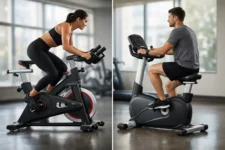
A spin bike is built to mimic the feel of road cycling and high-intensity studio classes. It usually has a heavier flywheel, a more aggressive riding position, and resistance that can be adjusted fast for intervals, climbs, and hard efforts. You ride leaning slightly forward, often with more weight through your legs and core.
An upright bike is designed more like a traditional exercise bike. You sit in a more vertical position, the seat is generally wider, and the setup feels friendlier for casual rides, lower-impact sessions, and beginners who want something straightforward. It tends to be easier to get on and use right away.
Neither is automatically better. One is more performance-driven. The other is often more comfort-driven.
Choose based on how you want to train
This is where most people get stuck. They compare features instead of habits.
If you like interval training, pushing pace, standing up to pedal, or following cycling-style workouts, a spin bike usually makes more sense. It rewards effort. It feels more dynamic. It can also be a smart pick if you get bored easily and want a machine that supports harder, shorter, more intense sessions.
If you prefer moderate cardio, longer rides, or a machine that anyone in the house can use without much setup, an upright bike often wins. It asks less from your posture and technique, and that matters when consistency is the real goal.
There is also a mindset piece here. Some people want their equipment to challenge them the second they sit down. Others want their equipment to remove friction so working out feels easy to start. Be honest about which one sounds like you.
Comfort and posture matter more than people think
A lot of buyers underestimate this section and regret it later.
Spin bikes usually put you in a more forward-leaning position, similar to outdoor cycling. That posture can feel athletic and engaging, especially if you want a more immersive ride. It can also recruit your core and upper body a bit more as you stabilize. But for some riders, especially those with low back, wrist, neck, or saddle comfort issues, that position can feel demanding.
Upright bikes are typically easier on the body for general use. The more vertical posture reduces pressure on the hands and upper body, and the seat is often more forgiving. That does not mean upright bikes are effortless. It means they are usually easier to tolerate for longer sessions and more approachable if you are easing into regular cardio.
If you are recovering from inactivity, carrying extra weight, or shopping for a shared home gym, comfort can beat intensity. A bike you enjoy using will always outperform one that looks impressive but feels rough after ten minutes.
Which burns more calories?
This is where marketing gets loud. The honest answer is that either bike can help with calorie burn, weight management, and conditioning. The bigger factor is how hard you work and how often you train.
That said, spin bikes often lead to higher-intensity sessions. Because they are designed for powerful efforts, quick resistance changes, and out-of-saddle riding, many users naturally push harder. For experienced riders or anyone chasing intense calorie-burning workouts, that can be a major selling point.
Upright bikes can still deliver excellent calorie burn, especially if you stay consistent and increase resistance over time. They may not inspire the same all-out effort for every rider, but they are often easier to stick with. And consistency is where real body-composition progress happens.
If your schedule is packed and you want efficient, sweat-heavy training in 20 to 30 minutes, a spin bike may fit better. If you want lower-stress cardio you can do more frequently, an upright bike may actually get you better long-term results.
Muscle engagement and training feel
A spin bike tends to feel more athletic overall. The riding position, flywheel momentum, and resistance style often create a stronger sense of drive through the quads, glutes, hamstrings, and calves. When you stand to pedal or work through hill-style intervals, the workout can feel much closer to a real cycling effort.
An upright bike still trains the lower body effectively, but the experience is usually steadier and less aggressive. That can be a plus if you want controlled cardio without the technical feel of a cycling workout.
If you already strength train and want cardio that feels performance-oriented, a spin bike often complements that setup well. If your cardio is mainly about health, daily movement, and getting steps-like activity without joint impact, an upright bike fits the brief.
Space, noise, and home setup
For home gyms, the best machine is not just the one with the best workout. It is the one that fits your space and routine.
Many spin bikes have a sleek footprint and can work well in apartments, bedrooms, or compact gym corners. They often look more premium and studio-inspired, which can be motivating if aesthetics matter to you. Some models are also relatively quiet, especially those with magnetic resistance.
Upright bikes are usually compact too, but they can feel less intimidating in a shared family space. They are often the easier choice for households with mixed fitness levels because the learning curve is low.
If multiple people will use the bike, adjustability becomes a big factor. Spin bikes often offer more seat and handlebar adjustments, which is great for dialing in fit. Upright bikes are generally simpler, though some may offer fewer fine-tuning options.
Price and value
Budget matters, but value matters more.
Spin bikes often cost more when you move into sturdier builds, smoother resistance systems, and better adjustability. For riders who want a connected, studio-style feel, the extra spend can feel worth it. You are paying for a more training-focused machine.
Upright bikes come in a wide range of price points and are often a smart value play for beginners. If your main target is dependable home cardio without premium cycling features, they can deliver plenty of return without stretching the budget.
This is one of those only-for-a-limited-time shopping decisions where it helps to think beyond the sticker price. A good deal on the wrong bike is still the wrong bike. The better buy is the one you will use for months, not the one that looked cheapest in the moment.
Who should choose a spin bike?
A spin bike is usually the hot pick for people who want training intensity, cycling-style workouts, and a machine that grows with them. It makes sense for former studio riders, athletes, interval lovers, and anyone who wants cardio to feel like a serious session instead of a checkbox.
It is also a strong option if motivation comes from challenge. If you like metrics, sweat, and the feeling of pushing through climbs or sprint blocks, a spin bike can keep workouts fresh.
The trade-off is comfort. For some users, especially complete beginners, it can feel less forgiving at first.
Who should choose an upright bike?
An upright bike is often the better fit for beginners, casual exercisers, and anyone who values comfort and simplicity. It works well for low-impact cardio, general fitness, and daily movement without the more aggressive setup of a spin bike.
It is also a practical choice for people who want a machine that feels easy to start using right away. If your biggest hurdle is getting yourself to work out after a long day, simpler can be smarter.
For many shoppers, that makes the upright bike a best-seller kind of purchase – not flashy, just reliable.
The better bike is the one you will actually ride
The spin bike vs upright bike decision usually comes down to one question: do you want your cardio machine to push you, or support you?
If you are chasing harder workouts, stronger cycling feel, and more intensity, go with the spin bike. If you want comfort, accessibility, and steady cardio you can keep coming back to, choose the upright bike. Both can absolutely earn a place in a smart home setup.
At FitwellGoods, the best equipment choices are the ones that match your goal, your pace, and your real life. Pick the bike that makes it easier to show up, and the results tend to follow.











&url=https://fitwellgoods.com/shop/yoga/yoga-mat-bags/cosmos-exercise-yoga-mat-carrying-shoulder-strap-bag-with-internal-and-outside-storge-pocket-yoga-mat-is-not-included/&media=https://m.media-amazon.com/images/I/41-KtCWTK4L._SS1024_.jpg)


&url=https://fitwellgoods.com/shop/yoga/yoga-mat-straps/black-yoga-mat-straps-yoga-strap-for-carrying-mat-multi-purpose-yoga-mat-holder-sling-adjustable-straps-yoga-mat-holder-sling-for-most-size-mats-yoga-mat-not-included/&media=https://m.media-amazon.com/images/I/31D6dH-K4dL._SS1024_.jpg)

&url=https://fitwellgoods.com/shop/yoga/yoga-blocks/liliful-4-pcs-yoga-blocks-bulk-eva-foam-exercise-yoga-brick-soft-non-slip-surface-foam-blocks-high-density-yoga-blocks-to-improve-strength-balance-lightweight-yoga-brick-9x6x3blue/&media=https://m.media-amazon.com/images/I/41UxsaIe7JL._SS1024_.jpg)


