
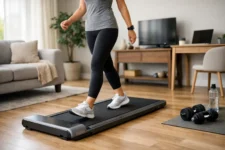
You do not need a full gym footprint to move more. That is the real appeal behind any walking pad review – not flashy tech, not oversized consoles, just a simpler way to rack up steps between meetings, after dinner, or while catching up on email. For busy people trying to stay consistent, that convenience can be the difference between thinking about cardio and actually doing it.
What a walking pad is really good at
A walking pad is a compact treadmill built for low-speed movement in smaller spaces. Most models are designed for walking rather than hard running, and that distinction matters. If your goal is to stay active during the workday, increase daily calorie burn, or build a steady habit without dedicating a whole room to cardio equipment, a walking pad can be a smart buy.
It works especially well for apartment dwellers, remote workers, and anyone who wants a lower-commitment cardio option. You can slide many models under a bed, stand them upright in a closet, or tuck them behind a sofa. That small-space advantage is the whole product category in one sentence.
But there is a trade-off. Smaller size usually means a shorter deck, lower max speed, and fewer stability features than a standard treadmill. If you have a long stride, want incline training, or plan to do regular run sessions, a walking pad may feel limiting fast.
Walking pad review: the pros that actually matter
The best thing about a walking pad is not that it is trendy. It is that it lowers friction. When your machine is easy to access, easy to store, and easy to start, you are far more likely to use it.
For step goals, light fat-loss phases, and general activity, that matters more than a giant screen. A walking pad can help turn dead time into movement time. Twenty minutes before work, thirty during calls, fifteen after lunch – those blocks add up quickly over a week.
Noise level is another major win, although this depends on the model and your flooring. Most walking pads are quieter than full treadmills at moderate speeds, which makes them better suited to shared living spaces. They are not silent, and downstairs neighbors may still hear foot impact, but many users find them much more practical for home use.
Price can also be appealing. Compared with a larger treadmill, a walking pad is often a lower-cost entry into home cardio. If you are building out a home setup and also budgeting for dumbbells, recovery tools, activewear, or supplements, that lower upfront cost can make the whole routine easier to assemble.
Where walking pads fall short
This is where a useful walking pad review needs to stay honest. Compact cardio has limits, and ignoring them leads to returns.
First, stability varies a lot. Lightweight units are easier to move, but some can feel less planted underfoot, especially for taller users or anyone walking at the upper speed range. If the frame flexes or the belt feels narrow, confidence drops quickly.
Second, speed range is often modest. Many walking pads top out at a brisk walk or light jog, and some are clearly made for walking only. That is perfect for desk use and low-impact movement, but not for people who want intervals, hill-style training, or true run workouts.
Third, the user experience can feel stripped down. You may get a remote, a simple LED display, and an app connection if you are lucky. If you enjoy guided programming, advanced metrics, or a more immersive workout feel, a standard treadmill may still be the better investment.
Durability is the biggest it-depends factor. A walking pad used by one person for thirty minutes a day is one thing. A walking pad used by multiple household members for hours every day is another. Compact machines can absolutely be worth it, but they tend to reward realistic expectations.
Who should buy one and who should skip it
A walking pad makes sense for people who value convenience over training complexity. If your biggest challenge is finding time to move, a machine that is always within reach can be a real win. It is also a strong option for beginners who feel intimidated by larger cardio equipment and just want a no-drama way to start.
It also fits well for body composition goals when paired with strength work and nutrition structure. Extra daily steps can support calorie expenditure without beating up your joints or forcing long gym sessions. That makes walking pads attractive during fat-loss phases, especially for people who already lift and just need a practical cardio layer.
You should probably skip one if your main priority is running performance, incline training, or heavy household use. In those cases, a traditional treadmill usually delivers better deck size, motor strength, and long-term durability. Buying too small to save money can backfire if you outgrow it in a month.
Walking pad review: what to check before you buy
Start with the motor and the stated use case. Some machines are clearly built for occasional walking, while others are better suited to frequent daily use. Product pages can make every unit sound powerful, so look past hype and ask a simpler question: will this machine handle your body weight, your pace, and your weekly volume without strain?
Deck size matters more than many shoppers expect. A slightly longer or wider surface can make a huge difference in comfort. If you are taller, broader, or just want a more natural stride, do not treat deck dimensions as a throwaway spec.
Weight capacity is another key filter. Stay well within the listed maximum if possible. Machines tend to feel more stable and perform better when they are not pushed right to the edge of their rating.
Pay attention to storage design. Some walking pads fold, some do not, and some are slim but still awkward to move. Transport wheels help, but only if your floor plan actually allows easy rolling and storage.
Then there is noise. Marketing claims here are often optimistic. Motor noise might be low, but foot strike still creates sound. If you are in an upstairs apartment or sharing space, a mat can help, but it will not turn a walking pad into a silent machine.
Warranty and support deserve a close look too. For a category built around convenience, post-purchase frustration is the fastest way to kill value. A decent warranty, clear setup instructions, and easy replacement support can matter as much as top speed.
What using a walking pad feels like day to day
This is where walking pads either become a habit or a dust collector. The people who love them usually keep things simple. They use them while working at a standing desk, during evening TV time, or as a short movement block before or after training.
The people who end up disappointed often expect a full treadmill experience in a thinner package. That is not really the point. A walking pad is best viewed as a consistency tool, not a performance machine.
Used that way, it can be surprisingly effective. More steps, less sitting, and easier cardio adherence are not flashy benefits, but they pay off. If your fitness routine has been missing a practical way to stay active between workouts, a walking pad can fill that gap better than many higher-ticket machines.
For shoppers building a complete home setup, it also pairs well with compact strength gear and recovery tools. That combination gives you daily movement, resistance training, and mobility work without overloading your space. For a lot of people, that is a smarter setup than chasing commercial-gym equipment at home.
So, is a walking pad worth it?
Yes – if you are buying it for the right reason. A walking pad is worth it when your goal is to move more, stay consistent, and make cardio fit into real life. It is less worth it if you expect high-speed training, premium treadmill features, or commercial-level durability from a compact machine.
The best buying decision usually comes down to honesty. If you know convenience drives your consistency, a walking pad can be one of the smartest home cardio buys in your lineup. If you need more training range, hold out for a larger treadmill instead.
At FitwellGoods, that same logic applies to every piece of gear: buy the equipment you will actually use, not the one that only looks good in your cart. The best results usually start with one simple move – and then another tomorrow.








%20(Black/Black/Dark%20Smoke%20Grey)&url=https://fitwellgoods.com/shop/yoga/yoga-mat-bags/nike-black-black-dark-smoke-grey-dn3700-010-adult-unisex-yoga-mat-bag-21l-black-black-dark-smoke-grey/&media=https://m.media-amazon.com/images/I/31hdrX8ZWAL._SS1024_.jpg)


