
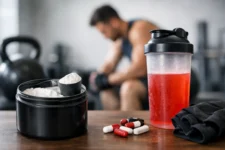
You feel it about 20 minutes before training. Your brain gets sharper, your warm-up feels lighter, and the workout you were half-dreading suddenly looks manageable. That shift is why so many people ask, what does pre workout do – and whether it actually makes a difference or just feels like expensive caffeine.
The short answer is that pre-workout is designed to improve training performance before you start exercising. Depending on the formula, it can help with energy, focus, muscular endurance, blood flow, and perceived effort. But not every product does the same thing, and not every workout needs it.
What does pre workout do in your body?
Pre-workout is not one single ingredient. It is usually a blend built to change how you feel and perform during training. The most common effect is increased alertness, but that is only part of the story.
A well-formulated pre-workout can make hard training feel more doable. That matters because performance is not just about strength or conditioning on paper. It is also about how ready you feel to push, how dialed in you are between sets, and whether you can hold output when fatigue starts climbing.
Most people notice four main effects. First, energy goes up, usually because of caffeine or other stimulants. Second, focus improves, which can be useful for technical lifts, interval work, or early-morning sessions. Third, endurance can improve, especially in repeated efforts or higher-volume training. Fourth, some ingredients support better blood flow, which can create the muscle pump many lifters want.
That does not mean pre-workout creates results by itself. It helps you bring more to the session. If your sleep, hydration, programming, and nutrition are off, even a strong formula has limits.
The ingredients that actually drive performance
If you want to know what does pre workout do, you have to look at the label. The effect comes from the ingredients and their doses, not from the category name.
Caffeine for energy and output
Caffeine is the engine in most pre-workouts. It stimulates the central nervous system, reduces your sense of fatigue, and can improve performance in both strength and cardio training. For many users, this is the ingredient doing the heavy lifting.
That said, more is not always better. A moderate dose may improve training without making you shaky, anxious, or light-headed. A high-stim product might feel powerful at first but can backfire if it disrupts pacing, raises your heart rate too much, or leaves you crashing later.
Beta-alanine for muscular endurance
Beta-alanine is known for the tingling sensation some people feel after taking pre-workout. That tingle gets attention, but the real reason it is included is to help buffer acid buildup during hard efforts. In plain terms, it may help you hang on a little longer during demanding sets or intense intervals.
It is not an instant magic switch. Beta-alanine works best with consistent use over time rather than one dramatic scoop before a single workout.
Citrulline for blood flow and pump
Citrulline, often listed as L-citrulline or citrulline malate, supports nitric oxide production. That can improve blood flow and may enhance endurance and muscle pump during training.
For lifters, this often translates to fuller muscles and better training feel. For athletes doing volume work, it may help maintain performance deeper into the session. It is one of the more appealing ingredients because the effect is often noticeable without relying on extreme stimulation.
Creatine for strength support
Some pre-workouts include creatine, which can support power output, strength, and muscle performance. Like beta-alanine, creatine is more about saturation than immediate sensation. You do not take it once and suddenly add plates to the bar.
Its inclusion can be convenient, but it is not required for a pre-workout to be effective. Many people take creatine separately so they can control the dose.
Focus ingredients like tyrosine or theanine
Some formulas add ingredients to smooth out the stimulant effect or sharpen mental focus. Tyrosine may support concentration under stress, while theanine is often used to create a cleaner energy feel when combined with caffeine.
This is where formulas can differ a lot. Some are built for aggressive stimulation. Others are designed for steady energy and cleaner concentration. Which feels better depends on your tolerance and the type of training you are doing.
When pre-workout helps most
Pre-workout tends to shine when energy is low but the session still matters. Early morning training, post-work gym sessions, heavy leg days, high-volume hypertrophy work, and intense conditioning are common examples.
It can also be useful for people training in a calorie deficit. When food intake is lower and energy feels flat, the right pre-workout may help you train with more intent and preserve output. That can be a big deal if your goal is fat loss without watching performance fall apart.
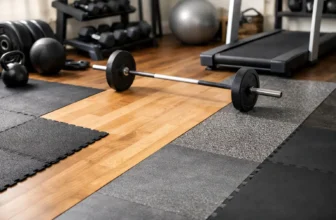
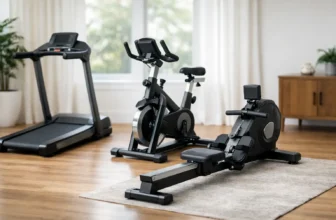
For home-gym users, it can help create a clearer transition into training. That matters more than people think. When your treadmill, dumbbells, or bench are ten feet from your desk, getting mentally switched on is half the battle.
When it may not be worth it
Not every workout needs a scoop.
If you are doing light movement, an easy walk, mobility work, or a short recovery session, pre-workout may be unnecessary. The same goes for evening training if stimulants wreck your sleep. Poor sleep hurts recovery far more than one underpowered workout.
It may also be a bad fit if you are already highly caffeinated. Coffee, energy drinks, and fat burners can stack fast. What looks like a normal serving on the label can become too much when combined with everything else in your day.
There is also the adaptation factor. If you use high-stim products constantly, the effect can fade. Then you are chasing the same feeling with larger doses, which is not a great long-term plan.
What pre-workout feels like – and what it should not feel like
A good pre-workout should make you feel ready, switched on, and capable of training harder. It should not make you feel panicked, nauseous, dizzy, or out of control.
Some sensations are normal. Mild tingling from beta-alanine is common. Increased alertness is common. Feeling more motivated to get after the session is the whole point.
But if your heart is pounding unusually hard, your stomach is turning, or your concentration gets worse instead of better, the formula may be too strong or simply not right for you. Trendy does not always mean effective. Best seller does not always mean best fit.
How to choose the right kind of pre-workout
The smartest move is to match the product to your goal, not the hype.
If you want clean energy for consistent workouts, a moderate-stim formula usually makes more sense than a mega-dose product. If you train late, a low-stim or stimulant-free option may be a better call. If your focus is muscle pump and volume, look harder at citrulline and endurance-support ingredients than flashy stimulant blends.
Beginners should be especially careful here. Starting with half a serving is often a better move than going all in. You can always scale up. You cannot untake a scoop that hits too hard halfway through your warm-up.
This is also where shopping smart matters. Instead of grabbing the loudest label, compare formulas, serving sizes, and ingredient amounts. A solid product should tell you what is in it and why. That is a better sign than a giant energy claim with a vague proprietary blend.
So, what does pre workout do for results?
Pre-workout does not build muscle, burn fat, or transform performance by itself. What it can do is help you train at a higher level more consistently. Over time, that matters.
Better focus can improve session quality. More energy can help you stop skipping tough workouts. Extra endurance can let you complete more productive volume. A better pump can improve mind-muscle connection for some lifters. Those effects are not the result. They are support for the work that creates the result.
That is the trade-off worth understanding. Pre-workout can be a useful tool, but it is still a tool. The foundation is training, nutrition, hydration, and recovery.
If you are shopping for performance support, think in stacks, not shortcuts. The right setup might include your pre-workout, a solid hydration routine, recovery support, and training gear that makes it easier to stay consistent. That is where a broad fitness retailer like FitwellGoods has a real advantage – you can build around the goal instead of buying one product and hoping it does everything.
The best pre-workout is the one that helps you show up stronger for the session in front of you, without creating problems after it. If it gives you better energy, sharper focus, and more quality work when it counts, that is money well spent. If it only gives you jitters and a flashy label, keep looking. Your next great workout should feel earned, not forced.










&url=https://fitwellgoods.com/shop/speed-agility/sports-agility-ladders/juvale-agility-ladder-workout-equipment-with-6-speed-training-cones-and-resistance-parachute-footwork-skills-drill-gear-for-football-and-soccer-20-ft/&media=https://m.media-amazon.com/images/I/41nTC1sWrAL._SS1024_.jpg)