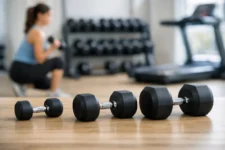
Buying dumbbells sounds simple until you realize one pair can feel perfect for curls and completely useless for squats. If you’re asking what size dumbbells should beginners buy, the real answer is not one magic number – it’s the weight that lets you train with control, make progress, and avoid wasting money on gear you outgrow in two weeks.
For most beginners, the smartest buy is not the heaviest pair you can lift once. It’s a weight you can use for full, clean reps across basic movements like presses, rows, curls, lunges, and squats. That usually means starting lighter than you think, especially if your goal is consistency, better form, and a home setup you’ll actually use.
What size dumbbells should beginners buy for real workouts?
A practical starting point for many adults is 5 to 15 pounds per dumbbell for upper-body work and 15 to 25 pounds per dumbbell for lower-body movements. That said, your best starting range depends on your training history, body size, coordination, and the exercises you want to do most.
If you’re brand new to strength training, 5s, 8s, or 10s can be enough for shoulder presses, lateral raises, biceps curls, and triceps work. If you’ve played sports, done manual labor, or already train with machines, 12s or 15s may feel more realistic for upper-body basics. Lower-body exercises usually need more load because your legs and glutes are stronger, so goblet squats, Romanian deadlifts, and lunges often call for a heavier option.
This is where beginners get stuck. They want one pair that does everything. In reality, one pair rarely covers your entire body well. A weight that challenges your shoulders may be too light for your legs, and a pair that works for deadlifts may be too heavy for presses. That’s why adjustable dumbbells or two different sets often give you better value than guessing on one all-purpose pair.
The easiest way to choose your starting weight
Think in reps, not ego. Your starter dumbbells should let you complete about 8 to 15 reps with good form while still feeling the last 2 or 3 reps. If you can swing, twist, or rush through the movement, the weight is too heavy. If you can chat through 20 reps and barely notice the load, it’s too light for that exercise.
For example, if you can shoulder press 10 pounds for 10 controlled reps and rep 11 would be a grind, that’s a useful training weight. If you can curl 15s easily but your elbows drift and your back starts helping, 15 might be too much right now. Clean reps beat flashy reps every time.
A fast rule that helps most shoppers is this: buy for your weaker lifts first. Your shoulders, arms, and upper chest will usually limit your starting dumbbell choice more than your legs. That keeps you from overspending on weights you can only use for shrugs and squats while ignoring half your routine.
Beginner ranges by fitness level
There’s no perfect chart for every person, but there are smart ranges that reduce guesswork.
If you’re a true beginner with little to no resistance training background, women often do well starting with 5 to 10 pounds for upper body and 10 to 20 pounds for lower body. Men in the same category often start with 10 to 15 pounds for upper body and 15 to 25 pounds for lower body.
If you’re moderately active, have done classes, sports, or machine training, women may prefer 8 to 15 pounds for upper body and 15 to 25 pounds for lower body. Men often land around 12 to 20 pounds for upper body and 20 to 30 pounds for lower body.
These are starting points, not rules. Smaller isolation moves like lateral raises and triceps extensions usually need less weight. Big compound moves like rows, carries, split squats, and Romanian deadlifts can handle more.
Why adjustable dumbbells are often the best beginner buy
If your budget allows, adjustable dumbbells are usually the most beginner-friendly option. They solve the biggest problem fast – your strength will not stay the same for long if you train consistently.
With adjustable dumbbells, you can go lighter for shoulder work, heavier for rows, and increase gradually as your form improves. That means fewer bad guesses, less clutter, and better long-term value. For home-gym shoppers who want more flexibility without buying a full rack, this is often the sweet spot.
Fixed dumbbells still make sense if you like quick transitions, want a simpler setup, or are only buying for a few key movements. A pair of 10s and a pair of 20s can cover a surprising amount of ground for a beginner. But if you already know you want variety in your workouts, adjustable options are hard to beat.
What beginners usually get wrong
The biggest mistake is buying based on one exercise. A pair that feels great for biceps curls might be useless for lower-body training. The second mistake is buying too heavy because heavier feels like better value. It usually isn’t if the dumbbells spend months on the floor untouched.
Another common issue is forgetting progression. Early strength gains happen quickly. What feels challenging now may feel light after four to six weeks of steady training. That doesn’t mean your first purchase was wrong. It means your body is adapting, which is exactly the point.
Grip comfort matters too. If the handle is awkward, too thick, or slippery, even a good weight can feel bad in use. For beginners building a home setup, ease of use is a real advantage. The best dumbbell is the one you pick up consistently.
How many pairs do you really need?
If you want the leanest possible start, one adjustable set is enough for most beginners. If you prefer fixed dumbbells, two pairs usually make the most sense. A lighter pair handles presses, curls, raises, and rehab-style work. A heavier pair covers rows, squats, deadlifts, and carries.
For many shoppers, that means something like 10s and 20s, or 15s and 25s, depending on current strength. That setup gives you room to train more of your body without turning your space into a full commercial gym.
If your budget is tight, start with the pair you’ll use most and build from there. Smart home gyms grow in layers. You do not need a wall of equipment on day one to get results.
What size dumbbells should beginners buy for weight loss or toning?
This is where marketing creates confusion. There is no separate dumbbell category for “toning.” Muscle responds to resistance, reps, and progression. If your goal is fat loss, lean muscle, or a more defined look, you still need weights that challenge you.
Very light dumbbells can work for endurance circuits, mobility work, and beginners learning form. But if they never feel challenging, they won’t do much to build strength or preserve muscle while losing weight. A better approach is choosing a weight that feels manageable for 10 to 15 solid reps, then increasing when that range becomes easy.
That’s also why shoppers who want body-composition results often do better with adjustable dumbbells or a couple of weight options. Your lateral raise weight and your squat weight should not be the same just because the label says beginner.
A smarter way to shop your first set
Before you buy, ask yourself three things: Which exercises will I actually do? Do I want one flexible set or multiple fixed pairs? And will I still be happy with this purchase when I get stronger a month from now?
If you want the easiest answer, buy adjustable dumbbells with a beginner-friendly range. If you want fixed weights, choose one lighter pair for upper-body control work and one heavier pair for lower-body training. If you’re between two options, the one that lets you move with better form is usually the better starting buy.
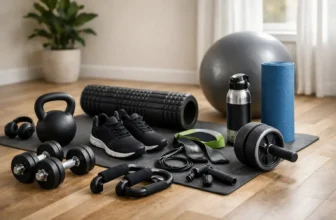
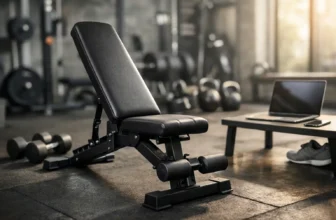
For shoppers building a full setup, this decision also works best when you think beyond dumbbells. A bench, mat, resistance bands, recovery tools, and training shoes can make your first routine more effective and easier to stick with. That’s one reason a broad store like FitwellGoods can simplify the process – you can build around your goal instead of piecing together random gear.
The right dumbbells should make your workouts feel doable today and still useful as you get stronger. Start with control, buy with progression in mind, and let your next set be earned by the reps you’re already putting in.




&url=https://fitwellgoods.com/shop/yoga/yoga-mat-bags/cosmos-exercise-yoga-mat-carrying-shoulder-strap-bag-with-internal-and-outside-storge-pocket-yoga-mat-is-not-included/&media=https://m.media-amazon.com/images/I/41-KtCWTK4L._SS1024_.jpg)


