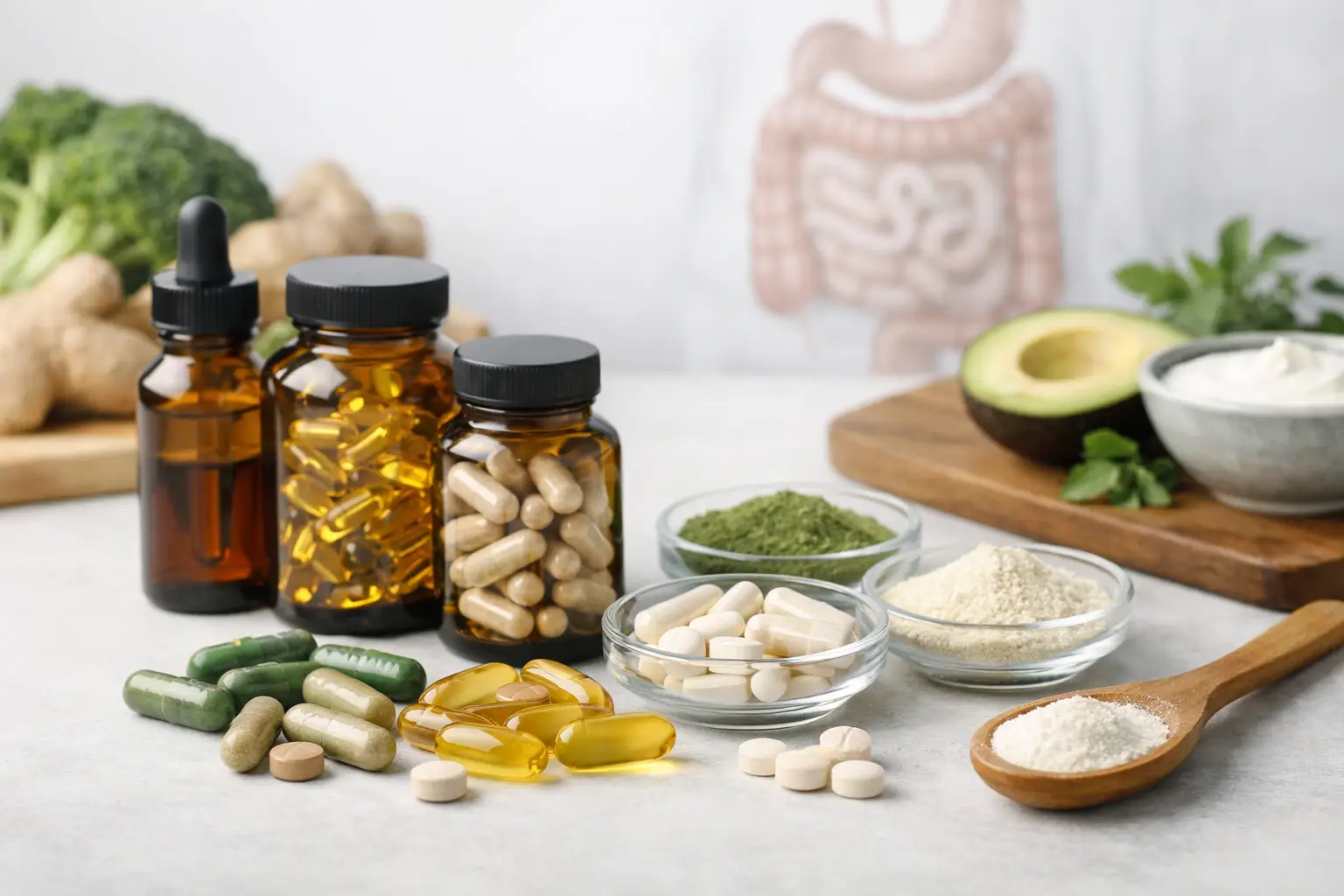
That post-workout bloat, the random stomach drama after a high-protein meal, the days when your digestion feels off for no clear reason – this is usually when people start asking what supplements help with gut health. And fair enough. If your gut is not cooperating, it can throw off energy, recovery, appetite, and just how good you feel moving through the day.
The catch is that gut health supplements are not one-size-fits-all. The best pick depends on whether you are dealing with occasional bloating, irregularity, digestive discomfort, antibiotic recovery, or a diet that is heavy on protein, low on fiber, or packed with convenience foods. A smart supplement can help, but the wrong one can waste money or make symptoms worse.
What supplements help with gut health if you want real results?
The strongest starting point for most people is a simple one: match the supplement to the problem. Probiotics get the spotlight, but they are only one option. Prebiotics, digestive enzymes, fiber, L-glutamine, and postbiotics can all have a place depending on your routine and your goals.
If your digestion is generally slow or inconsistent, fiber is often the most practical move. If certain meals leave you feeling heavy or gassy, digestive enzymes may be more useful. If your gut feels off after stress, travel, illness, or antibiotics, a targeted probiotic may make more sense. This is where a lot of shoppers get stuck – they buy the trending formula instead of the right formula.
Probiotics
Probiotics are live microorganisms that may help support the balance of bacteria in the gut. They are popular for a reason. Certain strains have been studied for helping with occasional bloating, regularity, and digestive changes linked to antibiotics or travel.
What matters most here is strain specificity. Not every probiotic does the same thing, and higher CFU counts do not automatically mean better results. Some people do well with Lactobacillus and Bifidobacterium blends for general digestive support, while others respond better to yeast-based options like Saccharomyces boulardii, especially after antibiotic use or during travel.
There is a trade-off, though. Probiotics can help some people quickly, but others notice temporary gas or bloating in the first week or two. If your system is sensitive, starting with a lower dose can be the smarter play.
Prebiotics
Prebiotics are compounds that feed beneficial gut bacteria. You can think of them as support fuel rather than the bacteria themselves. Ingredients like inulin, FOS, and GOS show up in many gut health products because they help nourish the microbes you want more of.
For the right person, prebiotics can be a strong long-game option. They may help with regularity and overall gut balance, especially if your diet is low in plant variety. But they are not always beginner-friendly. If you already deal with noticeable bloating or IBS-type symptoms, some prebiotics can ramp up discomfort before things improve – and sometimes they simply are not the right fit.
Fiber supplements
If there is one category that deserves more attention, it is fiber. A lot of active adults focus hard on protein targets and hydration but still fall short on fiber. That gap can show up as constipation, inconsistent digestion, or the feeling that meals just sit there.
Psyllium husk is one of the better-known options because it can support regularity and stool consistency. Partially hydrolyzed guar gum is another option that some people find gentler. Fiber can also help support fullness, which matters if body composition is part of your bigger plan.
The catch is that more is not better overnight. Jumping from a low-fiber diet straight into a full-dose supplement can backfire fast. Start low, increase slowly, and drink enough water. Otherwise, the supplement you bought to fix bloating can become the reason for it.
What supplements help with gut health for bloating and heavy meals?
This is where digestive enzymes earn their spot. These supplements help break down food components like protein, fat, carbohydrates, lactose, or fiber. If you feel especially uncomfortable after larger meals, protein-heavy meals, or foods like dairy and beans, enzymes may offer more immediate support than a probiotic.
Protease helps with protein digestion, lipase helps with fats, and lactase helps with lactose. Broad-spectrum blends are common, but the better option depends on what actually triggers your symptoms. If dairy is the issue, you do not need a random kitchen-sink formula – you need lactase. If high-protein meals leave you feeling sluggish, a blend with protease may be worth a closer look.
This is one of those categories where expectations matter. Enzymes can help you digest a meal more comfortably, but they are not a free pass to ignore food intolerances or eat in ways that always leave you feeling rough.
L-glutamine
L-glutamine shows up in both sports nutrition and gut health for good reason. It is an amino acid involved in several body processes, and it is often marketed for supporting the gut lining, especially during periods of physical stress or heavy training.
Some active adults like it because it fits into a broader recovery stack while also supporting digestive comfort. The research is mixed depending on the population and the condition, so this is not a miracle fix. Still, if your training load is high, your diet is aggressive, or stress is clearly part of the picture, L-glutamine can be a reasonable option to explore.
Postbiotics and butyrate
Postbiotics are gaining traction because they skip the live-bacteria piece and focus on beneficial compounds produced by gut microbes. Butyrate, a short-chain fatty acid, is one of the most talked-about examples because it plays a role in colon health and gut barrier support.
This category is newer to many shoppers, but it is worth watching. For people who do not tolerate probiotics well, postbiotics may feel like a cleaner, simpler option. That said, they are not yet the first supplement most people should try before basics like fiber and targeted probiotics.
How to choose the right gut health supplement
A better buying strategy starts with one question: what are you actually trying to fix? If the answer is irregularity, look hard at fiber first. If it is occasional bloating after meals, think enzymes. If your digestion changed after antibiotics, travel, or illness, a probiotic may be the better fit.
It also helps to check your routine before your cart. A supplement has a harder job if you are under-eating produce, relying on ultra-processed convenience foods, skipping water, or living on high-protein shakes and coffee. No supplement fully covers for a diet with almost no fiber and constant stress.
Capsule count, dosing style, and tolerance matter too. Some people do better with a simple once-daily option. Others want a focused formula they can use around problem meals. If you are comparing products, look beyond front-label hype. Specific strains, ingredient amounts, and intended use tell you more than flashy claims.
A few mistakes that cost people time and money
The first mistake is stacking too many gut supplements at once. If you start probiotics, prebiotics, enzymes, and fiber together, you will not know what is helping or what is irritating your system.
The second is expecting instant results from every category. Enzymes may work quickly if they match the problem. Fiber and probiotics often need more time. Gut health is usually a consistency game, not a one-day transformation.
The third is ignoring red flags. If you have persistent abdominal pain, blood in stool, unexplained weight loss, severe diarrhea, or symptoms that keep getting worse, this is not a self-experiment moment. It is a good time to talk with a healthcare professional.
The smartest way to start
For most people, the best move is not the biggest stack. It is the most targeted one. Pick the supplement category that matches your main issue, give it time, and pay attention to how your body responds. If you are shopping for performance, body composition, and daily wellness all at once, that same strategy applies here too – practical choices beat random trend buying every time.
Gut health support works best when it fits your real routine, not your ideal one. Start where your digestion is losing, choose the supplement that makes sense for that specific problem, and build from there. Better energy, better comfort, and better consistency usually start with that one smart decision.