That tight band through your quads after leg day, the stiff upper back from hours at a desk, the calves that feel like concrete after a run – this is exactly where people start asking how to use foam roller tools correctly. A foam roller can help you feel looser, move better, and recover faster, but only if you use it with some purpose. More pressure is not always better, and rolling every sore spot like you are crushing dough can backfire.
The good news is that foam rolling is simple once you know what to target, how long to stay there, and when to stop. If you want one recovery tool that earns its place in your home gym, this is one of the smartest picks.
How to use foam roller for real results
Think of foam rolling as a way to improve tissue quality and short-term mobility, not as a magic fix for injuries or chronic pain. It works best before training to help you move more freely, or after training when you want to reduce that beat-up, stiff feeling. Some people also use it on rest days to stay loose.
The basic idea is straightforward. You place the roller under a muscle group, support your body weight with your hands or feet, and move slowly across the area. When you find a tender spot, you pause for 20 to 30 seconds and breathe instead of speeding past it. Most muscle groups only need 30 to 60 seconds. A full session can be as quick as five to 10 minutes.
What matters most is pressure control. You should feel discomfort, not panic. On a scale of 1 to 10, stay around a 5 to 7. If you tense up, hold your breath, or feel sharp pain, you are pushing too hard. Back off and reduce the load.
The best way to roll
Slow beats aggressive almost every time. Move about an inch per second, especially when you are learning. Fast rolling usually turns into random rubbing with very little payoff.
It also helps to keep the target muscle as relaxed as possible. If you are rolling your calf, for example, let the foot stay loose. If you are rolling your quads, avoid bracing every muscle in your body. The more you can breathe and settle into the position, the better the roller can do its job.
And avoid rolling directly over joints or bones. A foam roller is for soft tissue, not kneecaps, hips, or your lower back vertebrae.
Where to use a foam roller
The best foam rolling routine usually focuses on a few high-payoff areas. You do not need a 30-minute recovery block to feel a difference.
Calves
Sit on the floor with the roller under one or both calves. Lift your hips slightly and roll from above the ankle to just below the knee. If you find a hot spot, pause and breathe. Crossing one leg over the other increases pressure, which is useful if both calves at once feels too light.
This area is a strong choice for runners, people who walk a lot, and anyone whose ankles feel stiff during squats.
Quads
Lie face down with the roller under the front of your thighs. Support yourself on your forearms and roll from above the knee to the top of the thigh. Shift a little left or right to catch different parts of the muscle.
Quad rolling can be intense, so do not rush it. If your legs are smoked after lunges, cycling, or heavy squat work, this is one of the first places to hit.
Hamstrings
Sit with the roller under the back of your thighs and your hands on the floor behind you. Lift slightly and roll from just above the knee toward the glutes. This area can feel awkward at first, but it is useful if long sitting leaves the back of your legs feeling shortened.
Glutes and hips
Sit on the roller, lean slightly toward one side, and cross that ankle over the opposite knee if you want deeper pressure. Small shifts in angle make a big difference here.
For many people, this is the money move. Tight glutes and outer hip muscles can affect how your lower body feels during training, especially with deadlifts, squats, stair climbing, and long workdays at a desk.
Upper back
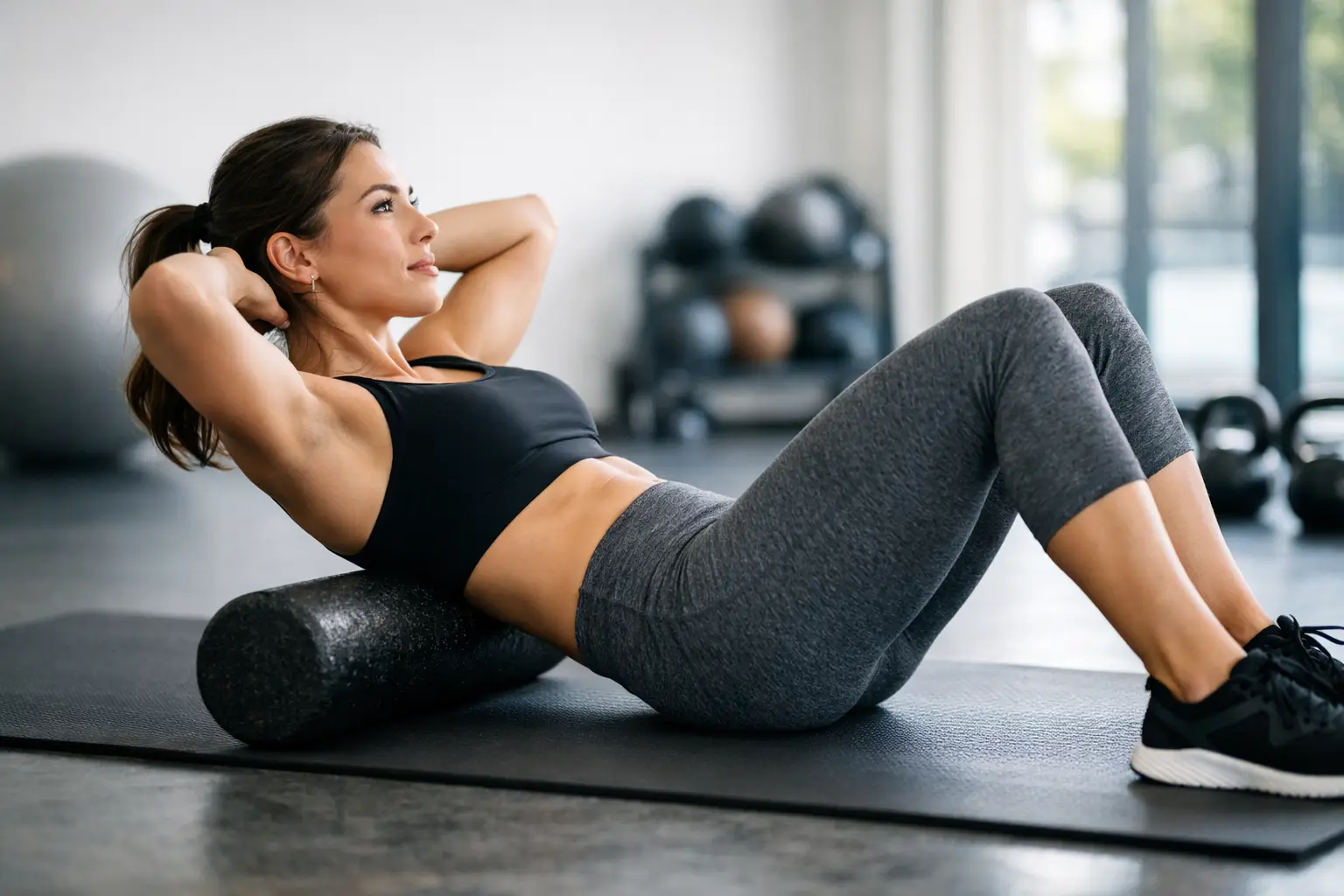
Place the roller under your upper back, bend your knees, and support your head lightly with your hands. Roll from the mid-back to the top of the shoulders. Keep your ribs down and avoid turning it into a huge backbend.
This can feel great if you spend hours hunched over a laptop or if pressing workouts leave your chest and shoulders feeling locked up.
How to use foam roller before a workout
Before training, foam rolling should be short and targeted. The goal is to help you move better, not to turn your warm-up into a recovery session. Spend 30 to 45 seconds each on the areas most likely to limit your workout.
If you are about to train legs, roll calves, quads, glutes, and maybe hamstrings. If you are heading into an upper-body session, the upper back and lats may deserve attention. After that, move straight into dynamic warm-up work like bodyweight squats, lunges, arm circles, or glute bridges.
This pairing matters. Foam rolling alone can help you feel looser, but combining it with active movement usually gives you a better carryover into the workout.
How to use foam roller after a workout
After training, the pace can be slower. This is where a foam roller becomes a solid recovery tool for reducing stiffness and helping you come back fresher for the next session. Roll the muscles you trained hardest, and spend a little more time on the areas that feel dense or overworked.
You still do not need to overdo it. Five to 10 minutes is enough for most people. If your session was brutal, you might add gentle stretching afterward, but keep it easy. Recovery should help your body calm down, not feel like another workout.
Common mistakes that waste your time
The biggest mistake is going too hard. People often think more pain means more progress, but that is not how this works. If you are gritting your teeth, your body is likely guarding instead of relaxing.
Another common miss is rolling the wrong areas. Lower back pain, for example, does not always mean you should roll your lower back. In many cases, the better play is to focus on glutes, hips, and upper back while improving core control and hip mobility.
There is also the issue of expectations. A foam roller can help with soreness, mobility, and movement quality, but it is not a substitute for strength work, recovery sleep, hydration, or smart programming. It is a useful piece of the puzzle, not the whole system.
Picking the right foam roller
Not every roller feels the same, and that is a good thing. Beginners usually do better with a standard-density foam roller that has some give. It delivers enough pressure to be effective without making every session miserable.
Firm, textured rollers create more intense pressure and can feel great for experienced users who want deeper work. But if you are brand new, starting too aggressive often turns foam rolling into something you avoid. The best recovery tool is the one you will actually use consistently.
If you are building out a home setup, this is one of those low-cost, high-use items worth grabbing while you are already shopping for mats, bands, or mobility gear. FitwellGoods carries foam rollers alongside other recovery and training essentials, which makes it easy to build a smarter cart instead of piecing things together later.
When not to foam roll
If an area is bruised, swollen, acutely injured, or producing sharp pain, skip the roller. The same goes if you have a medical condition that affects circulation, sensation, or tissue healing and your doctor has given you restrictions.
And if a spot keeps flaring up no matter how much you roll it, that is your sign to look deeper. Sometimes the issue is not tissue tightness at all. It may be a training load problem, a movement pattern issue, or a strength imbalance that needs a better fix.
A simple routine you will actually stick with
If you want a no-fuss plan, roll four areas most relevant to your training for 30 to 60 seconds each. For lower body, that could mean calves, quads, glutes, and hamstrings. For upper body, try upper back, lats, and pec-adjacent areas carefully, avoiding direct pressure on the shoulder joint.
Do that before workouts as part of your warm-up or after workouts when soreness starts building. Keep the pressure honest, the pace slow, and the session short enough that it feels sustainable. That is how foam rolling goes from random floor time to a recovery habit that actually pays off.
The smartest fitness tools are not always the flashiest ones. Sometimes real progress comes from using simple gear well, a few minutes at a time, and giving your body a better shot at showing up strong tomorrow.