Leg day felt great – until sitting down became a negotiation. If you are searching for the best recovery supplements for soreness, you probably do not need hype. You need options that make sense for how you train, how often you train, and how fast you want to feel ready for the next session.
Soreness is not always a problem. Some muscle fatigue after lifting, sprint intervals, long runs, or a return to training after time off is normal. But when soreness starts dragging into your next workout, your workday, or your sleep, recovery stops being a nice extra and starts becoming part of the plan.
What actually helps with soreness
The first thing to know is that no supplement erases muscle soreness overnight. Delayed onset muscle soreness, or DOMS, is tied to training stress, muscle damage, inflammation, hydration status, sleep, and nutrition. That means the best results usually come from stacking smart habits with the right products rather than expecting one powder or capsule to do everything.
The second thing to know is that your goal matters. Some people want less next-day stiffness. Others want to support muscle repair, reduce cramping, rehydrate faster, or get enough protein without cooking another meal. The best recovery supplements for soreness depend on which of those problems you are trying to solve.
8 best recovery supplements for soreness
1. Protein powder
If your training creates muscle breakdown, protein is the most practical place to start. Whey protein is popular because it is rich in essential amino acids and digests quickly, which makes it a strong post-workout option. A high-quality plant protein can also work well, especially if it delivers a complete amino acid profile.
This is less exciting than trendy recovery formulas, but it is often the biggest needle-mover. If your daily protein intake is low, adding protein powder may help soreness indirectly by supporting muscle repair and adaptation. It is also one of the easiest wins for busy schedules – shake, drink, move on.
2. Branched-chain amino acids or essential amino acids
BCAAs are widely marketed for recovery, but the real answer is a little more nuanced. If you already eat enough total protein, BCAAs alone may not do much. Essential amino acids often make more sense because they cover the full range your body needs for muscle protein synthesis.
Still, amino products can be useful in certain situations. Fasted trainers, people cutting calories, and anyone who struggles to eat enough protein may notice better recovery support from EAAs or BCAAs around training. This is a classic it-depends category.
3. Creatine monohydrate
Creatine is usually framed as a strength and power supplement, but it also earns a spot on any serious recovery list. By supporting energy production in muscle cells and helping with training performance over time, creatine may reduce how beat up you feel across repeated hard sessions.
It is not a soreness cure in the way people sometimes expect. What it can do is support better overall recovery capacity, especially for lifters, cross-trainers, and anyone pushing volume. It is one of the most researched and cost-effective options in the category, which makes it a hot pick for building a dependable stack.
4. Electrolytes
Not all soreness is true muscle damage. Sometimes what feels like deep fatigue, tightness, or heavy legs is partly dehydration and mineral loss, especially after long workouts, sweat-heavy sessions, hot weather training, or two-a-days.
Electrolytes help replace sodium, potassium, magnesium, and other minerals lost through sweat. If you finish training drained, cramp-prone, or headachy, this may be the missing piece. Beginners often overlook hydration support and jump straight to specialty capsules, but for many active people, recovery starts with fluids and electrolyte balance.
5. Magnesium
Magnesium has earned a strong reputation in recovery for good reason. It plays a role in muscle function, nerve signaling, and relaxation, and some people find it especially helpful when soreness is paired with muscle tightness, poor sleep, or nighttime cramping.
The trade-off is that magnesium is not equally useful for everyone. If your intake is already solid, you may not notice much. But for hard trainers, stressed professionals, and people whose diets are less consistent than they would like, magnesium can be a smart addition – especially when recovery issues feel bigger than just post-workout ache.
6. Omega-3 fatty acids
Fish oil and other omega-3 supplements are often used to support the body’s normal inflammatory response. That can matter when repeated hard training leaves you feeling stiff for days.
Omega-3s are not a quick-fix product. They tend to make more sense as part of a long-game recovery strategy than a one-time post-workout solution. If you train several days a week, especially with strength work or impact-heavy cardio, they may be worth considering. If you want immediate relief by tomorrow morning, this would not be the first item in your cart.
7. Tart cherry
Tart cherry has become one of the more interesting recovery options for athletes and serious weekend warriors. It is often used to support recovery from intense exercise, and some people report less soreness and better readiness between sessions when using it consistently around hard training blocks.
This is one of those products that can fit nicely during race prep, tournament weekends, or high-volume phases. It may be less necessary if your training is moderate and your basics are already covered. Still, for people chasing every recovery edge, tart cherry is more than just a trend.
8. Curcumin
Curcumin, the active compound found in turmeric, is often used for joint comfort and exercise recovery support. It is popular with lifters and active adults who feel soreness not only in muscles but also in the wear-and-tear areas that training can aggravate.
Bioavailability matters here, so the formula matters more than the label headline. Curcumin can be a strong add-on, but it usually works best after you have handled fundamentals like protein, hydration, and sleep. Think of it as a targeted upgrade, not the foundation.
How to choose the best recovery supplements for soreness
Start by being honest about what your body is telling you. If your issue is poor muscle repair, protein and creatine deserve attention first. If you are sweating hard and feeling wiped out, electrolytes may matter more. If soreness is tied to sleep problems, magnesium can pull double duty.
The smartest buyers do not build recovery stacks based on what is trending alone. They buy for the gap. That is how you avoid shelves full of half-used tubs and still get noticeable results.
It also helps to think in layers. Your base layer is protein, hydration, and overall calorie intake. The second layer is performance and repair support, like creatine or amino acids. The third layer is more specialized support, such as tart cherry, omega-3s, or curcumin.
When more supplements are not the answer
There is a point where adding another product is just expensive procrastination. If your soreness is extreme every week, your training load may be the issue. If your sleep is poor, your recovery ceiling stays low no matter what you mix into a shaker bottle.
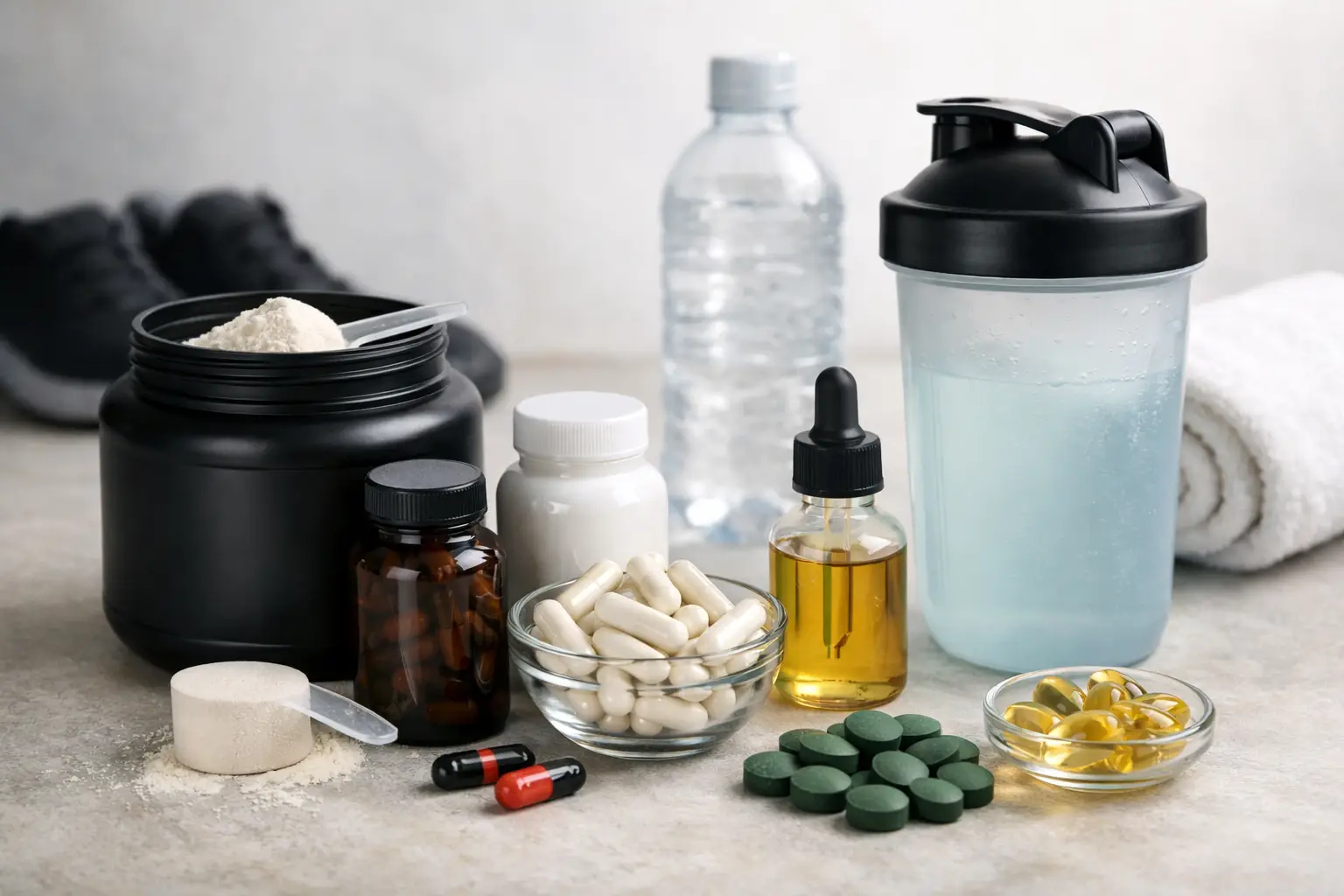
Form matters too. Powders are convenient for post-workout routines. Capsules are easier for daily habits. Drink mixes can make hydration easier if plain water is not cutting it. The best product is often the one you will actually use consistently.
A simple stack for most active adults
For most people, a practical recovery setup is not complicated. Protein powder covers muscle repair. Creatine supports performance and repeat training capacity. Electrolytes help with hydration and cramp prevention. From there, magnesium or tart cherry can be added based on individual needs.
That approach keeps your stack focused and budget-friendly while still hitting the main drivers of recovery. It is also easier to evaluate what is working when you add products with a purpose instead of taking five things at once just because they looked good on a best-sellers page.
If you are building a routine around hard training, home-gym consistency, and real progress, recovery deserves the same attention as your workouts. The right supplement stack will not replace sleep, smart programming, or a solid meal plan – but it can absolutely help you bounce back faster, train better, and feel more ready for what is next. FitwellGoods shoppers know the advantage of buying by goal, and recovery is one category where a smarter pick can pay off every single week.