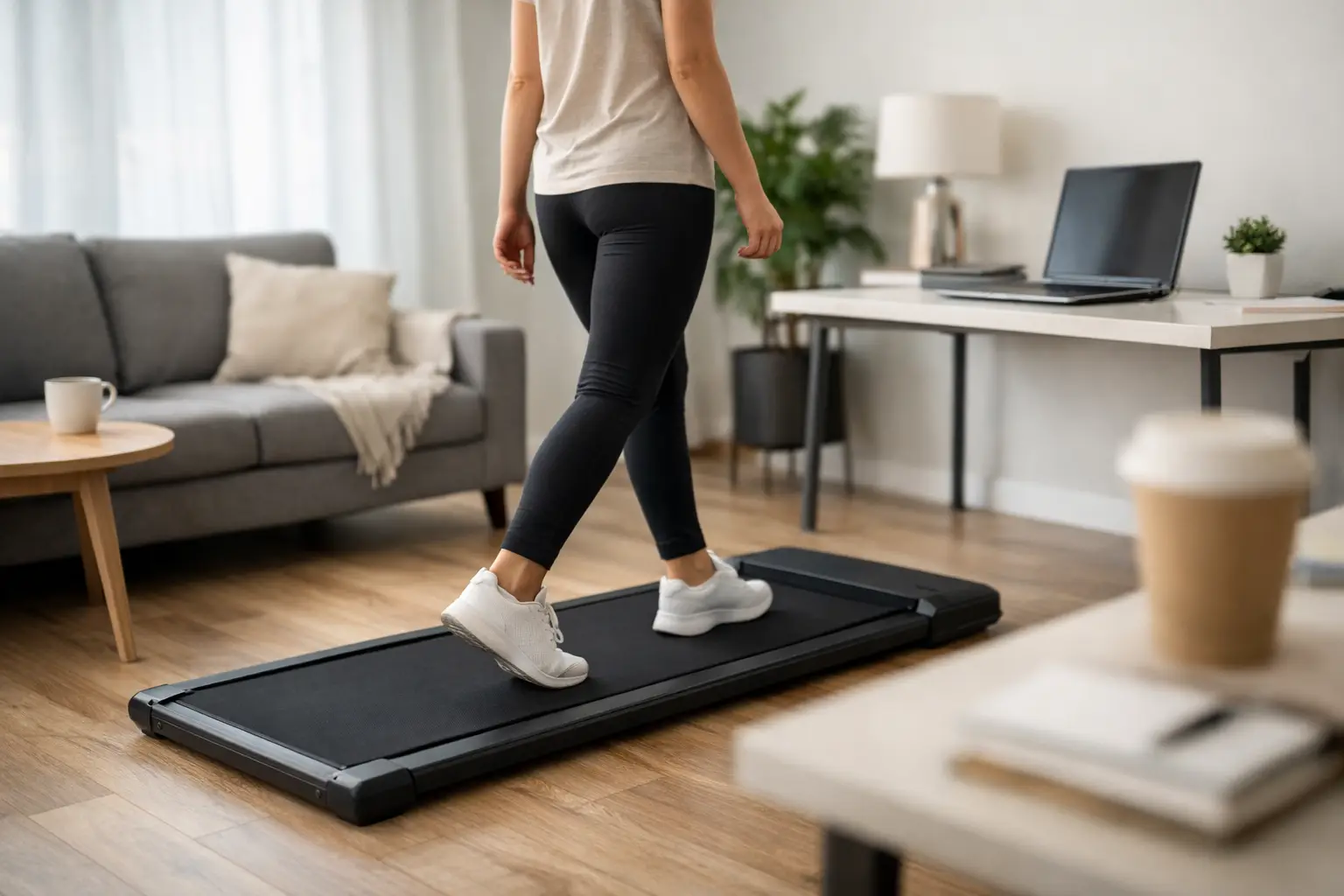
A walking pad can turn the slowest part of a workday – sitting still – into a steady stream of steps. But a slim treadmill is not automatically the right cardio buy for every home. This walking pad treadmill review looks past the compact design and viral desk-walking appeal to help you decide whether one will genuinely support your goals, your space, and your routine.
For busy professionals, apartment dwellers, and anyone building a practical home fitness setup, the appeal is obvious: walk while answering emails, watching a show, or fitting in extra movement before dinner. The best results come from matching the machine to how you really plan to use it, not just how good it looks tucked under a couch.
What Is a Walking Pad Treadmill?
A walking pad is a low-profile treadmill designed primarily for walking. Most models are lighter, shorter, and easier to store than a traditional treadmill, with a deck that can slide under a bed, sofa, or standing desk. Some fold at the handrail, while others skip the handrail entirely to stay as compact as possible.
The key difference is purpose. A standard treadmill is built to handle everything from easy walking to hard intervals and regular running. A walking pad is usually made for low-impact movement, daily step goals, and light cardio. That makes it a strong fit for active recovery, calorie-conscious routines, and work-from-home movement, but not always for runners training for speed or distance.
Walking Pad Treadmill Review: The Real Benefits
The biggest win is convenience. If your equipment is easy to access, you are more likely to use it. A walking pad removes the setup barrier that can make a workout feel like another task on a packed schedule. Step on for 10 minutes between meetings, then add another 15 minutes after lunch. Those small blocks can add up quickly.
Walking is also a smart lower-impact option. Compared with running, it puts less stress on joints while still supporting cardiovascular health, daily energy expenditure, and leg endurance. Pairing a walking routine with strength training, protein-focused nutrition, and recovery tools can create a more sustainable body-composition plan than relying on all-out workouts alone.
Storage is another major advantage. A full-size treadmill can dominate a room. A slim walking pad keeps your living area functional, especially in apartments, shared spaces, and smaller home gyms. For shoppers who want a cardio option without giving up an entire room, that matters.
Many users also find that desk walking makes long workdays feel less sedentary. The goal is not to power-walk through a spreadsheet at top speed. It is to keep the pace easy enough that you can focus, type, and hold a conversation. For most people, a controlled, comfortable walk works better than trying to turn every meeting into a workout.
The Trade-Offs You Should Know Before Buying
Compact cardio equipment has limits. The shorter deck on many walking pads can feel restrictive if you are tall, have a long stride, or tend to walk quickly. A deck that feels fine for a casual stroll may feel cramped during a more purposeful walk. Check both belt length and belt width rather than assuming all compact models feel the same.
Speed is the next consideration. Some walking pads top out around 3 to 4 mph, which is ideal for desk use and relaxed walking. Foldable hybrid models may reach jogging speeds, but they are not always as stable or durable as a traditional treadmill built for running. If running is a non-negotiable part of your plan, a standard treadmill is usually the better long-term investment.
Weight capacity matters just as much as speed. Do not treat it as a minor specification. The listed capacity should comfortably support the user, and shoppers near the maximum should prioritize a sturdier frame, stronger motor, and clear warranty coverage. A lower-priced unit can be a great deal, but only when it is rated for the way it will actually be used.
Noise can be another surprise. Walking pads are generally quieter than running treadmills, yet they are not silent. You will hear the belt, motor, and foot strike, especially on hard flooring. A quality exercise mat can reduce vibration and help protect floors, but it cannot make a machine completely quiet in a downstairs apartment or during a sleeping household’s early morning hours.
Features That Make a Walking Pad Worth It
When comparing models, focus on the features that change your day-to-day experience. A remote control can be convenient for quick speed adjustments, while a clear display makes it easier to track time, distance, speed, and estimated calories. App connectivity is useful for some shoppers, but it should not outweigh core build quality.
Look closely at these practical details:
- Motor rating and intended use: A stronger, well-cooled motor is more likely to hold up to frequent walking sessions.
- Deck size: Taller users and brisk walkers should prioritize a longer, wider belt.
- Foldability and storage height: Measure the exact space under your furniture before choosing a model.
- Handrail design: A handrail adds stability and may support higher speeds, while a flat design stores more easily.
- Controls and safety features: An accessible stop control, speed limits, and a secure power setup are especially useful in shared homes.
- Warranty and support: Moving equipment has wear parts. Clear coverage can be worth more than an extra app feature.
Also consider where the walking pad will live. A machine that requires lifting, moving furniture, and rerouting cords before every session may become a piece of expensive storage. If possible, give it a dedicated spot near your desk, TV, or preferred training area. Convenience is the feature you will feel every day.
Who Should Buy a Walking Pad?
A walking pad is a hot pick for people who want more movement without adding another intense workout. It works especially well for remote workers, beginners easing into cardio, people returning to exercise after time off, and home-gym shoppers with limited square footage. It can also support a step-based weight-management routine when paired with consistent meals, hydration, strength sessions, and realistic sleep habits.
It is not the best choice for everyone. Serious runners, high-intensity interval fans, and larger households that expect one machine to handle heavy daily use may be happier with a full treadmill. The same is true for users who need substantial handrail support for balance. In that case, stability should beat storage convenience every time.
For a balanced home setup, think of a walking pad as one piece of the system. Use it for low-intensity cardio and daily steps, then add resistance training with dumbbells, kettlebells, or bands to build muscle and support stronger long-term progress. A foam roller, supportive cross-training shoes, and recovery-focused nutrition can round out the routine without cluttering your space.
How to Use It Without Burning Out
The most effective walking pad routine is usually the one that feels almost too easy to start. Begin with 10 to 20 minutes at a comfortable pace, three to five days per week. If you are using it under a desk, start slower than you expect. Typing and walking at the same time takes a little practice, and a controlled pace is safer than chasing a number on day one.
For a simple daily movement plan, walk for 10 minutes in the morning, 10 minutes after lunch, and 10 minutes in the evening. That approach breaks up sitting time and feels more manageable than one long session. If your goal is fat loss, avoid treating the walking pad as a shortcut. It can increase activity, but consistent nutrition and resistance training still do the heavy lifting for lasting changes.
Wear stable athletic shoes rather than loose slippers, keep the walking surface clear, and avoid using the machine while distracted by tasks that require both hands and full attention. If you have joint pain, dizziness, balance concerns, or a medical condition that affects exercise tolerance, check with a qualified health professional before starting a new routine.
Is a Walking Pad a Smart Buy?
A walking pad is worth buying when it solves a real obstacle: lack of time, lack of space, or too much sitting. It earns its place when you will use it consistently for walking, not when you expect it to replace a runner’s treadmill at a fraction of the size and price.
Before you shop, measure your floor space and storage space, compare deck dimensions and user weight limits, and decide whether you need a handrail or a true under-desk design. Then build the habit around it. Fitness starts with every step, and the right compact cardio machine can make those steps far easier to keep.