Your shoes can make a great workout feel dialed in – or make every rep, stride, and side shuffle feel awkward. The real question behind cross training shoes vs running shoes is not which style looks better. It is whether your footwear supports the way you actually move.
If your routine includes treadmill miles, strength circuits, HIIT classes, squats, and quick trips between the gym and work, one pair may not be the best answer for every session. Knowing what each shoe is built to do helps you train with more confidence, get more from your gear, and avoid buying a pair that ends up collecting dust in the closet.
Cross Training Shoes vs Running Shoes: The Core Difference
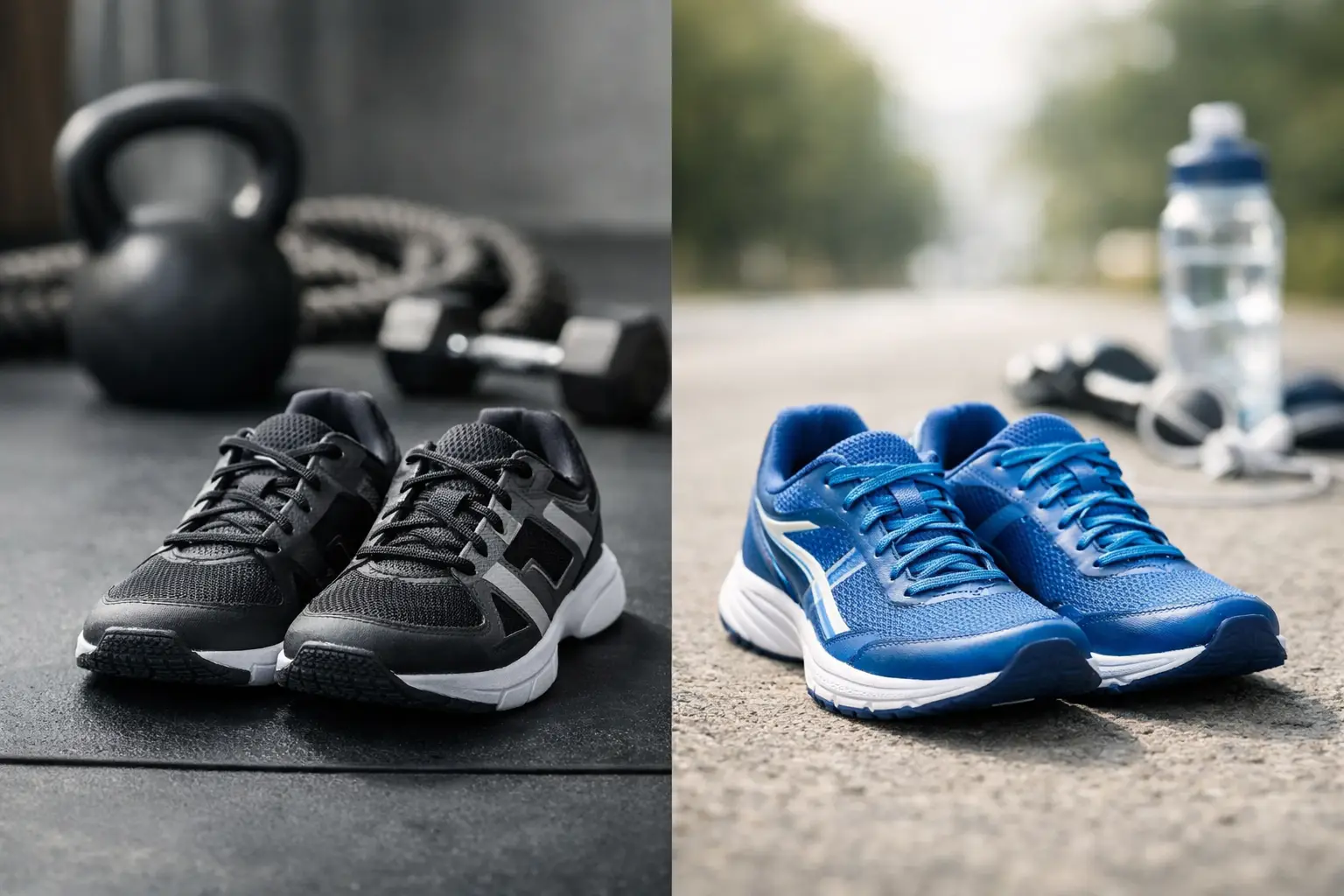
Running shoes are designed to move you forward, repeatedly and efficiently. Their priority is cushioning impact, supporting a smooth stride, and keeping your feet comfortable over miles of mostly straight-ahead motion. They tend to have a higher heel, softer foam, and a curved shape that helps your foot roll from landing to toe-off.
Cross training shoes are built for variety. Think squats, deadlifts, lunges, kettlebell swings, burpees, box jumps, agility drills, and group fitness classes. They usually have a flatter, firmer base that keeps you more stable when you lift or change direction. The upper is often more structured, and the outsole is designed to grip gym flooring during side-to-side movement.
Neither is automatically better. The best choice depends on what takes up most of your training week.
What Running Shoes Do Best
A quality running shoe earns its place when running is the main event. Whether you are logging neighborhood miles, building up for a 5K, using a treadmill at home, or taking recovery walks, the extra cushioning can reduce the harsh feel of repeated impact on pavement and treadmill decks.
The midsole foam in running shoes is typically softer and thicker than what you find in training shoes. That softness helps absorb force as your feet hit the ground thousands of times during a run. Many models also use a noticeable heel-to-toe drop, meaning the heel sits higher than the forefoot. This shape can feel natural for runners who land on their heel and want a rolling, forward-moving ride.
Running shoes also tend to be lighter. Less weight on your feet can make longer distances feel easier, especially when your stride is repetitive and your goal is steady pacing rather than rapid directional changes.
That same softness can become a drawback in the weight room. When you squat or deadlift in a highly cushioned shoe, your foot may feel less connected to the floor. The foam can compress under load, creating a slightly unstable platform when you want your base to feel planted.
Choose running shoes when you mostly:
Run more than you lift, train for races, walk long distances, use a treadmill for extended cardio sessions, or want a comfortable pair for easy daily movement. If your workout is 30 to 60 minutes of continuous running, a running shoe is usually the more comfortable and purpose-built option.
What Cross Training Shoes Do Best
Cross training shoes are the workhorses of mixed workouts. Their flatter profile gives you a more grounded feel for strength work, while the stable heel helps during movements where balance and force transfer matter. If you are pressing overhead, holding a plank, doing split squats, or driving through a heavy set of goblet squats, that stable base is useful.
They also handle lateral movement far better than most running shoes. In a HIIT class, bootcamp session, or home circuit, you may move forward, backward, sideways, and diagonally in a matter of minutes. Cross trainers are made to support those shifts without feeling overly tall or wobbly.
The outsoles are often wider and grippier for indoor surfaces. A broader base can give you more confidence when you step into lunges, perform mountain climbers, or work through agility ladder drills. Durable sidewalls may also stand up better to rope climbs and other functional training work than the lightweight mesh common on many running shoes.
The trade-off is mileage. Cross trainers can handle short warm-up jogs, sprint intervals, and a quick run to finish a circuit. But their firmer cushioning may feel unforgiving on a three-, five-, or ten-mile run. They are built to keep you stable, not to make repetitive road impact feel especially soft.
Choose cross training shoes when you mostly:
Lift weights, attend functional fitness classes, do HIIT, train at home with dumbbells and kettlebells, use agility equipment, or combine cardio bursts with strength work. They are a smart fit for the person whose workout changes by the day and who wants one dependable pair for the gym floor.
Cushioning, Stability, and Drop Explained
Three design details make the difference easier to feel: cushioning, stability, and heel-to-toe drop.
Cushioning is the foam underfoot that softens impact. Running shoes generally offer more of it, which is ideal for long, repetitive runs. Cross trainers use firmer cushioning so your feet do not sink when you apply force during lifts and jumps.
Stability is how secure your foot feels on the ground. Cross training shoes normally win here because they have a wider, lower base. Running shoes may feel less stable during lateral drills because their taller foam stacks are designed for forward motion, not quick cuts.
Heel-to-toe drop is the height difference between the heel and forefoot. Many running shoes have a moderate or high drop, while cross trainers usually sit closer to the ground. A lower, flatter shoe can help some lifters feel more balanced, but it may require time to adjust if you are used to a highly cushioned running shoe.
Do not assume that more cushion always means more comfort. Comfort is activity-specific. A soft shoe feels great on a long jog, while a firm shoe often feels better under a loaded barbell or during a fast circuit.
Can You Run in Cross Training Shoes?
Yes, for short distances and conditioning work. If your routine includes a half-mile warm-up, treadmill intervals, shuttle runs, or occasional 1- to 2-mile jogs, cross trainers are usually up to the job. They are especially practical when the run is only one part of a broader workout.
The line changes when running becomes your primary training goal. Regular longer runs in a cross trainer may leave your feet, calves, or joints feeling more beat up because the shoe is not designed for sustained impact. Your stride can also feel stiff compared with a dedicated running shoe.
Likewise, you can lift in running shoes, particularly for light dumbbell work or beginner routines. But for heavy lower-body training, explosive movements, or workouts requiring quick direction changes, a cross trainer usually provides a safer, more controlled foundation.
Do You Need Both Pairs?
If you run consistently and strength train consistently, owning both is less of a luxury than it sounds. You do not need a massive shoe rotation. A dependable running pair and a durable cross training pair cover most fitness plans while allowing each shoe to do its intended job.
This approach can also make both pairs last longer. Instead of grinding down your running shoes with lateral drills or wearing out your cross trainers on long pavement runs, you can match the shoe to the session. That is a practical upgrade for anyone building a home gym, starting a new program, or training toward body-composition and performance goals.
If your budget calls for one pair, choose based on your most frequent activity. Spend most of your week on cardio machines, sidewalks, or treadmill runs? Start with running shoes. Spend most of it lifting, doing circuits, or following on-demand fitness classes? Start with cross trainers.
How to Pick the Right Pair for Your Routine
Before you shop, look at your last two weeks of workouts instead of the workouts you hope to do someday. Your actual habits are the best guide. A runner who lifts twice a week needs different footwear than a lifter who finishes sessions with 10 minutes of incline walking.
Pay attention to fit first. Your toes need room to spread, your heel should stay secure, and the upper should not pinch across the widest part of your foot. Try shoes on later in the day if possible, when feet may be slightly more swollen. Wear the socks you train in, not thin dress socks that give a misleading fit.
Also consider your training surface. Road runners need a shoe that manages repeated hard impact. Treadmill users can often prioritize comfort and fit over aggressive outsole grip. Gym-goers and home exercisers should look for a stable sole with reliable traction on rubber mats, wood floors, or carpeted workout spaces.
A fresh pair of shoes will not replace smart programming, recovery, or consistent effort. But it can make your next workout feel more secure from the first warm-up set to the final cooldown. Choose the pair that meets your real training needs, then put it to work.