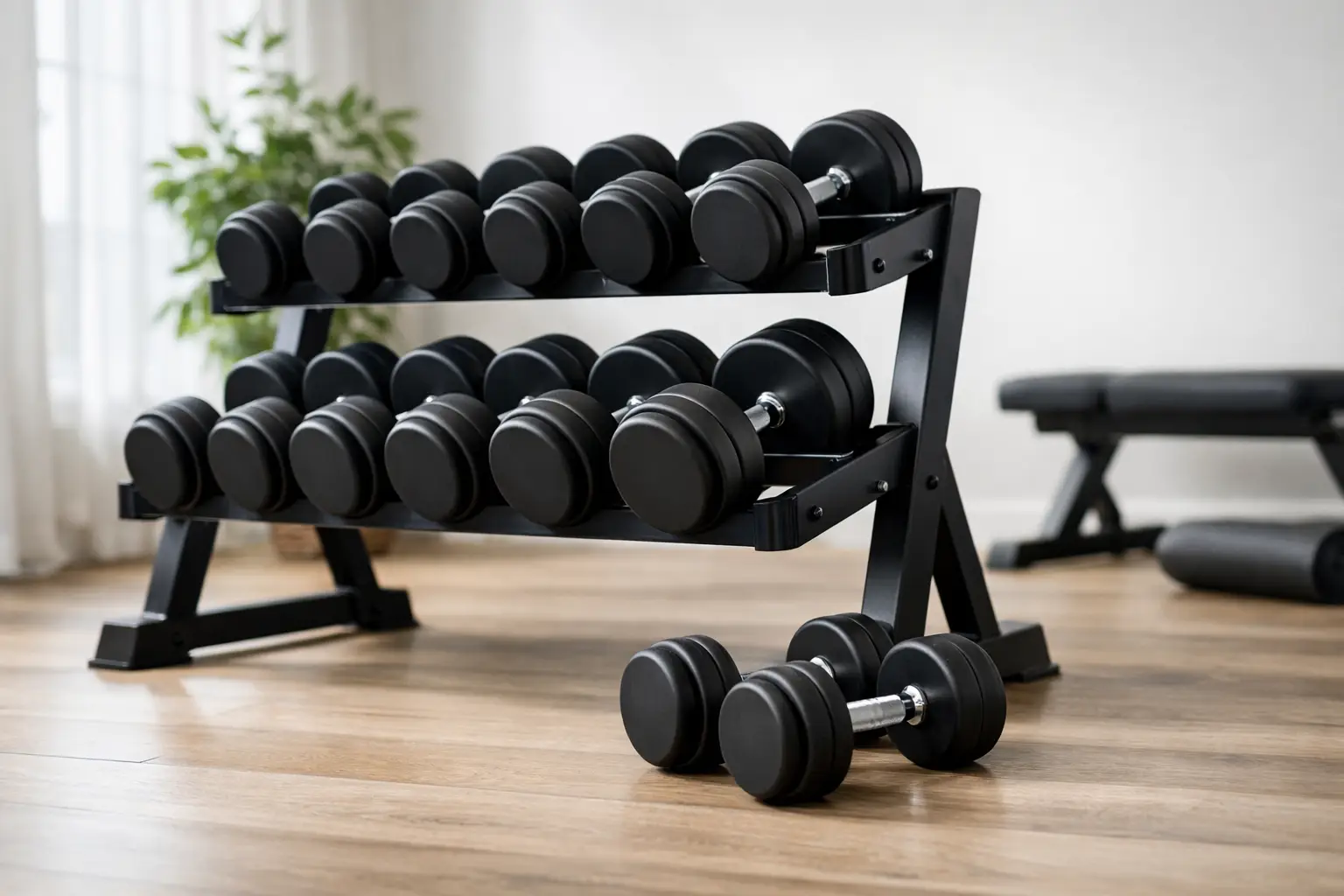
A dumbbell set with a rack for home training does more than make a workout space look organized. It removes the little barriers that derail consistency: hunting for matching weights, tripping over loose dumbbells, or realizing your next pair is buried under a mat. When every weight has a place, you can move from warm-up to working sets without losing momentum.
For busy lifters, beginners building a first setup, and experienced gym-goers tired of crowded commercial gyms, this is one of the smartest strength upgrades to make. The right combination gives you room to progress, supports full-body training, and turns a spare bedroom, garage corner, or basement wall into a workout zone you will actually use.
Why a Dumbbell Set With a Rack Belongs in a Home Gym
Dumbbells are among the most versatile tools in any training plan. A single set can cover presses, rows, lunges, squats, Romanian deadlifts, curls, carries, core work, and conditioning circuits. Unlike machines, they let each side of the body work independently, which can help you build better balance, coordination, and joint control.
The rack is what makes a full set practical at home. Individual dumbbells spread across the floor take up more usable space than most people expect. They also make quick weight changes annoying. A compact rack keeps pairs visible, protects flooring from unnecessary drops, and gives your space the clean, ready-to-train feel that makes showing up easier.
There is a safety benefit, too. Heavy dumbbells left on walkways become a toe-stubbing hazard. Storing them at a stable, accessible height means less bending, less clutter, and fewer awkward attempts to lift a pair from the ground when you are already fatigued.
Start With Your Training Goals, Not the Biggest Set
More weight is not automatically a better buy. The best dumbbell set with a rack for home use is the one that matches your current strength, your training style, and the exercises you plan to repeat every week.
If fat loss, general fitness, and functional circuits are your focus, a broad range of lighter to moderate pairs may serve you better than a set that jumps quickly into very heavy weights. You need options for shoulder raises, chest presses, goblet squats, lunges, and fast-paced complexes. Smaller increments matter because they allow you to keep improving without sacrificing form.
If your priority is building muscle, look for enough loading potential for major movement patterns. Most lifters outgrow light dumbbells first on rows, presses, squats, deadlifts, and carries. You may still use lighter weights for isolation work, but your setup should leave room to challenge your back, chest, legs, and glutes over time.
For a two-person household, consider the range of both lifters. A set that feels ideal for one person can be limiting for the other. This is where a larger fixed-weight collection or a rack paired with adjustable dumbbells can make sense.
Fixed dumbbells versus adjustable dumbbells
Fixed dumbbells are fast, simple, and built for smooth transitions. Pick up the pair you need, train, return it to the rack, and move on. They are especially useful for supersets, circuits, and anyone who wants a commercial-gym rhythm at home. The trade-off is footprint and upfront cost, particularly as the weight range expands.
Adjustable dumbbells save space because one pair can replace many. They are a strong choice for small apartments and minimalist training areas. However, adjusting between sets can interrupt a fast workout, and some designs feel bulkier than fixed weights. If you train with timed intervals or share equipment, dedicated pairs on a rack may be worth the extra room.
Choose a Weight Range That Lets You Progress
Progressive overload is the engine behind strength and muscle gains. You can add reps, improve control, increase training volume, or move to a heavier load. A dumbbell collection that skips too many increments makes that last option harder.
For many home gyms, five-pound jumps work well through the middle of the range. Lighter jumps can be valuable for shoulders, arms, rehab-minded training, and smaller muscle groups. A five-pound increase in each hand can feel dramatically different on a lateral raise, while it may be manageable on a row or squat.
Before buying, think through a simple week of training. What would you use for a chest press? A one-arm row? Split squats? Biceps curls? A loaded carry? Your answers reveal where you need more range. Someone who enjoys HIIT workouts may need several light and moderate pairs. Someone training for strength may be better served by fewer light options and heavier top-end weights.
Do not buy only for where you are today. Choose a setup that gives you a realistic runway for the next six to 12 months. That usually delivers more value than replacing a limited set after a few consistent training blocks.
Measure the Room Before You Chase the Deal
A rack may look compact online, but its real footprint includes the space you need to load, unload, and train around it. Measure the wall area, then leave clear room in front of the rack so you can safely pick up dumbbells and step into your first set.
A garage or basement gives you more flexibility, but apartment and bedroom setups need careful planning. In tighter spaces, a vertical rack or narrow A-frame design can work well. In wider home gyms, a horizontal rack can make every pair easier to see and reach. The best design depends on your room layout, not just the number of dumbbells it holds.
Also check floor protection. Rubber flooring, dense exercise mats, or a dedicated lifting platform can reduce noise and help protect both your equipment and the surface underneath. This matters most if you live above someone else or train early in the morning.
Rack stability is not a minor detail
Look for a rack with a solid base, secure cradles, and enough capacity for the total weight you plan to store. A rack should feel planted when you remove a heavy pair from one side. If the shelf angles are too shallow or the dumbbells do not sit securely, the storage system becomes frustrating instead of helpful.
Hex dumbbells are a popular home-gym choice because their shape helps prevent rolling. Round dumbbells can feel excellent in hand, but they need a rack designed to hold them properly. Match the rack to the dumbbell style rather than assuming any stand will work with any set.
Material, Grip, and Durability Matter Every Session
Cast iron and rubber-coated dumbbells are proven choices for home training. Rubber coatings can help reduce noise, protect floors, and limit wear from daily use. They may carry a stronger odor when new, especially in enclosed rooms, so allow your training space to air out if needed.
Neoprene and vinyl dumbbells are comfortable for light workouts, mobility sessions, and beginner-friendly training. They are not usually the best primary option for someone planning to lift heavier over time. If your goal is long-term strength progress, prioritize a durable set that can handle regular loading and occasional contact with the floor.
Pay attention to handle feel. A grip that is too thick can make curls, presses, and rows uncomfortable for smaller hands. A handle that is too slick can become an issue during longer circuits. Moderate knurling or a textured grip often offers the best balance between control and comfort.
Build a Training Zone That Makes You Want to Use It
Your dumbbell rack can become the center of a simple, high-performing home gym. Place a bench nearby for presses, supported rows, step-ups, and split squats. Add resistance bands for warm-ups and mobility work, plus a foam roller for recovery after hard sessions. If conditioning is part of your goal, a jump rope, exercise bike, or rowing machine can turn the same space into a complete training station.
Keep your most-used equipment within reach, but do not overcrowd the area. A clean setup makes workouts feel easier to start. Put your water bottle, workout towel, and training log in one spot. Lay out your activewear the night before. These small moves help turn good intentions into completed sessions.
For a quick full-body session, choose a moderate pair and rotate through goblet squats, floor presses, one-arm rows, Romanian deadlifts, and overhead presses. Use lighter weights for lateral raises, curls, and triceps work at the end. You do not need a complicated program to get results. You need equipment that supports repeatable effort and a plan you can stick with.
A well-chosen dumbbell set and rack is a long-term investment in stronger workouts at home. Shop your weight range, room dimensions, and goals first, then look for hot picks and value-focused bundles that help you build a setup without buying gear you will not use. FitwellGoods makes it easier to pair your strength essentials with the training accessories, activewear, and recovery support that keep your next workout moving forward.