A bad pair of running shorts can ruin a solid workout faster than heat, chafing, or a phone bouncing against your leg for three miles. The right shorts for running men do the opposite – they disappear once you start moving, keep you cool, and help you stay locked in from warm-up to cooldown.
That matters whether you’re logging easy morning miles, mixing treadmill runs into a strength split, or pushing pace work after a long day at work. Good running shorts are not just about style. They are about comfort under motion, support where you need it, and small design details that save you from constant mid-run adjustments.
What makes shorts for running men actually good?
The best running shorts solve problems before they start. They reduce friction, manage sweat, move with your stride, and carry just enough without turning every run into a gear haul. If a pair looks great but rides up, traps heat, or feels heavy once sweat kicks in, it is not doing the job.
Fabric is the first filter. Lightweight, quick-drying material tends to win because it keeps the short from getting soggy and clingy. Stretch helps too, especially if your runs include hills, sprints, or mobility work before and after. A stiff short can feel fine standing still and terrible once your pace picks up.
Fit is the second filter, and this is where a lot of men buy wrong. Too loose and the shorts can bunch or flap. Too tight and they restrict stride or create pressure at the waist and thighs. The sweet spot is a secure fit that stays in place without needing the drawcord every few minutes.
Then there is the liner question. Some runners swear by built-in liners because they cut down on layers and help with support. Others prefer unlined shorts and wear their own compression base layer underneath. Neither is universally better. It depends on your comfort, the distance you run, and how sensitive you are to seams and friction.
How to choose the right inseam
Inseam changes how running shorts feel more than most shoppers expect. A 3-inch or 5-inch inseam usually feels faster, lighter, and less restrictive. It is a favorite for race day, speed sessions, and runners who hate extra fabric. The trade-off is coverage. Some men love the freedom, while others feel overexposed or deal with more thigh friction.
A 7-inch inseam is the middle ground for a reason. It gives more coverage, works well for everyday training, and tends to suit a wider range of body types. If you are buying one pair to handle everything from treadmill intervals to outdoor weekend miles, this is often the safest place to start.
A 9-inch inseam can work for men who want more coverage or who simply prefer a traditional gym-short feel. For pure running, though, longer shorts can sometimes get in the way, especially if the fabric is not very light. They can also hold more heat in summer.
If your thighs touch when you run, shorter is not always better. In that case, either a liner that fits well or a short with enough length to reduce rubbing can make a major difference.
Lined vs unlined shorts for running men
This choice is personal, but it should still be strategic. Lined shorts are convenient. You pull them on and go. A good liner adds support, helps manage sweat, and can reduce shifting under the outer shell. For men who want fewer layers and less decision-making, lined options are often the move.
Unlined shorts give you more control. If you already have compression shorts you trust, unlined running shorts let you build your own setup. This can be especially useful for longer runs, cooler weather, or men who need a different level of support than built-in liners usually provide.
The downside of lined shorts is that a bad liner is hard to ignore. If it pinches, rides up, or uses rough seams, every mile reminds you. The downside of unlined shorts is bulk. If your base layer and outer short do not work together, the combo can feel hot and overbuilt.
For beginners, lined shorts are often the easiest starting point. For experienced runners who know exactly what irritates their skin or what support they want, unlined can be the better call.
The features worth paying for
Not every extra feature matters, but a few are worth it. Waistbands should sit flat and secure without digging in. A decent drawcord helps when fabric relaxes mid-run from sweat. Zipper pockets are useful if you carry keys or a card, though too much storage can make shorts feel bulky.
Phone storage is where things get tricky. Some shorts advertise large pockets, but that does not always mean they run well with a phone inside. Bounce is still bounce. If you carry a device, look for a pocket placed close to the body, often at the back of the waistband or built into a compression liner.
Ventilation also matters more in hot weather than many men realize. Side splits, lighter fabrics, and mesh panels can make shorts feel dramatically better on humid runs. Reflective details are another bonus if you train early or after dark.
If you are browsing deal sections or hot picks, do not get distracted by color alone. Focus on fabric weight, liner quality, pocket placement, and inseam before anything else.
Matching your running shorts to your training
Not every run asks for the same short. That is why serious runners often keep more than one style in rotation. If your week includes easy runs, lifting, HIIT, and one longer session, one pair may handle some workouts well and feel wrong for others.
For speed work, shorter and lighter usually wins. You want minimal drag, less fabric movement, and zero distractions. For long runs, comfort gets top priority. That may mean more storage, a better liner, or a waistband that stays comfortable for an hour or more.
For treadmill running, breathability is huge because indoor heat can build fast. Outdoor runners may care more about weather adaptability, especially if they train through changing seasons. If your shorts need to pull double duty for lifting and running, choose a pair with enough stretch and a moderate inseam so they feel stable under a barbell and free enough on the move.
This is where shopping smart beats shopping fast. A pair that is great for general gym sessions is not automatically a great pair for pounding pavement.
Common mistakes men make when buying running shorts
The first mistake is buying based on looks alone. Clean design helps, sure, but performance comes from construction. A sharp-looking short that chafes is dead weight in your drawer.
The second mistake is choosing too much fabric. Men often assume longer or roomier means more comfortable. Sometimes it does. Often it just means more movement, more heat, and more chances for irritation.
The third mistake is ignoring the waistband and liner because they are less visible. Those are the parts you feel the most. If either one is off, the whole run suffers.
The fourth mistake is treating all workouts the same. If you mainly run 5Ks, your needs are different from someone training for a half marathon or mixing runs with heavy leg days. Your gear should match your routine, not someone else’s highlight reel.
How many pairs do you really need?
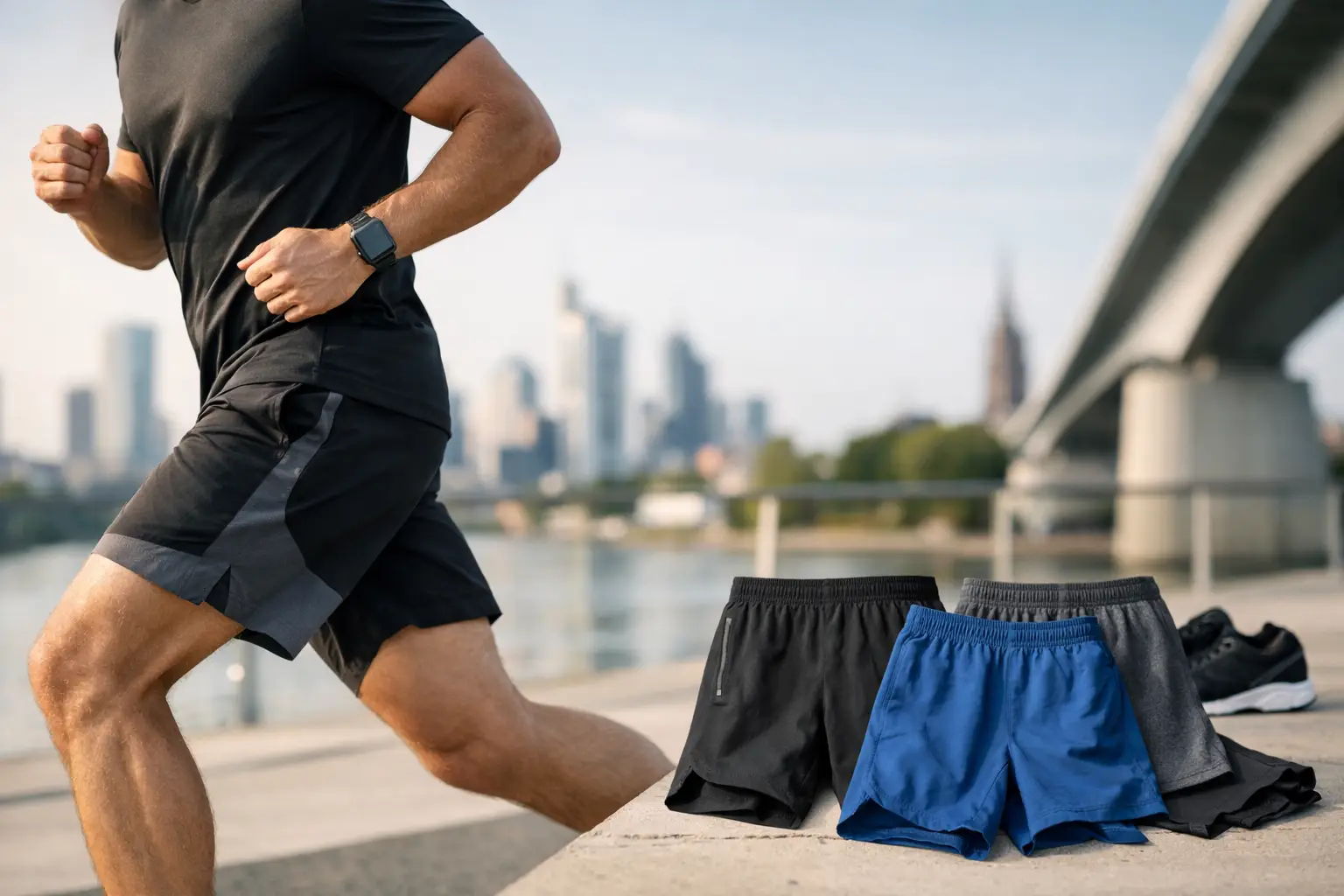
For most active men, two to three solid pairs is enough to cover a smart rotation. One lightweight pair for faster or shorter runs, one comfort-focused pair for longer sessions, and maybe one crossover pair for gym training and cardio. That setup keeps laundry pressure low and gives you options when weather or workout style changes.
If you train often, building a small rotation also extends the life of each pair. Sweat, washing, and repeated friction wear down fabric over time. Rotating shorts helps maintain elasticity, liner support, and overall comfort.
This is also where value matters. A strong deal on the right pair beats paying full price for hype. If you are already upgrading your activewear, it can make sense to shop your running shorts alongside training tops, recovery tools, or other essentials at a one-stop retailer like FitwellGoods, especially when bundle savings or limited-time offers are in play.
The best shorts for running men feel boring in the best way
That is the real test. The best pair does not demand attention once the run starts. No tugging the hem. No adjusting the waistband. No thinking about sweat, bounce, or rubbing. Just a clean fit, easy movement, and one less thing slowing you down.
If you are shopping for shorts for running men, think past the product photo and buy for the miles you actually run. The right pair can make training feel smoother from day one, and that kind of upgrade pays off every time you lace up.