
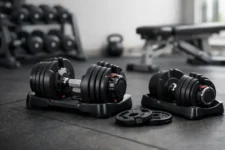
A cheap spinlock that rattles after a month and a well-built adjustable set that stays tight for years are not the same story. If you’re asking do adjustable dumbbells last, the real answer is yes – but only if you buy the right design for the way you train and treat them like equipment, not indestructible garage junk.
For busy lifters building a home setup, adjustable dumbbells can be a smart win. They save space, cut clutter, and make it easier to move from presses to rows to goblet squats without a full rack taking over the room. The trade-off is simple: more moving parts usually means more things that can wear out. That does not make them fragile by default. It just means durability depends on construction, use, and maintenance.
Do adjustable dumbbells last in a real home gym?
In a real-world home gym, adjustable dumbbells can last for years. Many sets hold up through regular weekly training with no major issues, especially when they are used on rubber flooring, stored correctly, and not dropped. A quality set used three to five times a week for controlled strength work can easily outlast a lot of low-end fitness gear.
What shortens lifespan is usually not normal lifting. It is impact, sloppy storage, dust getting into the mechanism, forcing weight changes, or buying a design that is not built for your training style. If you love fast-paced circuits, heavy rows, and the occasional rushed set change, you need a sturdier system than someone doing moderate presses and lunges a few times a week.
That is why the question is less about whether adjustable dumbbells last and more about which type lasts best for you.
The biggest factor is the design
Not all adjustable dumbbells use the same mechanism, and durability changes a lot from one style to another.
Selectorized models are popular because they are fast and compact. You turn a dial, move a pin, or slide a selector, and the dumbbell changes weight in seconds. They are convenient, and convenience matters when you want smooth workouts at home. But they also have internal parts that can wear down over time. Plastic cradles, selector pins, and locking tracks can become problem areas if the set is dropped or handled roughly.
Plate-loaded adjustable dumbbells usually last longer under hard use because the design is simpler. You manually load plates and secure them with collars. They take more time to change, but fewer internal mechanisms means fewer delicate failure points. If your priority is long-term toughness over speed, this style often wins.
There is also a middle ground with hybrid designs that aim to balance quick changes with heavier-duty construction. These can be a strong value if the materials are solid, but quality control matters a lot. Two sets can look nearly identical online and perform very differently after six months.
What usually wears out first
The handle itself is rarely the issue. Most problems start in the adjustment system.
Locking pins can bend or stop seating cleanly if they are forced into place. Dials can become sticky if chalk, dust, or debris builds up. Plastic trays can crack if the dumbbells are slammed back in carelessly. On some cheaper sets, the plates develop play and start to shift slightly during reps, which feels annoying at first and unsafe later.
The other weak point is the connection between the handle and the loaded weight. Any looseness there tends to get worse over time. If a dumbbell starts making new sounds, wobbles more than usual, or requires fiddling just to lock in, that is a sign the wear is no longer cosmetic.
This is where buying the lowest price on the page can backfire. A deal feels great on checkout day, but if the locking mechanism gets unreliable fast, you did not really save money.
Build quality matters more than max weight
A lot of shoppers focus on the weight range first. That makes sense, but durability often comes down to materials and fit, not just how heavy the dumbbell goes.
A 50-pound set with solid steel components, clean machining, and a secure lock can outlast a shaky 90-pound set built with more plastic and looser tolerances. Heavier adjustable dumbbells also put more stress on every moving part. If the engineering is not there, high max weight can actually expose weaknesses faster.
Look at the grip, the locking mechanism, the tray, and how tightly the plates sit when loaded. A dumbbell that feels compact and secure usually gives you a better long-term experience than one that simply advertises a bigger number.
For most home gym users, durability is really about repeatability. Can you pick it up hundreds of times, change weights quickly, and trust that it feels the same session after session? That is the standard that matters.
How your training style changes lifespan
If your workouts are controlled and strength-focused, adjustable dumbbells tend to last longer. Presses, split squats, rows, curls, and shoulder work are generally not hard on the equipment when you lower the weight with control.
If you train with explosive reps, fast circuits, or high-volume sessions where the dumbbells are constantly being rushed back into the cradle, wear happens faster. The same goes for anyone who drops weights after sets. Most adjustable dumbbells are not designed for repeated drops, even from a short height.
That does not mean you need to baby them. It means you should match the product to the job. A lifter doing traditional hypertrophy work can get excellent long-term value from a good adjustable set. Someone training like every workout is a timed competition may be better off with fixed dumbbells for the most abusive movements.
How to make adjustable dumbbells last longer
A little care goes a long way here, and it does not take much extra effort.
Set them down, do not drop them. Place them back into their tray squarely instead of sliding them in at an angle. Keep the mechanism clean, especially if you train in a garage or use chalk. Store them in a dry space so moisture does not creep into metal parts. Check the locking action regularly. If something feels off, stop and inspect it before the next heavy set.
Flooring matters too. Rubber mats help absorb impact and reduce wear on both the dumbbells and the tray. That is one of those home-gym upgrades that protects your gear and your floors at the same time.
If you share equipment with family or roommates, make sure everyone knows how to change the weight correctly. A lot of damage comes from forcing a selector that is slightly misaligned.
Are adjustable dumbbells worth it if they might wear out?
For most people, yes. The value is not just in lifespan. It is in how much training variety you get without buying multiple pairs of fixed dumbbells or giving up half a room to storage.
A strong adjustable set can replace a large portion of a dumbbell rack, which is a big advantage for apartments, spare rooms, and compact garage gyms. It also makes progressive overload easier because you have more usable jumps in weight. That means better workouts with less friction, and that matters when consistency is the real goal.
The catch is that adjustable dumbbells are not all-purpose abuse tools. If you know you want to do heavy dumbbell snatches, repeated drop sets to the floor, or rough commercial-style use, they may not be your best long-term play. But for the average home user focused on efficient strength training, they can absolutely hold up and deliver solid value.
When adjustable dumbbells do not last
Usually, failure comes from one of three things: poor construction, poor fit for the workout style, or poor handling. Cheap materials fail faster. Overly complex mechanisms can become a headache. And even a good set will wear out early if it is dropped, stored badly, or used carelessly.
That is why comparison shopping matters. Look beyond the headline discount and check how the system locks, how the handle feels, and whether the set is built for your type of training. If you are already building out your space with benches, flooring, recovery tools, or other hot picks, it makes sense to think of your dumbbells as the centerpiece of the setup, not an afterthought.
For shoppers who want progress without the bulk of a full rack, adjustable dumbbells are still one of the smartest home-gym buys. At FitwellGoods, that kind of practical value is the whole point – gear that helps you train harder, save space, and keep momentum without making your setup more complicated than it needs to be.
The best way to think about it is simple: adjustable dumbbells can last a long time, but they reward smart buyers. Choose the right design, use them the way they were meant to be used, and they can stay in your rotation long after cheaper shortcuts start showing cracks.










&url=https://fitwellgoods.com/shop/yoga/yoga-mat-bags/gym-bag-with-yoga-mat-holder%ef%bc%8cyoga-mat-bags-fits-all-your-daily-stuff-for-womenno-yoga-mat/&media=https://m.media-amazon.com/images/I/41Ej7u-wlqL._SS1024_.jpg)


