
That first cardio session can go one of two ways – you finish feeling capable, or you finish feeling cooked. A smart elliptical workout plan for beginners keeps you in the first camp. The goal is not to survive 45 miserable minutes. It is to build consistency, improve stamina, and make the machine feel like a tool you can actually use week after week.
The elliptical is one of the best starting points for cardio because it gives you a low-impact workout without feeling too soft. Your joints take less pounding than they would on a treadmill, but you can still push your heart rate, train your legs, and build real endurance. For beginners, that matters. You want something tough enough to create progress and forgiving enough that you will come back for the next session.
Why an elliptical workout plan for beginners works
The biggest win with the elliptical is control. You can adjust resistance, speed, and incline on many machines, which means the workout can meet you where you are. If you are returning to exercise, carrying extra body weight, managing joint discomfort, or just trying to avoid the sore-knees trap, this machine gives you room to build up without getting wrecked.
It also solves a common beginner problem – going too hard too soon. On the elliptical, intensity is easier to scale in small steps. A slight bump in resistance can challenge your legs and lungs without forcing you into an all-out sprint. That makes it easier to stay in the effort zone where results happen.
There are trade-offs, of course. The elliptical does not build the same impact tolerance as running, and some people find the motion repetitive. If your only goal is road-race performance, it should not be your only cardio tool. But if your goal is fat loss, better conditioning, improved daily energy, or a reliable home workout habit, it is a strong play.
Before you start: get your setup right
A better setup makes the same workout feel smoother right away. Stand tall, keep your chest up, and let your feet stay flat against the pedals instead of lifting your heels. Grip the handles lightly if your machine has moving arms. You are looking for balance and rhythm, not a death grip.
Aim for a pace where your movement feels controlled. If you are bouncing, shrugging your shoulders, or leaning too heavily onto the handles, the resistance may be too high or you may be moving too fast. Smooth form usually beats aggressive settings, especially in the first few weeks.
It also helps to use a simple effort scale. Think of 1 as barely moving and 10 as an all-out effort you could only hold briefly. Most beginner workouts should live around a 4 to 6. You should be breathing harder but still able to get out a short sentence.
Your 4-week elliptical workout plan for beginners
This plan is built for three workouts per week. That is enough to create progress without turning cardio into a chore. On off days, walking, light mobility work, or strength training can fit well, but the foundation is these three sessions.
Week 1: Build comfort and rhythm
In week one, your job is to get familiar with the machine and finish each workout feeling like you had more in the tank.
Workout 1 starts with a 5-minute easy warm-up at low resistance. Then move into 10 minutes at a steady effort of 4 out of 10. Finish with a 5-minute cool-down. That is 20 minutes total.
Workout 2 uses the same 5-minute warm-up, then 12 minutes steady at a 4 to 5 effort, followed by a 5-minute cool-down. Total time is 22 minutes.
Workout 3 keeps the warm-up and cool-down the same, but in the middle you will alternate 1 minute slightly harder and 2 minutes easier for 12 minutes. Your harder minute should feel like a 6, while the easier minutes return to a 4. Total time is 22 minutes.
If that feels easy, good. Beginners often lose progress by mistaking exhaustion for effectiveness.
Week 2: Add time, not chaos
Now you will stretch the work period a little.
Workout 1 becomes a 5-minute warm-up, 15 minutes steady at a 5 effort, and a 5-minute cool-down. Total time is 25 minutes.
Workout 2 is your first light interval day. Warm up for 5 minutes, then do 6 rounds of 1 minute at effort 6 and 90 seconds at effort 4. Cool down for 5 minutes. Total time is 26 minutes.
Workout 3 is a longer easy session. Warm up for 5 minutes, ride 18 minutes at effort 4 to 5, then cool down for 5 minutes. Total time is 28 minutes.
The key this week is patience. If your breathing spikes too fast, reduce resistance before you reduce time. That keeps the habit intact.
Week 3: Start building capacity
By week three, the machine should feel more natural. This is where you can begin to push a little harder, but still with control.
Workout 1 is 5 minutes easy, 20 minutes steady at effort 5, then 5 minutes easy. Total time is 30 minutes.
Workout 2 uses rolling intervals. Warm up for 5 minutes, then do 5 rounds of 2 minutes at effort 6 and 2 minutes at effort 4. Cool down for 5 minutes. Total time is 30 minutes.
Workout 3 is a progression ride. Warm up for 5 minutes, then go 8 minutes at effort 4, 8 minutes at effort 5, and 6 minutes at effort 6. Cool down for 5 minutes. Total time is 32 minutes.
This week is often where confidence kicks in. You are not just exercising. You are training.
Week 4: Lock in the habit
Week four is about proving that you can handle more work without losing form or consistency.
Workout 1 is 5 minutes easy, 22 minutes steady at effort 5, and 5 minutes easy. Total time is 32 minutes.
Workout 2 is your toughest interval day so far. Warm up for 5 minutes, then complete 8 rounds of 1 minute at effort 7 and 90 seconds at effort 4. Cool down for 5 minutes. Total time is 29 minutes.
Workout 3 is your endurance test. Warm up for 5 minutes, ride 25 minutes steady at effort 5, and cool down for 5 minutes. Total time is 35 minutes.
If you finish week four feeling strong, you can keep progressing by adding 2 to 5 minutes to one workout each week, increasing resistance slightly, or adding one more interval round. You do not need to change everything at once.
How hard should beginner elliptical workouts feel?
A lot of people sabotage cardio by chasing calorie burn numbers on the screen. Those numbers can be motivating, but they are not the whole story. Your body responds better to repeatable training than random all-out efforts.
Most of your sessions should feel challenging but manageable. If every workout leaves your legs fried and your energy drained for the rest of the day, you are overshooting. If every workout feels like a lazy warm-up, you are undershooting. The sweet spot is finishing tired, not trashed.
There is also room for personalization. If you are brand new to exercise, three 20-minute workouts may be plenty at first. If you already walk a lot or have some gym experience, this plan may feel conservative. That is fine. You can nudge up time or resistance, but keep the overall structure.
Common mistakes beginners make on the elliptical
The first mistake is relying too much on the handles. When your upper body is doing all the stabilizing work and your lower body is just along for the ride, the workout gets less effective. Keep a light grip and let your legs drive the movement.
The second mistake is setting the resistance too high too soon. Heavy resistance can feel productive because it is hard, but if it wrecks your pace and form, it becomes a grind instead of a training session. Moderate effort done consistently will beat occasional hero workouts.
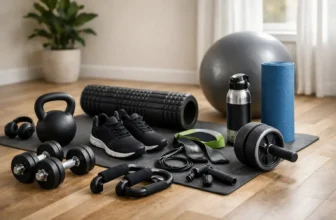
The third mistake is ignoring recovery. Even low-impact cardio adds up. Good shoes, breathable activewear, hydration, and basic recovery tools like a foam roller can make it easier to stay on track. If you are building out a home setup, this is where a one-stop shop like FitwellGoods can help you stack smart picks across cardio, apparel, and recovery without overcomplicating the process.
What results can you expect?
If you stick with this plan for four weeks, expect better cardio endurance first. You will likely notice that daily movement feels easier, your recovery between efforts improves, and your confidence on the machine goes way up. Depending on your nutrition and overall activity, you may also start seeing changes in calorie burn, body composition, or energy levels.
Just keep your expectations realistic. The elliptical can support weight loss, but it is not a shortcut by itself. Results depend on how often you train, how hard you work, what you eat, how well you sleep, and whether you stay consistent when motivation is not sky-high.
That is the real advantage of this plan. It is simple enough to repeat, flexible enough to adjust, and strong enough to build from. Start where you are, keep the pace honest, and let each session make the next one feel a little easier.