You finish leg day, stand up from the bench, and your quads immediately start negotiating. That is usually when the foam roller vs massage gun question gets real. Both tools promise faster recovery, less stiffness, and better movement, but they do not do the same job in the same way.
If you want the short version, a foam roller is better for broad muscle groups, mobility work, and budget-friendly recovery. A massage gun is better for targeted relief, quick sessions, and people who want less effort. The right choice depends on how you train, where you get sore, and whether you want a warm-up tool, a recovery tool, or both.
Foam roller vs massage gun: the real difference
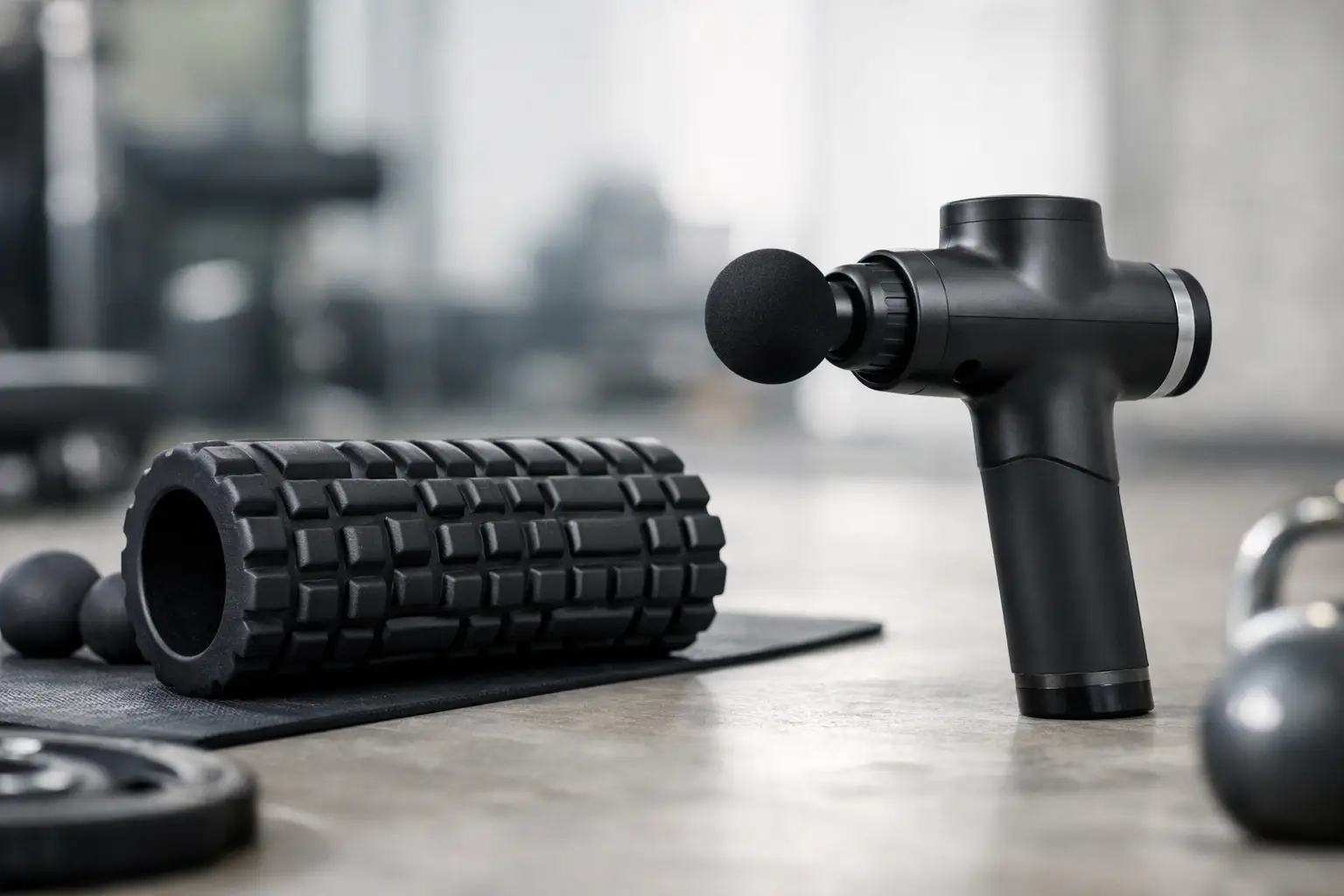
A foam roller uses your body weight to apply pressure across a larger area. You roll over the surface slowly, pause on tight spots, and let that pressure help reduce stiffness and improve how a muscle feels before or after training. Because the contact area is wide, it works especially well on the calves, quads, hamstrings, glutes, and upper back.
A massage gun delivers rapid percussive pressure through a small attachment head. Instead of you moving your body over a roller, the device does the work and lets you target a more specific area. That makes it useful for spots that feel knotted, hard to reach, or too sensitive for full bodyweight pressure.
That difference matters. One is broad and bodyweight-driven. The other is targeted and motor-driven. Neither is automatically better. They solve slightly different recovery problems.
When a foam roller is the better buy
For a lot of people, the foam roller is still the best starting point. It is simple, durable, and usually much more affordable than a massage gun. If you are building out a home gym and trying to get more value from every purchase, this is one of those practical add-ons that keeps earning its spot.
The biggest win is mobility. A foam roller naturally encourages slower work through full sections of tissue, which can help you feel looser before squats, runs, or long days at a desk. It also fits well into warm-ups because it gets you moving on the floor rather than just chasing soreness.
There is a trade-off, though. A foam roller takes more effort. You need space, body control, and a little tolerance for discomfort. Rolling your lats or upper back can feel manageable, but trying to hit smaller trouble spots with precision is not always easy. If your wrists, shoulders, or core are already fatigued, using the roller can feel like extra work when you are least interested in doing extra work.
When a massage gun is the better buy
A massage gun is built for convenience. Turn it on, choose an attachment, and go straight to the area that needs attention. That speed is why so many busy lifters, runners, and home-workout users love it. If recovery has to fit into a tight schedule, the massage gun often wins on consistency because it asks less from you.
It is also better for targeted treatment. If your right calf is much tighter than your left, or one side of your upper trap always stiffens up after work, the massage gun lets you focus on that exact spot without rolling across an entire region to get there.
The downside is price and precision. Massage guns usually cost more, and not everyone uses them well. More speed and more pressure are not always better. If you hammer away on a sore spot too aggressively, it can feel irritating instead of helpful. For some people, especially those who bruise easily or dislike intense percussion, the experience can feel too sharp compared with the steadier pressure of a roller.
Which one works better for soreness?
If your soreness is spread across big muscle groups after a hard lower-body session, a foam roller often feels more effective. It covers more area, encourages slower breathing, and helps you work through stiff tissue without bouncing around from spot to spot.
If the soreness is more specific, the massage gun usually has the edge. Think of a stubborn glute trigger point, a tight spot near the shoulder blade, or a calf that always locks up after speed work. In those cases, targeted percussion can be faster and more practical.
There is also a timing factor. A massage gun is great when you want a quick hit between meetings, before the gym, or after a long drive. A foam roller tends to fit better when you have a few more minutes and want a fuller mobility session.
Which one is better before a workout?
Before training, both can help, but they help differently.
A foam roller is useful when your goal is to open up movement. If you are preparing for squats, lunges, deadlifts, or a run, rolling the calves, quads, glutes, and thoracic spine can make your body feel less restricted. It pairs especially well with dynamic warm-up drills.
A massage gun is useful when your goal is activation and quick relief. A short burst on the glutes before lower body work or on the pecs and lats before upper body training can help you feel more ready without spending much time on the floor.
If your warm-ups are usually rushed, the massage gun may be the tool you actually use. If you enjoy a more complete prep routine, the foam roller gives you more warm-up value for less money.
Which one is better after a workout?
After training, the answer again comes down to broad versus specific. A foam roller is great for bringing the intensity down and easing into recovery. It works well after heavy strength sessions, long runs, or days when your whole lower body feels cooked.
A massage gun shines when one or two areas are stealing the show. It can also be easier to use later in the day while sitting on the couch or at your desk, which means it often gets used more often. And the best recovery tool is usually the one that fits your routine well enough to become a habit.
Foam roller vs massage gun for beginners
Beginners often do better with a foam roller first. It is cheaper, simpler, and teaches body awareness. You learn where you are tight, how much pressure feels productive, and how to connect recovery work to your actual training.
That said, some beginners avoid foam rollers because they find them awkward or too uncomfortable. If that sounds familiar, a massage gun may be the better entry point. It lowers the effort barrier, and that matters. Recovery tools do not help much if they stay in a closet.
The budget question matters more than people admit
A lot of recovery advice ignores cost, but most shoppers are balancing gear, apparel, supplements, and everyday life. In that real-world setup, the foam roller is the value play. It is one of the lowest-cost ways to add recovery and mobility work to a home setup.
The massage gun is more of a convenience upgrade. It can absolutely be worth it, especially if you train often, sit for long hours, or want fast relief without getting on the floor. But it is not a mandatory purchase for good recovery.
If you are trying to stretch your budget across multiple fitness needs, start with the tool that matches your biggest pain point. Want more mobility and a lower price tag? Foam roller. Want targeted relief and speed? Massage gun. Want the hot-pick combo for a more complete setup? Using both covers more bases than either one alone.
Who should choose each tool?
Choose a foam roller if you want broad muscle coverage, mobility support, simple durability, and stronger value for the money. It is especially useful for lifters, runners, and home-gym users who do not mind putting a little work into their recovery.
Choose a massage gun if you want convenience, targeted pressure, faster sessions, and something easy to use consistently. It is a strong fit for busy professionals, athletes with recurring tight spots, and anyone who prefers direct relief over full-body rolling.
So, foam roller vs massage gun?
If you want one tool that gives you the most recovery value per dollar, go with the foam roller. If you want the easiest tool to grab, use, and put back down in five minutes, go with the massage gun. And if recovery is becoming a real part of your training instead of an afterthought, owning both makes a lot of sense.
The smartest buy is not the trendiest one. It is the one that matches how you train, how you recover, and what will actually stay in your weekly routine. That is where better movement starts – and where better workouts usually follow.