That cheap rower with the shaky seat and awkward pull usually ends up as an expensive clothes rack. A better pick can become the machine you use four or five days a week. This guide to rowing machines is built to help you skip the guesswork, match the machine to your goals, and buy with confidence.
Rowing machines earn their spot in a home gym because they do more than just raise your heart rate. A solid rower trains legs, glutes, back, core, and arms in one motion while keeping impact low. That makes it attractive for fat-loss plans, conditioning blocks, recovery days, and quick sessions before work. The catch is that not every rower feels the same, and the wrong resistance system or frame size can make a promising buy feel like a bad deal.
Why a rowing machine works so well
If you want efficient cardio without pounding your joints, a rower is one of the strongest options in the category. The stroke starts with a leg drive, then moves through the hips and torso, and finishes with the upper body. When your form is decent, the workload spreads across large muscle groups instead of dumping stress into just your knees or ankles.
That full-body demand is why rowing often feels tougher than expected, even at moderate pace. You can use it for long steady sessions, short intervals, or finishers after strength training. It also fits busy schedules. Twenty minutes on a rower can feel like a real workout, not a placeholder.
There is a trade-off, though. Technique matters more on a rower than on a treadmill or exercise bike. Beginners usually need a few workouts to stop over-pulling with the arms or rushing the return. The learning curve is not steep, but it is real.
A practical guide to rowing machines by resistance type
The fastest way to narrow your options is to understand resistance. This is where the ride feel, noise level, upkeep, and price usually separate.
Air rowers
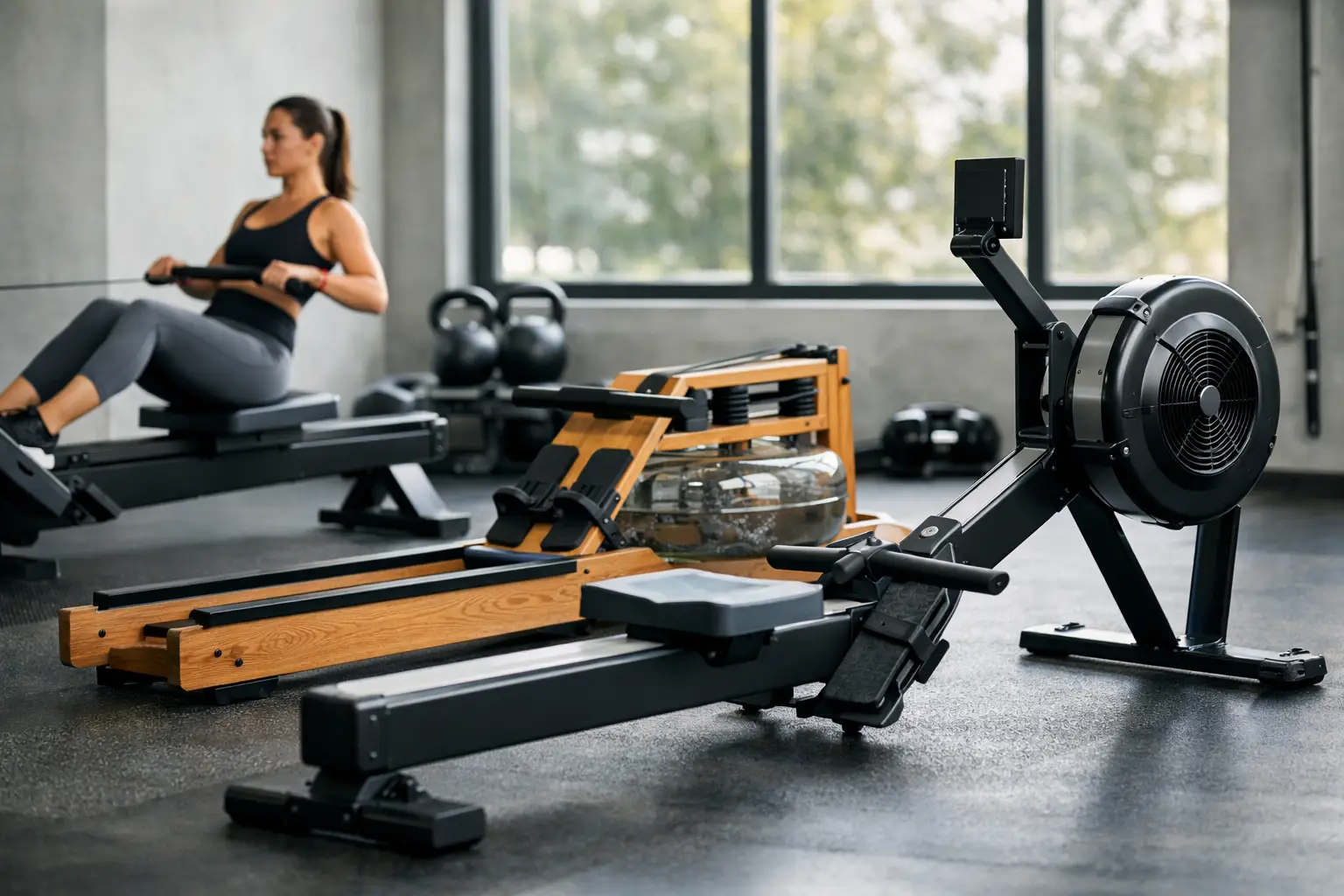
Air rowers create resistance with a fan. The harder you pull, the more resistance you feel. They are popular for high-intensity training because they respond quickly and reward effort. If you like tough intervals and a gym-style rowing feel, air can be a strong match.
The downside is noise. Fan-based rowers are rarely quiet, so they are not always ideal for apartments, shared spaces, or early morning sessions while everyone else is asleep.
Magnetic rowers
Magnetic rowers use magnets to control resistance, often with preset levels. They tend to be smoother and quieter than air models, which is a big win for home use. If your priority is convenience, lower noise, and consistent resistance, magnetic is often the smart play.
The trade-off is feel. Some users love the smooth pull, while others think it feels less dynamic than air or water. For steady cardio, beginner workouts, and general home fitness, that may not matter much.
Water rowers
Water rowers use paddles spinning through a water tank. They are known for a fluid stroke and a satisfying swish that many users find more natural than other systems. They also look better in a living space than most cardio equipment, which matters if your machine will stay visible.
They are usually pricier, and some need a bit more care over time. If aesthetics, rowing feel, and workout enjoyment matter as much as pure budget, water rowers are easy to like.
Hydraulic rowers
Hydraulic rowers are often compact and budget-friendly. They can work for small spaces and entry-level buyers who simply want movement at home. If your budget is tight, this category can get you started.
Still, this is usually where compromises show up fastest. The motion can feel less smooth, durability may be lower, and the overall experience often falls short of larger air, water, or magnetic machines. For occasional use, maybe. For long-term training, it depends on build quality.
How to choose the right rowing machine for your goals
A good deal is only a good deal if it fits how you actually train. Before comparing screens, rail lengths, or sale prices, get clear on your main use case.
If your goal is calorie burn and conditioning, air rowers and stronger magnetic models make sense because they handle intervals well. If you want low-impact cardio three to five times a week in a shared home, magnetic rowers often hit the sweet spot. If motivation matters and you know you stick with gear that feels premium, a water rower may keep you coming back. If space and price are your top concerns, compact hydraulic or foldable magnetic units deserve a look.
Body size matters too. Taller users should pay close attention to rail length and max inseam guidance. A machine that is too short will force a cramped stroke and make every workout feel off. Heavier users should check the weight capacity and overall frame stability, not just the listed number. A higher capacity often signals a sturdier build.
The features that actually matter
A long feature list can look impressive, but only a handful of details will shape your day-to-day experience.
Comfort comes first. Look at the seat design, handle grip, footrests, and how stable the machine feels at the catch and finish. If the seat is uncomfortable after ten minutes, no app integration will save it.
Next is the monitor. Basic screens that show time, distance, strokes, and calories are enough for many buyers. If you thrive on metrics, progress tracking, or guided programming, a more advanced display can be worth the extra spend. Just be honest about whether you will use those extras after the first week.
Storage matters in real homes. Foldable frames and transport wheels are more valuable than flashy extras if you are moving the machine after every session. Noise is another make-or-break factor. A rower that fits your training goals but disrupts the household may not last in your routine.
Warranty is worth a close look because rowing machines have moving parts that take repeated stress. A stronger warranty does not guarantee perfection, but it usually reflects more confidence from the manufacturer.
Common buying mistakes
The biggest mistake is shopping by price alone. The lowest-cost option can become the most expensive if it breaks early, feels bad to use, or gets abandoned in a month.
Another mistake is ignoring your space. Measure the workout area and the storage footprint. Then measure your ceiling height if you are storing the rower upright. People often focus on length and forget about where they will stand, mount, and move around the machine.
Many buyers also underestimate technique. If you are brand-new to rowing, choose a machine that feels stable and smooth rather than one loaded with advanced features. Better basics usually mean better consistency.
And yes, aesthetics count more than some people admit. If a machine looks bulky, awkward, or out of place in your home, you may be less likely to use it. A practical setup is one you can live with.
How much should you spend?
For occasional use, entry-level rowers can work, especially if your expectations are realistic. You are paying for access to movement, not a studio-grade experience. For regular weekly training, mid-range models tend to offer the best balance of performance, comfort, and durability.
Premium rowers make sense when the machine will be a core part of your routine. If you are replacing gym sessions, training often, or building a serious home setup, spending more upfront can feel like a smarter value over time. This is where curated shopping helps. Instead of sorting through endless models, focus on best sellers, trending picks, and machines that align with your actual training style.
Getting more from your rower once it arrives
The first week should be about rhythm, not punishment. Start with shorter sessions and focus on sequence: legs, then body, then arms on the drive; arms, then body, then legs on the return. That alone improves comfort and power.
A rower also works best as part of a bigger plan. Pair it with strength work, mobility, and recovery tools so your setup supports more than one goal. That is where a one-stop fitness approach can make life easier. If you are building a home gym through FitwellGoods, it makes sense to think beyond the rower itself and create a setup that supports consistency from warm-up to recovery.
The best rowing machine is not the one with the longest feature list or the loudest hype. It is the one that fits your space, your budget, your body, and the kind of training you will actually repeat next week. Choose for real life, and your workouts usually follow.