
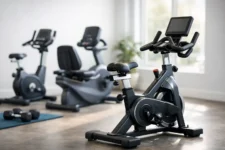
A cheap bike that wobbles after two weeks is not a deal. A high-end bike loaded with features you never use is not a win either. This guide to choosing exercise bike options is built for shoppers who want real results – fat loss, steady cardio, low-impact training, or a stronger home setup – without wasting money on the wrong machine.
The right exercise bike should fit your body, your training style, and your space. That sounds obvious, but this is where most people miss. They shop by price first, then end up with a bike that feels awkward, too loud, too basic, or too aggressive for what they actually need.
Guide to choosing exercise bike by goal
Start with the outcome you care about most. If your goal is weight loss and calorie burn, a bike that lets you adjust resistance quickly and push intensity matters more than entertainment features. If you want easy joint-friendly cardio several times a week, comfort and ride position matter more than top-end resistance.
For beginners, consistency beats complexity. A bike that feels inviting is usually the better pick than one that looks like a commercial gym centerpiece. If you are more advanced and already follow structured workouts, you may want a model with heavier flywheel feel, stronger resistance range, and more training data.
Time matters too. Busy professionals often do better with a setup that starts fast and needs almost no friction to use. If the bike is easy to hop on for 20 minutes before work, it has a better chance of becoming part of your routine.
Upright, recumbent, or indoor cycle?
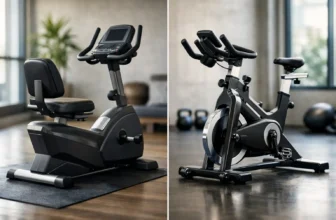
This is the first real fork in the road. Upright bikes feel closest to a standard cycling position. They work well for general cardio, interval sessions, and home users who want a compact machine with a familiar ride.
Recumbent bikes shift you into a reclined seated position with back support. They are a strong pick for users who prioritize comfort, lower-back support, or low-impact training. If long sessions sound better than hard sprints, recumbent can be the smarter buy.
Indoor cycles, often called spin-style bikes, are built for more aggressive training. They usually have a more performance-driven feel, a narrower saddle, and geometry that supports hard intervals and out-of-seat efforts. They are great for riders who want studio-style intensity, but they are not automatically the best choice for every home gym.
Resistance matters more than flashy extras
If you want a bike that stays useful as your fitness improves, pay close attention to resistance type. This affects ride feel, durability, noise, and how smoothly the bike responds when you increase the challenge.
Friction resistance is often found on budget spin-style bikes. It can work fine for basic use, but it may be louder and require more maintenance over time. Magnetic resistance is the stronger all-around value for most home users because it is smoother, quieter, and usually easier to adjust precisely.
That quiet factor is a bigger deal than many shoppers expect. If you live in an apartment, share walls, train early, or watch shows while riding, a quieter bike is not just a nice feature. It changes how often you will actually use it.
How much resistance do you really need?
More is not always better. Beginners rarely need elite-level resistance capacity on day one. What they do need is a range that starts manageable and scales up enough to stay challenging for months.
Intermediate and advanced riders should look for smoother progression and enough headroom for intervals, climbs, and threshold work. If you already know you like hard cycling sessions, buying too basic can feel limiting fast.
Fit and comfort decide whether the bike gets used
This is where smart shoppers separate a good-looking product page from a good purchase. If the bike does not fit your body, motivation drops quickly. Knee tracking feels off, hips get irritated, hands go numb, and suddenly your cardio plan starts gathering dust.
Seat adjustability is the first checkpoint. Ideally, you want both vertical and horizontal adjustment, especially on upright and indoor cycle models. Handlebar adjustment helps too, especially if more than one person will use the bike.
Seat comfort matters, but do not judge only by how plush it looks. Very soft seats can feel better for five minutes and worse after twenty. A stable, supportive saddle usually wins over time. Recumbent bikes naturally solve part of this issue with larger, supported seating, which is one reason they appeal to comfort-first buyers.
Pedals are another overlooked detail. If they feel flimsy or your feet slip during harder efforts, the ride quality drops immediately. For stronger workouts, secure pedals and solid foot placement make a real difference.
Check the user size range
Always check the height and weight capacity before you buy. A bike that technically works but feels undersized is frustrating. Taller riders especially should pay attention to max seat height and overall frame geometry.
If multiple people in your household will use the bike, quick-adjust features are worth paying for. Saving money on a bike that is annoying to share is rarely a bargain.
Console features: useful, optional, or pure clutter?
A screen can help, but it should not be the reason you choose a weak machine. First, make sure the bike is mechanically solid. Then decide which tech features support your training.
For many riders, the basics are enough: time, distance, speed, calories, and heart rate. If seeing your numbers keeps you accountable, a clean console is a practical win. More engaged users may want preset workouts, cadence tracking, Bluetooth connectivity, or app pairing.
The trade-off is price. Smart features can raise cost fast, and not every rider uses them long term. If you already track workouts with a watch or phone, built-in extras may be less important than a better frame or smoother resistance.
A tablet holder can be more useful than a complex screen. It gives you flexibility for classes, entertainment, or training apps without locking you into one system.
Size, storage, and noise can make or break a home setup
A bike can look compact online and still dominate a room. Measure your space before you fall for the product photo. Think about footprint, ceiling clearance if you plan on standing during rides, and enough room around the bike to get on and off comfortably.
Transport wheels are helpful if the bike needs to move after each workout. Foldability is less common with sturdier performance bikes, so do not assume portability and high stability always come together. That is one of the clearest trade-offs in this category.
Noise is also worth shopping for directly. Magnetic bikes usually have the edge here. If your bike is going in a bedroom, upstairs room, or shared living area, lower noise can be the difference between daily use and constant compromise.
Budget: where to save and where not to
Price shopping is smart. Buying on price alone usually is not. The best value sits where build quality, comfort, and resistance match your actual routine.
If you plan to ride two or three times a week for moderate sessions, you may not need a premium bike. A well-built mid-range model often delivers the sweet spot. But if you expect frequent use, harder intervals, or multiple users, spending more upfront can save you from replacing a shaky machine later.
The smartest place to invest is in the frame, resistance system, and adjustability. Those affect every ride. Extras like oversized screens, flashy programming, or decorative design touches are easier to skip if budget is tight.
This is also where deal timing matters. Hot Picks, limited-time markdowns, and compare features can help narrow strong options without overpaying. If you are building out a home gym, pairing your bike purchase with accessories like floor mats, heart rate tools, or recovery gear can also make the overall setup work better from day one.
A practical guide to choosing exercise bike models online
When you are comparing bikes online, resist the urge to judge only by star ratings and promo images. Read the spec sheet like it actually matters, because it does. Focus on bike type, resistance style, adjustability, dimensions, user capacity, and warranty support first.
Then look at the ride experience clues. Is the seat adjustable enough? Does the bike mention smooth magnetic resistance? Is the console basic but useful, or expensive without adding much? A compare tool is especially helpful here because side-by-side specs reveal gaps fast.
If you are between two models, choose the one that better matches your most likely habit, not your most ambitious fantasy. The bike that supports four real workouts a week beats the bike designed for a version of you that only shows up once a month.
The best exercise bike is the one that keeps your momentum going. Buy for comfort if consistency is your challenge. Buy for progression if performance is your priority. And if a strong deal lands on a model that checks both boxes, move while it is still in stock.







&url=https://fitwellgoods.com/shop/yoga/yoga-blocks/prosourcefit-foam-yoga-blocks-high-density-eva-yoga-bricks-4x-6-x-9-set-of-2/&media=https://m.media-amazon.com/images/I/21vfHnTaDyL._SS1024_.jpg)


&url=https://fitwellgoods.com/shop/activewear/womens-activewear/womens-athletic-hoodies/champion-womens-hoodie-powerblend-fleece-comfortable-hoodie-sweatshirt-for-women-plus-size-available/&media=https://m.media-amazon.com/images/I/41cws4tksOL._SS1024_.jpg)
&url=https://fitwellgoods.com/shop/yoga/yoga-blocks/supportive-yoga-block-non-slip-eva-for-yoga-pilates-stretching-and-meditation-4x6x9/&media=https://m.media-amazon.com/images/I/31Ck-cLpGdL._SS1024_.jpg)

&url=https://fitwellgoods.com/shop/yoga/yoga-mats/gaiam-yoga-mat-premium-6mm-print-reversible-extra-thick-non-slip-exercise-fitness-mat-for-all-types-of-yoga-pilates-floor-workouts-68-x-24-x-6mm-thick/&media=https://m.media-amazon.com/images/I/31k8kww154L._SS1024_.jpg)


