
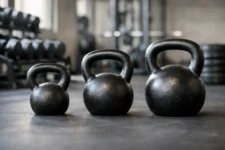
One kettlebell can humble you fast. A weight that feels easy in a deadlift can turn a press into a grind and make your swing lose snap halfway through a set. That is exactly why a smart guide to kettlebell weight selection matters – not just for safety, but for faster progress, better form, and fewer wasted purchases.
If you are building a home setup, the goal is not to buy the heaviest bell you can move once. The goal is to choose a weight you can train with well, across the exercises you actually plan to do. For most people, the right kettlebell is the one that lets you own the movement, keep speed where speed matters, and still have room to grow.
Why kettlebell weight selection feels tricky
Kettlebells do not behave like dumbbells. Because the load sits below the handle, the weight pulls differently in swings, cleans, snatches, and carries. That offset load is part of what makes kettlebell training so effective for power, grip, core stability, and conditioning, but it also means your “usual” gym numbers do not always translate cleanly.
A second wrinkle is exercise variety. The same person might swing 35 pounds with confidence, struggle to strict press 20 pounds overhead, and goblet squat 50 pounds without much trouble. So the best weight depends on what you are doing most often. If you want one bell to cover everything, you need a middle ground. If you want a sharper setup, you may need two or three sizes.
A practical guide to kettlebell weight selection by experience level
For complete beginners, a common starting point is 18 to 26 pounds for women and 26 to 35 pounds for men, but those ranges are only a starting signal, not a rule. A smaller, deconditioned beginner may need less. A former athlete or experienced lifter may need more right away.
What matters more than gender alone is your current strength, coordination, and training background. If you already squat, hinge, and press regularly, you will likely outgrow a very light kettlebell quickly. If you are new to resistance training, a slightly lighter starting bell can help you groove technique without turning every rep into survival mode.
The easiest way to think about it is this: beginners need a bell that feels manageable for goblet squats and deadlifts, challenging but controlled for swings, and probably too heavy for high-rep overhead work. That is normal. Overhead moves usually expose the truth fastest.
For intermediate lifters, one moderate bell and one heavier bell usually create the best range. The moderate bell covers presses, cleans, carries, and longer conditioning sets. The heavier bell handles two-hand swings, deadlifts, front squats, and lower-body strength work. This is often the sweet spot for home gyms because it gives you more exercise flexibility without a full rack of weights.
Choose by movement pattern, not marketing hype
If your main goal is fat loss, conditioning, or fast home workouts, swings will probably be your anchor movement. In that case, go heavier than you think – but only if you can keep your hinge crisp and explosive. A swing should feel powerful, not squatted, yanked, or overly slow.
If your focus is shoulder strength, core control, and total-body technique, choose based on your press and clean. A bell that you can clean smoothly and press with solid lockout is usually better for skill-building than a heavier one you can only muscle into place. For many buyers, this is the difference between a kettlebell that gets used weekly and one that sits in the corner.
If you care most about lower-body strength, goblet squats and deadlifts can justify a heavier purchase. The trade-off is that a heavy goblet-squat bell may be too much for snatches, presses, or longer complexes. This is where shoppers often make the wrong call – they buy for their strongest pattern and then wonder why half the movements feel awkward.
How to test if a kettlebell is the right weight
A good kettlebell should pass a few real-world checks. You should be able to deadlift it with total control and no rounding. You should be able to perform 10 to 15 two-hand swings while keeping the bell floating from hip drive, not shoulder lift. For goblet squats, you should be able to stay tall through the torso and hit depth without the weight pulling you forward.
For upper-body work, the standards should tighten. You should be able to clean the bell without banging your forearm and press it overhead without leaning back hard or losing wrist position. If every clean crashes and every press turns into a full-body struggle, that bell may still have a place in your setup, but it is not your best all-purpose option.
A useful rule is to leave one or two good reps in the tank on your first few sessions. If the bell feels maxed out immediately, your technique usually pays the price before your muscles do.
Common starting weights for popular kettlebell exercises
Swings usually allow the heaviest loading for beginners because the movement is driven by the hips. Goblet squats and deadlifts also tolerate more load early on. Presses, Turkish get-ups, and snatches usually require less weight because they demand more shoulder stability, timing, and precision.
That means one kettlebell can feel perfect for swings and far too aggressive for presses. If you only want one bell, bias your choice toward the movements you will train most. If your workouts will mix swings, squats, presses, and carries, choose the heaviest weight you can still clean and press with respectable form. You can make lighter exercises harder with tempo, pauses, and volume, but you cannot fake safe overhead control.
When one kettlebell is enough and when it is not
If you are just getting started, one kettlebell is enough to build momentum. You can deadlift, swing, squat, carry, row, and learn the clean with a single weight. That kind of simplicity is a win, especially for busy professionals who want a no-excuses setup at home.
But if you know you are serious about training, two kettlebells often make more sense than one perfect unicorn weight. A lighter bell for presses, warm-ups, and technique work plus a heavier bell for swings and leg training gives you more useful coverage. It also keeps progress moving longer before you need another upgrade.
Adjustable kettlebells can be a smart play if you want flexibility without crowding your floor space. They are especially useful for people who train multiple movement patterns or share equipment with a partner. The trade-off is feel. Some lifters prefer the balance and simplicity of a fixed bell, especially for fast cycling or high-volume sessions.
Mistakes that lead to the wrong kettlebell purchase
The biggest mistake is buying too light because you are nervous. That usually shows up when swings feel more like arm raises than hip power, or when lower-body work stops being challenging almost immediately. A too-light bell is not useless, but it may become a warm-up tool faster than you expected.
The second mistake is buying too heavy because you want to “grow into it.” That sounds ambitious, but it often stalls progress. If you cannot clean it safely, cannot press it with control, and cannot repeat quality reps, you are not setting yourself up for better workouts. You are paying for frustration.
Another common miss is ignoring handle comfort and bell construction. Handle thickness, window size, finish, and overall balance matter more than many shoppers realize. A great price is nice, but a bell that tears up your hands or feels awkward in the rack position is not a deal if it kills consistency.
How to buy for your actual training goals
If your plan is short conditioning circuits three to four times a week, prioritize a versatile bell you can swing, squat, carry, and clean. If your goal is strength with lower reps, lean heavier and pair it with slower, controlled work. If you want skills like snatches or Turkish get-ups, give technique the edge and stay conservative enough to learn well.
For home-gym shoppers, this is where curated gear selection really pays off. Instead of guessing, think in terms of your workout style, your current strength, and what will keep you training next month, not just impress you on day one. Hot picks and best-seller badges can help narrow the field, but your best buy is the kettlebell that matches your real use case.
The right kettlebell should make you want to train. It should feel challenging, useful, and repeatable – heavy enough to drive results, smart enough to keep your form clean. Choose for progress, not ego, and your next workout will tell you that you got it right.









%20(2,%20black)&url=https://fitwellgoods.com/shop/yoga/yoga-sandbags/umbrella-base-weight-sand-bags-sand-bags-for-weight-2-x-44-lbs-fillable-sandbags-for-umbrella-base-cantilever-patio-umbrella-trampoline-outdoor-garden-backyard-furniturewithout-sand-2-black/&media=https://m.media-amazon.com/images/I/31skGzGFR4L._SS1024_.jpg)


