That empty corner between your couch and TV stand can either stay wasted space or become the spot that keeps your training consistent. A smart home gym apartment setup example is not about cramming in oversized machines and hoping for the best. It is about choosing the right gear for your square footage, your downstairs neighbors, and the kind of progress you actually want to make.
Most apartment setups fail for one reason: people shop like they have a garage. They buy a treadmill that dominates the room, a bench that never folds away, and random accessories that end up in a basket under a console table. The better move is building around movement patterns, noise control, and storage from day one. That gives you a setup you will use four or five days a week instead of one that looks impressive for two weekends.
A realistic home gym apartment setup example
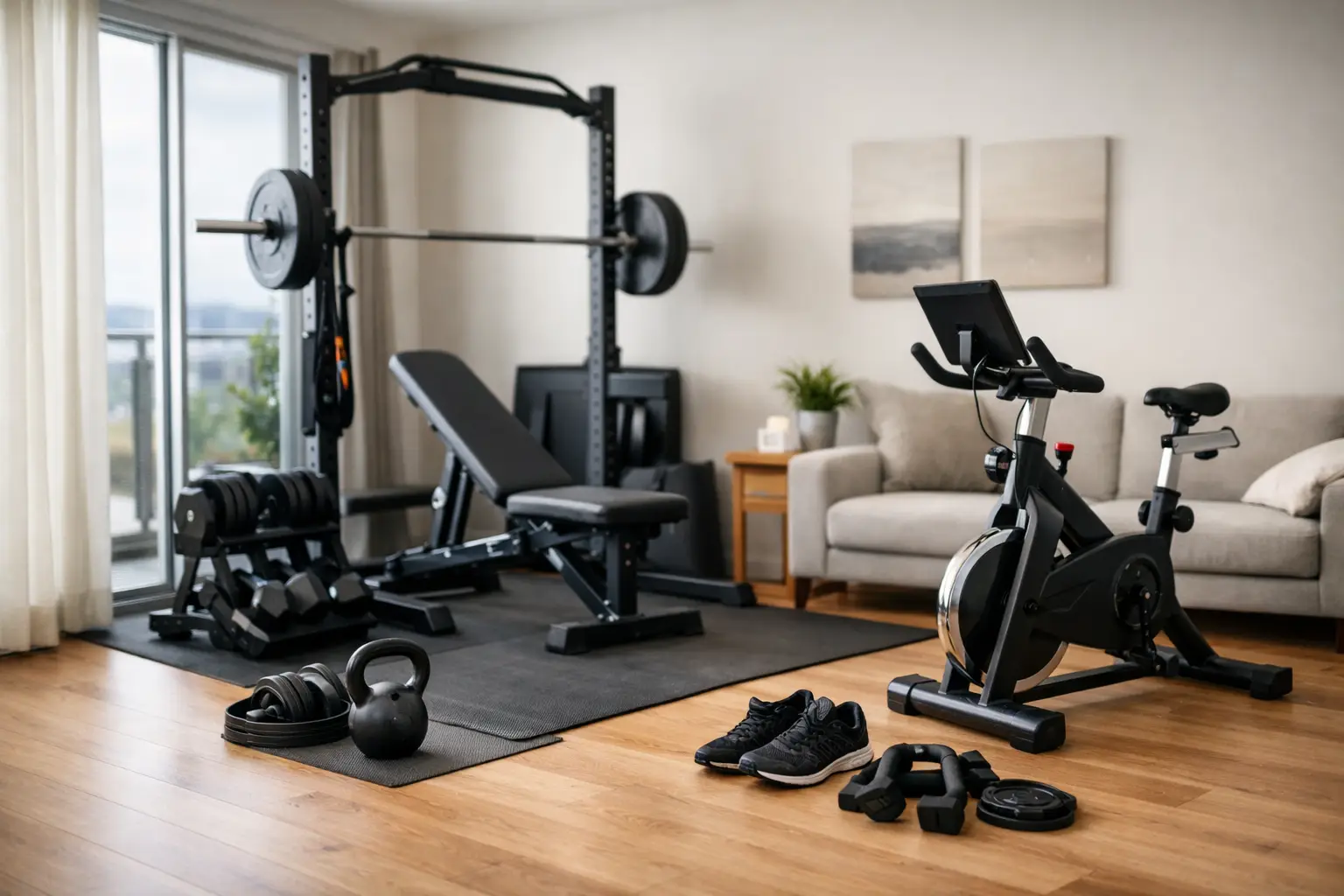
Let’s use a common scenario: a one-bedroom apartment with a living room corner measuring roughly 8 by 10 feet. That is enough room for a compact, effective setup if every item earns its place.
In this example, the foundation starts with interlocking rubber or high-density foam flooring that covers the full training zone. That single choice matters more than people expect. It protects the floor, cuts down vibration, creates a visual boundary, and makes the area feel like a dedicated workout space instead of overflow storage.
Next comes adjustable dumbbells, which are usually the highest-value strength purchase for apartment living. Instead of a full rack taking over half the room, one adjustable pair gives you pressing, rows, squats, lunges, Romanian deadlifts, curls, and carries. Add a foldable bench and you suddenly have enough variety for full-body training without crowding the apartment.
For cardio, this setup skips a large treadmill and uses either a compact exercise bike or a rower designed for smaller spaces. Which one makes more sense depends on your building and your body. Bikes tend to be quieter and easier on shared floors. Rowers offer more full-body work but need longer clearance and can still create noise if used aggressively.
To round it out, include resistance bands with a door anchor, a yoga mat, and one recovery tool such as a foam roller or massage gun. That gives the space three clear jobs: lifting, conditioning, and recovery. That is the sweet spot for an apartment gym.
Why this apartment setup works better than a bigger one
The win here is not just that it fits. It works because it reduces friction. When your dumbbells are easy to access, your bench folds away in seconds, and your cardio piece does not require rearranging the room, workouts happen faster. Consistency usually beats equipment variety.
There is also a financial upside. Many people burn budget on one premium machine and then have no room or money left for the pieces that make training complete. A more balanced setup spreads your spend across strength, cardio, and recovery. That gives you better results per dollar and keeps you from needing another shopping round a month later.
This is also where a deal-focused approach helps. If you are building from scratch, the smartest move is to think in bundles rather than one-off purchases. Flooring, adjustable weights, bands, and recovery accessories often create more training value than buying the biggest machine first just because it feels like the headline item.
Start with your training goal, not the equipment
Before you buy anything, decide what the apartment gym needs to do for you. If your main goal is fat loss, your setup should support quick transitions between resistance training and cardio. If your focus is strength, you need progressive loading and stable support. If you are mostly trying to stay active between long workdays, comfort and convenience matter more than advanced programming.
That is where a lot of small-space plans go off course. Someone with a strength goal buys a spin bike because it looks sleek. Someone who wants daily movement buys heavy kettlebells they rarely touch. The right apartment setup is not the one with the most gear. It is the one that matches the workouts you will repeat.
For beginners, that often means keeping it simple. Adjustable dumbbells, a bench, bands, and a mat can carry months of progress. For experienced lifters, adding a heavier kettlebell, weighted vest, or compact plate-loaded option may make more sense than adding another cardio machine.
The best layout for a small living room gym
Placement changes everything. Put the flooring and primary training tools against a wall that gives you enough room to move forward and backward. Keep your bench and dumbbells closest to that wall, then leave the center open for bodyweight work, stretching, and band exercises.
If you are adding a bike or rower, place it at the edge of the zone rather than in the middle. You want to avoid a setup where one machine blocks every other workout. Foldable and vertical-storage gear is especially useful here because apartment gyms often share space with your actual life.
A storage shelf or narrow cabinet helps more than most people expect. It keeps bands, gloves, towels, recovery tools, and supplements off the floor. That visual cleanup matters. A neat setup feels inviting. A cluttered one feels like a chore.
Lighting helps too. If the gym corner is dark, even great equipment can feel neglected. A brighter lamp, mirror, or cleaner backdrop can make the area feel intentional without adding any training footprint.
Apartment gym trade-offs you should expect
There is no perfect apartment gym. There is only the best trade-off for your space.
If you choose a treadmill, you may lose flexibility for strength training. If you choose a rower, storage gets trickier. If you choose heavier free weights, your floor protection needs to improve. If you choose ultra-minimal equipment, you may outgrow it faster.
Noise is the other big variable. Jump training, dropping weights, and high-impact cardio can become a problem fast in shared buildings. That does not mean you cannot train hard. It means your setup should support lower-impact intensity. Tempo squats, loaded carries, incline push-ups, rowing intervals, cycling sprints, and band resistance all work well without turning your apartment into a complaint magnet.
This is where practical gear wins over flashy gear. A quiet, compact setup you can use at 6 a.m. is more valuable than an impressive machine you avoid because it shakes the floor.
A strong gear mix for most renters
For most people, the best apartment-ready mix looks like this: adjustable dumbbells, a foldable bench, protective flooring, resistance bands, a mat, and one cardio piece that fits the room and the noise level. That combination covers a lot of ground without making the apartment feel like a warehouse.
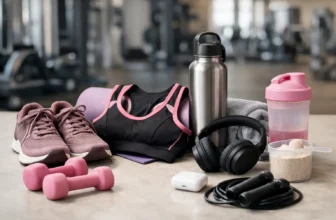
If your budget has room, recovery and support items are worth adding early. A foam roller, supportive training shoes, and basic wellness staples can improve how often you train and how well you recover between sessions. A small apartment gym should support the whole routine, not just the workout itself.
That is one reason broad, category-based shopping makes life easier. When you can build a setup across equipment, accessories, activewear, and recovery support in one pass, you spend less time piecing together random solutions and more time getting started. FitwellGoods leans into that convenience with a strong mix of must-have gear and goal-based shopping options, which is especially useful when decision fatigue starts to creep in.
What to skip in a home gym apartment setup example
The fastest way to waste money is buying equipment for your fantasy routine instead of your real one. If you have never used a power tower consistently, your apartment probably does not need one now. If you hate running, a treadmill is not going to change your personality. If your space already feels tight, oversized multi-station equipment is usually a bad bet.
It is also smart to avoid duplicate function. You do not need three pieces of gear that all solve the same problem. One good cardio option, one versatile strength base, and a few accessories will almost always outperform a crowded room with overlapping tools.
Another common miss is forgetting recovery. In smaller spaces, people focus so much on the workout itself that they ignore what keeps them coming back. A mat, roller, and a little room to stretch can make your setup feel complete.
Make the setup easy to use every day
The best apartment gym is the one that fits your schedule as much as your room. Keep your most-used equipment visible. Store the extras neatly. Set out the items that support your first move, whether that is a mat for mobility, dumbbells for strength work, or a bike for a quick sweat session before work.
If you train early, keep the setup quiet and simple to start. If you train after work, make sure the area can switch from living space to workout space in under two minutes. That transition time matters more than people think.
A good apartment gym should feel like a shortcut, not a project. When your space is built around your routine, it becomes easier to stay on track through busy weeks, bad weather, and low-motivation days.
The smartest setup is rarely the biggest or the most expensive. It is the one that makes progress feel close, convenient, and hard to skip.