
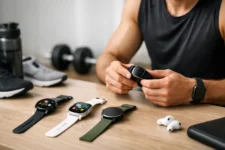
You notice it fast once training gets serious – the wrong smartwatch becomes one more thing to manage. It slips during intervals, misses reps, dies before a long run, or floods you with stats you never use. If you’re figuring out how to choose smartwatch for workouts, the best pick is not the one with the longest feature list. It’s the one that fits your training style, your schedule, and the way you actually move.
How to choose smartwatch for workouts starts with your goal
Before comparing brands, screens, or price tags, get honest about what you want the watch to do. A runner, a lifter, and someone doing at-home HIIT need different strengths.
If your focus is cardio, GPS accuracy, heart-rate consistency, and battery life matter most. You want reliable pace data, stable distance tracking, and enough charge for long sessions without stress. If your focus is strength training, rep counting and exercise detection can be helpful, but comfort, durability, and easy interval timing often matter more than flashy analytics.
For mixed training, look for balance. A watch that handles runs well but also supports gym sessions, recovery tracking, and general wellness metrics can be the smarter buy than a niche device that dominates in one area and falls flat everywhere else.
This is where people overspend. They buy for an aspirational routine instead of the one they actually follow. If you train four days a week at home with dumbbells, bands, and a rower, you probably do not need an ultra-premium outdoor watch built for mountain ultras. Buy for your real routine, not your fantasy cart.
The core features that actually matter
The most useful workout smartwatch features are usually less glamorous than the marketing claims. Heart-rate tracking is one of the big ones, because it affects calorie estimates, training zones, and recovery data. Wrist-based heart-rate sensors have improved a lot, but they still vary. During steady cardio, many perform well. During sprints, circuits, kettlebell work, or anything with lots of wrist movement, accuracy can dip.
That does not automatically make a watch bad. It just means you should know the trade-off. If precise heart-rate data is critical for your programming, choose a model known for strong sensor performance or one that pairs easily with a chest strap.
GPS is another make-or-break feature for outdoor training. Built-in GPS is far better than relying on your phone if you run, cycle, or hike regularly. Faster signal lock and more accurate route tracking make your splits and distance more useful. For treadmill users or indoor cyclists, GPS matters less, so that budget can go toward comfort, battery life, or recovery features.
Then there’s workout mode support. Some watches offer polished profiles for running, cycling, swimming, rowing, strength sessions, yoga, and HIIT. Others look strong on paper but give shallow data once you start training. If your week includes multiple styles of training, make sure the watch supports them in a meaningful way, not just as a labeled button.
Comfort beats specs you’ll never use
A smartwatch for workouts has to feel good for more than 20 minutes. If it is bulky, too heavy, or catches on sleeves during training, you will stop wearing it consistently. And once that happens, even the best features lose value.
Lifters often prefer a lower-profile watch that doesn’t dig into the wrist during push-ups, front rack holds, or cleans. Runners may tolerate a slightly larger watch if it brings better battery life and a more readable screen. People wearing a watch all day usually care more about weight, band comfort, and how easily it transitions from workout mode to work mode.
Band material matters more than many shoppers expect. Silicone is common because it handles sweat well and is easy to clean. Nylon can feel lighter and more breathable. Metal bands may look sharp but usually make less sense for hard training.
Screen size is also a trade-off. Bigger screens are easier to read mid-run or during intervals, but smaller cases tend to feel better during all-day wear. If possible, choose a size that matches your wrist rather than defaulting to the biggest option.
Battery life depends on how you train
Battery claims can be misleading because smartwatch brands often advertise ideal conditions, not heavy real-world use. A watch that lasts several days in regular mode might drop fast if you use GPS, music, notifications, sleep tracking, and daily workouts.
If you train indoors for 30 to 60 minutes most days, moderate battery life may be fine. If you run long distances, do weekend hikes, or hate charging another device every night, battery life jumps much higher on the priority list.
There is no universal sweet spot. Some people are happy putting their watch on the charger while they shower. Others want a device that can survive a week of workouts without planning around an outlet. Be realistic about your tolerance. Convenience is a feature.
Don’t get distracted by recovery metrics
Recovery scores, readiness ratings, sleep insights, stress tracking, and body battery-style features can be useful, especially for people juggling training with work, family, and uneven sleep. But they are not magic.
These metrics work best as trend tools, not commands. If your watch says you are under-recovered but you feel good and your training plan is controlled, that score should inform you, not rule you. On the other hand, if your sleep trends are poor, your resting heart rate is climbing, and your workouts feel flat, those metrics can be a strong signal to adjust.
For beginners, too much data can create friction. For experienced athletes, the right data can improve decision-making. That’s why the best smartwatch is often the one that presents useful information clearly instead of burying you in dashboards.
How to choose smartwatch for workouts on budget
You do not need to chase the most expensive model to get a strong training tool. Mid-range watches are often the sweet spot because they cover the features most people actually use: solid heart-rate tracking, dependable GPS, guided workouts, sleep data, and decent battery life.
Budget models can be a smart buy if your workouts are straightforward and your expectations are clear. They often work well for step tracking, basic cardio data, and simple app notifications. The catch is that build quality, sensor consistency, and long-term software support may be weaker.
Premium models make more sense when you have a specific reason to pay more. That might be advanced training metrics, better GPS, stronger water resistance, offline maps, longer battery life, or deeper recovery tools. If you won’t use those features weekly, the upgrade can feel exciting at checkout and unnecessary a month later.
A good filter is this: pay for features that support adherence. If a brighter display, easier controls, better battery, or better comfort helps you train more consistently, that upgrade can be worth it.
Match the watch to your workout environment
Your training environment changes what matters. If you work out mostly in a commercial gym, you may care more about stopwatch functions, quick-start intervals, and strength mode usability than outdoor navigation. If you train at home, you might value compatibility with cardio machines, Bluetooth accessories, and app-guided workouts.
If you swim, water resistance is non-negotiable, and not all “water-friendly” watches perform equally well in pools. If you train outside in heat or cold, screen visibility and button responsiveness become more important than they seem in product photos.
And if your workouts include gloves, chalk, sweat, or fast transitions, touchscreen-only controls can get annoying. Physical buttons are not flashy, but during a hard session, they can be a real advantage.
Think beyond workouts for everyday value
A smartwatch should support your fitness goals, but most people wear it beyond training. Notifications, music controls, contactless payments, and sleep tracking all add value if they fit your routine. If those features help you keep the watch on consistently, your training data becomes more complete too.
That said, a full smartwatch experience is not always better than a fitness-first device. Some people love app integration and lifestyle features. Others want fewer distractions and stronger workout performance. If constant buzzing pulls you out of training, simpler can be better.
If you’re already upgrading your setup, it helps to think in systems. A smartwatch works best when it fits the rest of your routine – your training plan, your shoes, your home equipment, your recovery habits, even how often you charge devices. That practical mindset is what makes a purchase useful instead of just trendy. If you’re building out more of your fitness gear in one place, FitwellGoods can help you shop by goal and keep decision fatigue low.
The smartest choice is the one you’ll actually use
The best workout smartwatch is not the one with the most sensors, the biggest screen, or the loudest hype. It’s the one that makes training easier to follow, easier to measure, and easier to repeat next week.
So start with your goal, filter for the features that truly support it, and be picky about comfort and battery life. Hot picks are fun, but the real win is choosing a watch that helps you show up, stay consistent, and see progress you can measure.








&url=https://fitwellgoods.com/shop/yoga/yoga-mats/gaiam-cork-yoga-exercise-mat-natural-sustainable-cork-resists-sweat-and-odors-non-slip-tpe-backing-prevents-slipping-great-for-hot-yoga-pilates-fitness-working-out-68-x-24x-5mm-thick/&media=https://m.media-amazon.com/images/I/41ZTft9ojHL._SS1024_.jpg)


&url=https://fitwellgoods.com/shop/yoga/yoga-mats/gaiam-yoga-mat-premium-5mm-print-thick-non-slip-exercise-fitness-mat-for-all-types-of-yoga-pilates-floor-workouts-68-x-24-x-5mm/&media=https://m.media-amazon.com/images/I/314BMyuGnGL._SS1024_.jpg)
&url=https://fitwellgoods.com/shop/activewear/mens-activewear/mens-track-jackets/puma-mens-track-jacket-blackmedium/&media=https://m.media-amazon.com/images/I/31CjVGlYtyL._SS1024_.jpg)
&url=https://fitwellgoods.com/shop/yoga/yoga-mats/gaiam-yoga-mat-premium-6mm-print-extra-thick-non-slip-exercise-fitness-mat-for-all-types-of-yoga-pilates-floor-workouts-68l-x-24w-x-6mm-thick/&media=https://m.media-amazon.com/images/I/41o9n2j2WrL._SS1024_.jpg)
