Best Weighted Jump Rope for Speed, Strength, and Endurance Training


Weighted jump ropes add resistance to a simple, space-saving cardio move, turning standard skipping into a strength and conditioning tool. They work by adding mass to the rope or handles so each rotation forces your shoulders, arms, and core to work harder while your heart rate rises. For people who want a compact, low-cost way to build endurance and upper-body strength at home or on the go, a weighted jump rope can give more bang for each minute than a light-speed rope.
Choosing the right weighted rope comes down to weight, handle comfort, rope material, and length adjustability—those factors decide how well the rope fits your body and goals. Heavier ropes boost strength but can tire you quickly; ergonomic handles prevent blisters; and a smooth, tangle-free cable keeps rhythm and speed consistent. We tested and compared ropes across those features to find models that balance durability, comfort, and workout effectiveness.
Best Weighted Jump Ropes
Below is our carefully chosen list of the best weighted jump ropes for building strength, improving cardio, and boosting coordination. We tested options for grip, weight range, and durability so you can pick the rope that fits your workouts and goals.
Redify 1LB Weighted Jump Rope

We recommend this rope if you want a sturdy, weighted option that handles double-unders and everyday cardio well.
Pros
- Solid, balanced 1 lb feel that boosts cardio and strength.
- Two ropes (cotton + PVC) let us swap for speed or durability.
- Comfortable aluminum handles with grippy silicone texture.
Cons
- Adjusting length needs a knife or scissors and a little patience.
- Bearings can wear on one side after heavy use.
- Heavier ropes can be tiring for beginners at first.
We used this rope for gym and backyard workouts. The weight gave each jump a clear resistance that made intervals feel tougher in a good way. Double-unders came easier once we synced our timing to the heavier swing.
Swapping between the braided cotton and solid PVC was handy. The cotton felt quieter and softer on surfaces, while the PVC spun faster and lasted more when we trained outside.
Handles felt solid and didn’t slip, even in sweaty sets. After a month of near-daily use one bearing started to feel rough, so expect some maintenance if you push it hard.
Overall, it’s a practical, well-built weighted rope that fits crossfit, boxing, and general fitness routines without breaking the bank.
Elite Muay Thai 2.0 (Crimson Red)
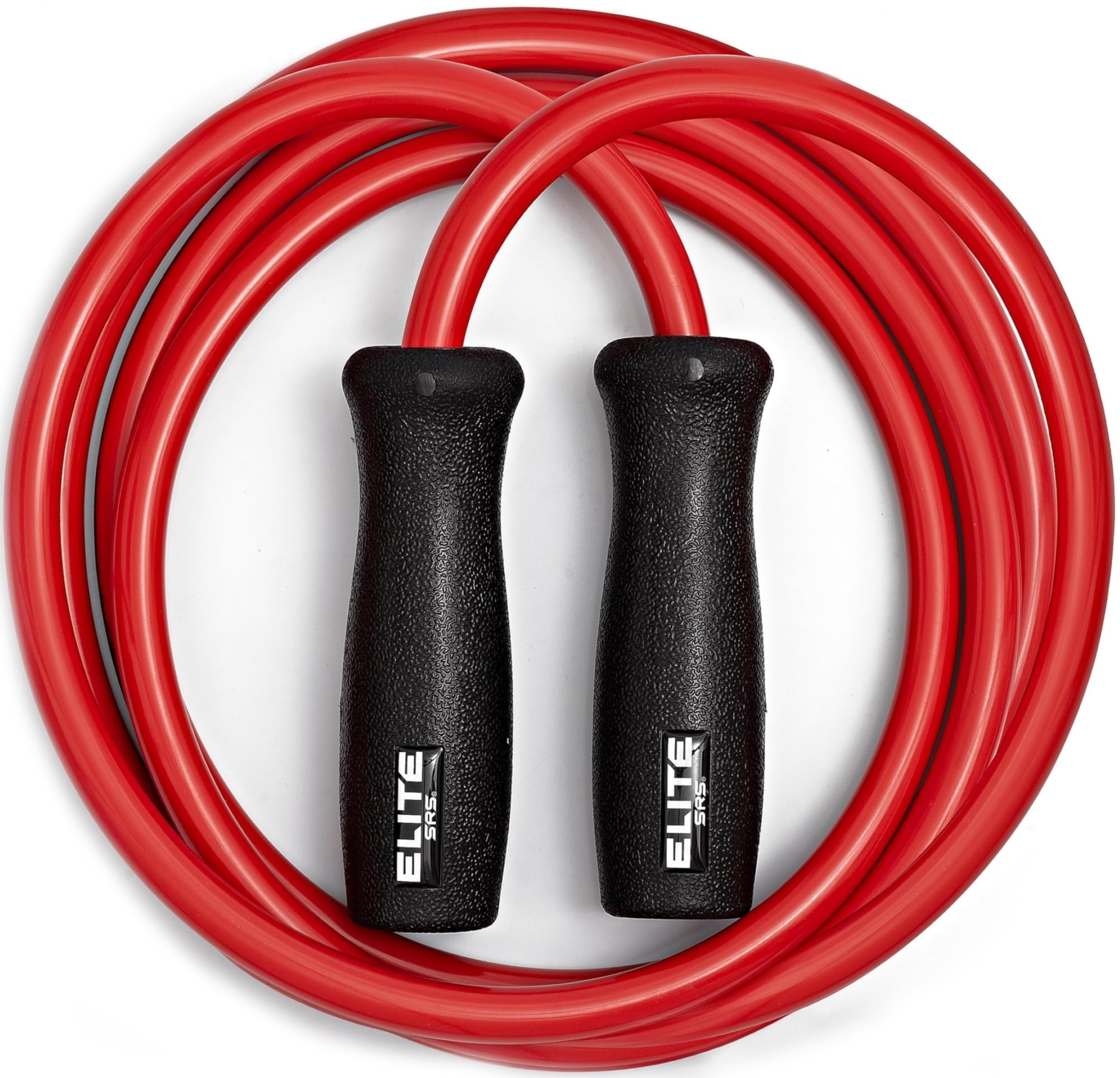
We recommend this rope for buyers who want a heavy, durable trainer that builds forearm and shoulder strength fast.
Pros
- Feels solid and heavy for real strength work.
- Smooth spin from good bearings.
- Handles grip well during long sets.
Cons
- Heavier than some expect, so not ideal for speed work.
- PVC outer shell scars on rough surfaces.
- Long 9 ft length may need trimming for shorter users.
We used this rope for HIIT and Muay Thai conditioning. The weight hits your forearms and core in a way a speed rope does not. After five minutes you can feel the difference in grip and shoulder fatigue.
The handles turn smoothly and the rope spins without catching. That made rhythm drills easier and kept us focused on form instead of fixing tangles.
Rope durability impressed us during daily use, though the PVC sheath shows scuffs if you use it on concrete. We trimmed a bit of length to fit one of our shorter teammates and it still felt balanced.
If you want a heavy trainer to build strength and endurance rather than chase top speed, this rope works very well.
HPYGN Weighted Jump Rope

We recommend this rope if you want a compact, heavy jump rope that builds strength and gives a short, intense cardio session.
Pros
- Solid build that feels durable in hand.
- Heavy weight gives fast strength and calorie burn.
- Comes with a carry bag for travel.
Cons
- Heavier ropes tire beginners quickly.
- Rope can feel stiff until broken in.
- Length may be short for taller users.
We used the HPYGN rope for several workouts and noticed it really taxes the shoulders and core fast. The handles grip well and the weight transfers cleanly, so each rep feels purposeful.
During the first sessions the nylon cord felt stiff and required a few uses to smooth out. Once it loosened, the rope tracked better and swung more predictably for double-unders and steady rounds.
We liked taking it on trips thanks to the small bag. If you already skip with a light rope, this one steps up the intensity and cuts workout time, but complete beginners should start lighter to avoid early fatigue.
Mangodan 1LB Weighted Jump Rope

We recommend this rope if you want a durable, adjustable weighted option that works for speed and strength training.
Pros
- Smooth 360° rotation keeps the rope from tangling.
- Two rope types give quick options for speed or heavier swings.
- Comfortable aluminum handles with non-slip silicone grip.
Cons
- Heavier feel can tire your shoulders faster than light ropes.
- Weight balance across the rope can feel uneven at times.
- PVC rope is stiffer and may take time to break in.
We used this rope for several workouts and liked how the ball-bearing system keeps the spin clean. Double unders flow easier than with cheap ropes, and switching from cotton to PVC changed the workout quickly.
The handles feel solid in hand and the silicone texture stops slipping when we sweat. Adjusting length was simple, and the included bag makes it easy to carry to class or outside.
The weighted feel gives a solid upper-body burn; beginners should expect a tougher session than a light speed rope. We noticed the PVC cord is stiff at first and the weight can feel a little off-center, but overall it holds up well for regular use.
Loocio Speed Jump Rope

We recommend this rope if you want a fast, adjustable, and affordable option for daily cardio.
Pros
- Smooth ball-bearing rotation for quick spins.
- Easy length adjustment fits different heights.
- Comfortable foam handles that stay grippy.
Cons
- Thin coated cable can sting at high speed.
- Lightweight feel may not suit people wanting heavy handles.
- Color mix-ups reported by some buyers.
We used the rope for interval sessions and found it really fast. The bearings cut down on tangles and let us keep a steady pace without fighting the cable.
Adjusting the length took a minute and worked as advertised. We set it for two different users in one workout and it stayed secure.
The foam handles felt good in sweaty hands and the rope packed small for travel. On the downside, the thin steel cable can bite your shins if you miss a jump and it’s lighter than weighted ropes some of us prefer.
Buying Guide
We look for a rope that fits our goals and skill level. Pick a weight that matches your strength and endurance needs; heavier ropes build power, lighter ropes improve speed and coordination.
We check handle comfort and grip. Handles should feel secure and not slip when our hands sweat. Ball-bearing or swivel systems help the rope turn smoothly and reduce wrist strain.
We test rope length and adjustability. A rope that adjusts easily fits different heights and workout styles. Measure so the rope reaches your armpits when stepped on the center.
We consider rope material and durability. Metal-core or weighted cables last longer than soft ropes. Coatings can protect the cable and reduce wear on floors.
We weigh portability and storage. Some weighted ropes fold or detach for travel. If we take the rope to class or the gym, a compact option is better.
We compare price to build quality and features. Higher cost can mean better bearings, stronger cable, or more comfortable handles. But a mid-priced rope can still offer good performance for most users.
We use this checklist when choosing:
- Weight: light, medium, or heavy
- Handle: grip, length, rotation system
- Length: adjustable, fits our height
- Material: cable, coating, wear resistance
- Portability: foldable, detachable, travel case
- Price vs. quality: components match cost
We try to test a rope when possible. Hands-on feel and smooth rotation matter more than specs alone.





[…] that can make a noticeable difference when your workouts include running intervals, deep squats, jump rope, lunges, or anything with repeated […]