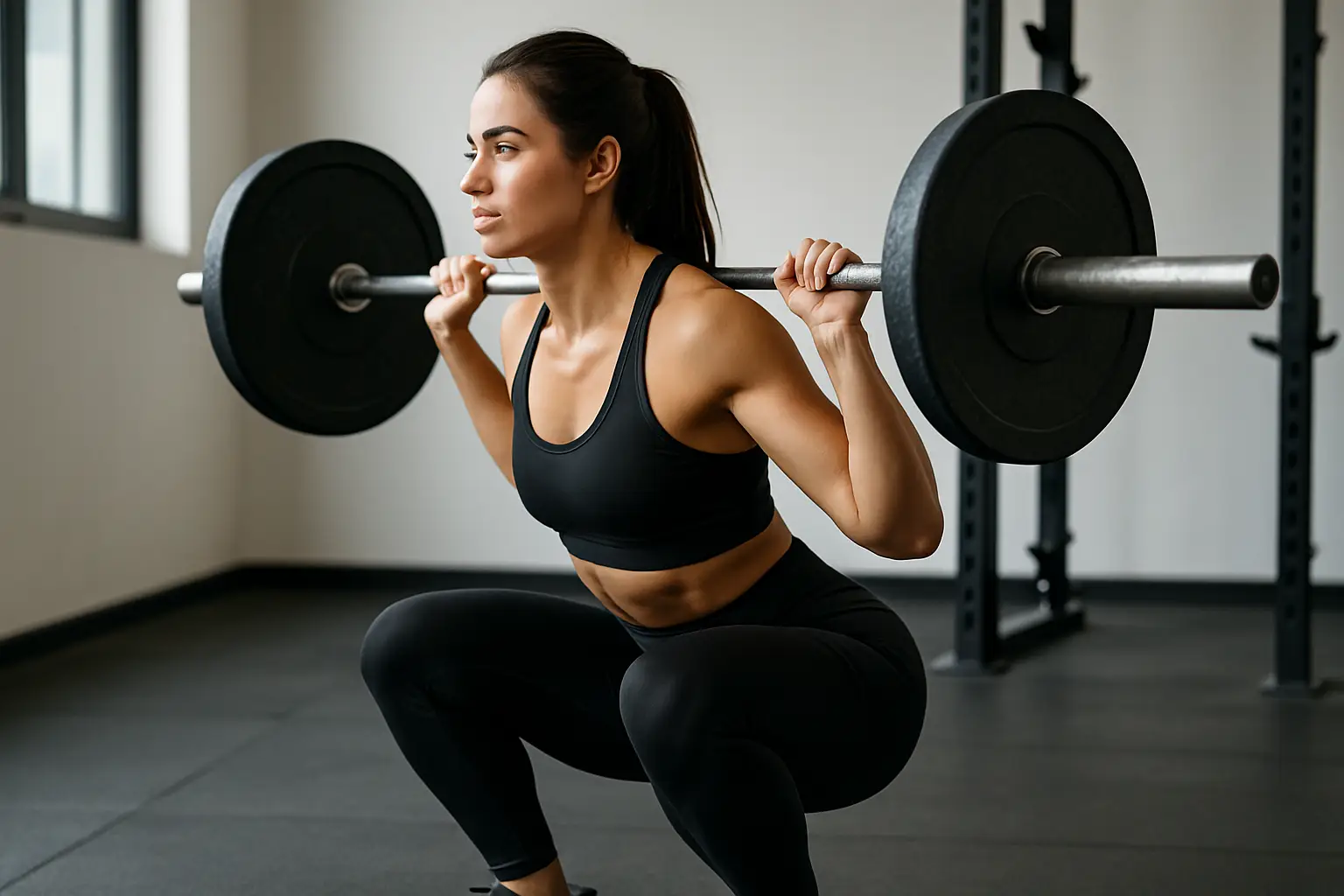
That moment at the bottom of a squat is brutally honest.
If your waistband rolls, your thighs feel glued, or you catch yourself wondering if the fabric just turned see-through under the gym lights, you stop thinking about hitting depth and start thinking about your outfit. The best leggings for squats don’t just look good on a mirror selfie – they stay put through warm-ups, heavy sets, and sweaty finishers, so your focus stays on form and load.
What “squat-proof” really means (and why it’s not one thing)
“Squat-proof” gets tossed around like it’s a magic label, but it’s really a combo of fabric density, stretch quality, and fit. A legging can be thick and still fail if it’s overstretched at the glutes. Another can be lighter weight and still pass if the knit is tight and the sizing is right.
Squat-proof also isn’t only about opacity. The best squat leggings resist sliding down, don’t cut into your stomach when you brace, and don’t bunch behind the knees. If you do a lot of compound work – squats, deadlifts, lunges, hip thrusts – you want a legging that behaves like performance gear, not loungewear.
The 6 features that make the best leggings for squats
1) Fabric that holds shape under load
Look for performance blends that include a meaningful percentage of elastane (often labeled spandex or Lycra). That “snap back” is what keeps fabric from bagging out after a few sets.
A cotton-heavy legging can feel soft, but it tends to show sweat, stretch thin at the glutes, and lose structure faster. For squatting, you’re usually better off with nylon or polyester as the primary fiber, plus elastane for recovery.
2) Enough compression to stay in place (without cutting off your brace)
Compression is your anti-slip insurance. Too little and you’ll be hiking your leggings up between sets. Too much and your waistband will feel like it’s fighting your breathing when you brace.
If you train heavy and use a lifting belt sometimes, pay extra attention to how the waistband feels at the top edge. A slightly wider waistband with medium compression tends to pair best with bracing, belts, and high-rep work.
3) Waistband construction that doesn’t roll
A high-rise waistband is popular for a reason: it gives you coverage in the bottom position and reduces the chance of sliding. But rise height alone isn’t the fix. The internal structure matters.
A waistband with a firm top seam, a stabilizing inner panel, or a thicker knit will resist rolling better than a flimsy, ultra-soft band. If you’ve ever had that “accordion roll” during front squats or goblet squats, it’s almost always a construction issue.
4) Seam placement that flatters and performs
Seams can be your best friend or your worst enemy.
For squats, look for seams that follow the glute curve and avoid digging straight across the widest part of the hips. A well-placed gusset (the diamond-shaped panel in the crotch) matters too – it improves range of motion and reduces stress on the stitching when you hit depth.
If you’re sensitive to chafing, prioritize smoother flatlock seams. If you do high-volume leg days, that detail shows up fast.
5) A finish that matches your training style
Matte, brushed finishes feel cozy, but they can show lint and sometimes hold sweat more. Sleek finishes (often nylon-forward) tend to slide on easier, dry faster, and look cleaner under bright lighting.
If your squat sessions are paired with conditioning, sled pushes, or a treadmill incline finisher, fast-drying fabric is a real upgrade.
6) The right length for your movement and climate
7/8 length is a sweet spot for many lifters because it stays out of the way at the ankle and doesn’t bunch. Full length can be perfect if you train in a colder garage gym or you prefer full coverage.
If you’re doing Olympic-style lifts or lots of dynamic warm-ups, less bunching usually feels better.
How to test squat-proof leggings in 60 seconds
You don’t need a dressing room squat rack to get a good read. You need a quick, no-nonsense check.
First, do the light test: stretch the fabric with your hands and look at it against bright light. If the knit opens up dramatically, it’s a warning.
Next, do a movement test at home: bodyweight squat to full depth in front of a mirror, then hold the bottom for two seconds. If you see the fabric turn shiny and thin across the glutes, sizing or fabric density is off.
Finally, do the “real world” test: wear them for a warm-up that includes lunges and hip hinges. If you adjust the waistband more than once, they’re not your squat pair.
The best types of leggings for squats (pick your lane)
High-rise compression leggings for heavy strength days
If your training is built around progressive overload – barbell back squats, front squats, paused reps – you want structure. High-rise, medium-to-firm compression leggings tend to stay locked in when you brace and drive out of the hole.
Trade-off: they can feel warmer and slightly restrictive on very hot days or during high-rep circuits.
Seamless knit leggings for comfort-focused lifting
Seamless styles can feel like a second skin and often contour well. A higher-quality seamless knit can still be squat-proof if the knit is tight and the sizing is correct.
Trade-off: “seamless” doesn’t automatically mean durable. Some seamless leggings pill faster or go sheer if the knit is too airy.
Pocket leggings for training days that include life
If your workout includes a walk, errands, or coaching, pockets are a win. Side pockets that are stitched into a stable panel will hold a phone without tugging the fabric down.
Trade-off: pockets add seams and weight. If the pocket panel is flimsy, it can sag during deep squats.
Lightweight performance leggings for sweat-heavy sessions
If your squat day ends with intervals, stair work, or a rower burn, lighter performance fabric can feel better and dry quicker.
Trade-off: lightweight fabric demands better sizing discipline. If you size down too far, you risk sheerness at depth.
Fit mistakes that make good leggings fail
A lot of “bad legging” complaints are actually sizing problems.
If your leggings slide down, you might assume you need tighter compression. Sometimes you do – but often you need a better waist-to-hip ratio. If the waistband fits but the hips feel loose, the legging will migrate. If the hips fit but the waistband cuts in, you’ll get roll-down.
Another common issue is over-stretching. If you’re between sizes, the smaller size can look amazing standing up and go sheer the moment you squat. The best leggings for squats should feel secure before you move, not only after you’ve adjusted them three times.
Matching leggings to your squat setup
Your equipment changes what you need.
If you lift in a home gym with a bench, textured flooring, or a rough bar knurling that occasionally brushes your thighs during setup, durability matters. A tighter knit and stronger seams will last longer.
If you train in a commercial gym where lighting is harsh and mirrors are everywhere, opacity matters more. Darker colors and heathered patterns usually hide stretch-thinning better than flat, light solids.
And if you use knee sleeves, pay attention to friction. Some fabrics grip sleeves and tug, especially during high-rep sets. A smoother finish can reduce that “fabric catch” feeling.
Color and pattern: the honest truth about sheerness
Black leggings aren’t automatically squat-proof, but they’re more forgiving. Light colors, especially pastels, show stretch and sweat more easily. If you love lighter shades, look for thicker fabric, double-layered areas, or a more substantial knit.
Patterns can be a cheat code. A subtle print or heather texture distracts the eye and makes minor fabric thinning less noticeable. If you’re building a rotation, one dark solid and one patterned pair can cover most training weeks.
Shopping smarter: build a rotation, not a one-pair miracle
Most lifters don’t need 12 pairs. They need two or three that match their training split.
A “heavy day” legging that’s compressive and locked-in, plus a “conditioning day” legging that’s lighter and fast-drying, handles most programs. Add a pocket pair if you like walking warm-ups, tracking steps, or heading straight from the gym to the rest of your day.
If you’re deal-hunting, watch for bundle pricing and limited-time offers so you can build that rotation without paying full price each time. That’s the kind of cart-building that actually makes training easier week after week.
If you want a one-stop shop to browse activewear alongside home-gym upgrades and recovery essentials, you can check out FitwellGoods when you’re ready to refresh your training setup.
A quick reality check: the best leggings for squats are the ones you forget you’re wearing
When your leggings do their job, you don’t think about them at all. You think about bracing, hitting depth, driving your knees out, and standing up with the rep. Aim for a pair that passes the light test, stays put through lunges, and feels good on your heaviest set – then go earn the burn with zero distractions.