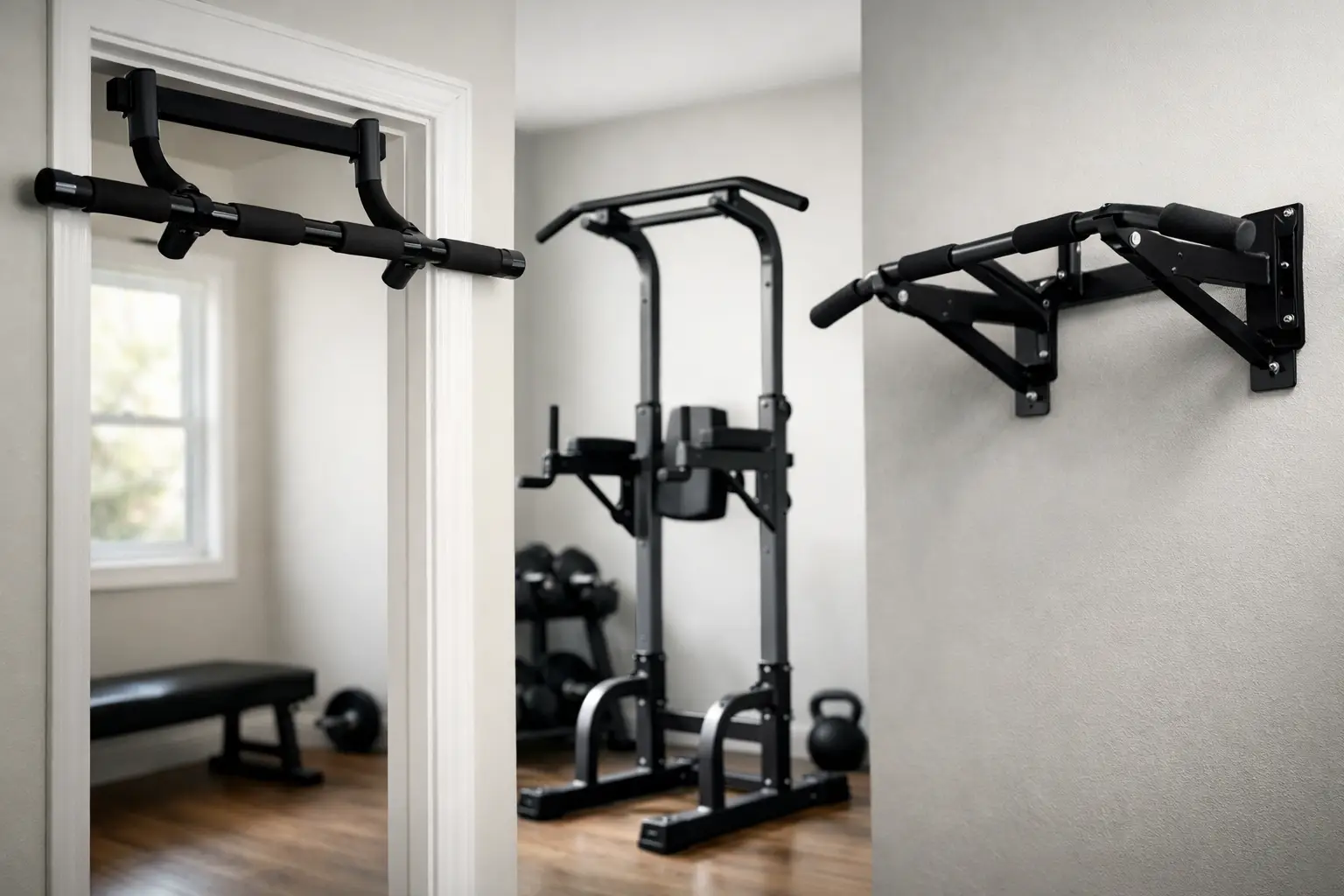
A pull-up bar takes almost no floor space, yet it can change the way your home gym performs. The best pull up bars give you a reliable place to build upper-body strength, improve grip, train your core, and make bodyweight workouts feel like real progress – not a compromise when you cannot get to the gym.
The right choice is not automatically the biggest or most expensive bar. It is the one that fits your space, your doorway or wall structure, your current strength level, and the way you actually plan to train. Choose well, set it up safely, and you have a must-have piece of equipment for pull-ups, chin-ups, hanging knee raises, dead hangs, and more.
Best Pull Up Bars by Home Gym Setup
Your mounting surface should lead the decision. A compact apartment, a dedicated garage gym, and a rental home all call for different equipment. Start with the bar style that makes sense for your space, then compare the details that affect comfort and confidence.
Doorframe pull-up bars for convenience
Doorframe bars are a hot pick for beginners, renters, and anyone who wants a fast workout station without drilling. Most use leverage against the trim of a standard doorway, while others use adjustable tension systems that press against the frame.
Leverage-style bars are generally the better choice when you want multiple grip positions and a more stable feel. They are quick to install and remove, which makes them ideal when your workout area also serves as a bedroom, office, or living room. Many models can also sit on the floor for push-ups and triceps work.
The trade-off is that every doorway is different. Measure the width and check the depth and strength of the trim before buying. A bar that does not match your frame can shift, mark the surface, or simply be unsafe. Never assume a tension-mounted bar is suitable for explosive movements, kipping, or swinging.
Wall-mounted bars for serious training
A wall-mounted pull-up bar is built for the home athlete who wants a permanent, stable training point. When secured into appropriate wall studs or masonry with the correct hardware, it creates more clearance for full pull-ups, strict muscle-building work, weighted sets, and controlled leg raises.
This style is a smart upgrade if your doorway feels cramped or your head nearly touches the ceiling at the top of each rep. Look for a bar that projects far enough from the wall to allow natural movement without your knees or chest running into the surface.
Installation is the deciding factor. Drywall alone is not enough. If you are unsure where the studs are or what your wall can support, get help before loading the bar with your bodyweight, a dip belt, or a weighted vest. Stability is worth more than a quick install.
Ceiling-mounted bars for open training space
Ceiling-mounted pull-up bars work especially well in garages, basements, and dedicated fitness rooms with suitable overhead framing. They can offer excellent clearance and allow room for gymnastics rings, suspension straps, or climbing rope attachments.
They are not the first choice for every home. Ceiling height matters, and mounting must be done into strong structural material. But for a functional training setup, this style can make a small footprint work harder. Pair it with resistance bands, a bench, and adjustable dumbbells to create a versatile strength zone without filling the room with bulky machines.
Power towers for no-drill versatility
A freestanding power tower is a strong option when you cannot mount anything to a door, wall, or ceiling. Along with a pull-up station, many towers include dip handles, push-up grips, and a vertical knee raise station. That creates more exercise variety in one piece of equipment.
The catch is floor space. A tower is larger than a mounted bar and needs level flooring to feel solid. Check its footprint, height, weight capacity, and whether it has a wide, reinforced base. For people who want bodyweight training without permanent installation, though, it can be a worthwhile home-gym centerpiece.
What Makes the Best Pull Up Bars Feel Better to Use
Weight capacity matters, but it should not be the only number you compare. A bar should have a stated capacity that comfortably exceeds your current bodyweight, especially if you plan to use a weighted vest, add slow negatives, or attach resistance bands. Follow the manufacturer’s guidance, and remember that dynamic movement creates more force than standing still.
Grip diameter also changes the workout. A very thin bar can feel harsh on the hands, while an overly thick bar may fatigue your grip before your back gets enough work. Most people do well with a medium-diameter grip that feels secure without forcing the hand too wide open. Foam grips can feel comfortable, but durable textured steel often provides a more consistent hold over time.
Multiple grip positions are useful, not just decorative. A neutral grip, with palms facing each other, can be more comfortable for many shoulders and elbows. A chin-up grip, with palms facing you, often makes it easier to involve the biceps. A wider overhand grip shifts the challenge, but wider is not always better. If it shortens your range of motion or irritates your shoulders, bring your hands in.
Also consider clearance. You need enough room above the bar to avoid hitting your head and enough room below it to hang with knees bent or straight, depending on ceiling height. Taller lifters may get more value from a wall- or ceiling-mounted option than a doorway bar.
Match Your Bar to Your Goal
For your first unassisted pull-up, convenience beats complexity. A secure doorway bar and a set of resistance bands can support assisted reps, slow lowering phases, scapular pull-ups, and dead hangs. Train two or three times a week, keep the reps controlled, and let consistency do the work.
For muscle gain, prioritize a stable bar with enough clearance for full-range reps. Pull-ups and chin-ups belong in the same conversation as dumbbell rows, presses, and curls. Add load only after you can perform clean bodyweight reps without kicking, shrugging, or cutting the bottom of the movement short.
For grip strength and shoulder resilience, dead hangs are a simple addition. Start with short, comfortable holds, keeping your shoulders engaged rather than collapsing into the joint. If your hands are the limiting factor, chalk may help in a dedicated training space, while grip training tools can build capacity away from the bar.
For core training, hanging knee raises and controlled leg raises can be highly effective, but only if the bar stays stable. Avoid swinging your hips to force reps. A slower range of motion delivers more tension and makes it easier to spot whether your setup is moving.
Safety Checks Before Every Set
A pull-up bar should earn your trust before your feet leave the floor. For mounted systems, inspect bolts, mounting points, and the surrounding surface regularly. For doorway models, confirm the contact points are correctly placed, the frame is compatible, and the bar has not shifted since your last session.
Before a hard set, hang lightly with one foot still touching the floor. Listen for creaks, watch for movement, and recheck the fit. Do not use a bar that feels loose, damaged, bent, or unstable. And keep the area below you clear of furniture, sharp-edged equipment, and anything that could turn a simple dismount into a problem.
Form matters just as much. Begin from a controlled hang, set your shoulders down and back, and pull your elbows toward your ribs. Lower with control. If full pull-ups are not there yet, band-assisted reps and negatives are productive options – rushing the movement is not.
Build a Better Home Strength Station
A pull-up bar is one of those rare pieces of gear that stays useful as you get stronger. Beginners can use it to practice hanging and assisted reps. Experienced lifters can add weight, change grips, and use it to finish demanding upper-body sessions. The best value comes from choosing a bar that fits your home honestly, not forcing a setup that looks impressive but goes unused.
Make it part of a simple training corner with supportive gear that matches your goal: resistance bands for assistance, a recovery roller for tight lats, training gloves if your hands need protection, or a weighted vest when bodyweight sets stop being enough. Shop the setup that keeps you consistent, then put your new bar to work on the next workout – because stronger starts with one controlled rep.