You do not need a spare bedroom and a five-figure equipment list to train like you mean it. You need a setup that matches your schedule, your goals, and the reality of your space – because the best home gym is the one you walk into on a random Tuesday when motivation is average.
This is the practical way to build a home gym: start with the training you will repeat, buy the pieces that cover the most movements, and leave room to upgrade when your consistency proves you are ready.
Start with the “non-negotiable” goal
Before you pick equipment, pick the outcome. Fat loss training at home looks different than a strength-focused garage build, and a “get back into it” setup has different priorities than a serious hypertrophy plan.
If your goal is weight loss and energy, you will lean heavier on a cardio anchor plus simple strength tools you can use in circuits. If your goal is muscle and strength, you will prioritize a stable bench, progressive resistance, and enough weight options to keep overload going for months. If your goal is stress relief, mobility, and feeling better, you may get more mileage from a mat, bands, a kettlebell, and recovery tools than you would from a bulky machine.
It also depends on your personality. Some people love variety and will use multiple stations. Others will do more workouts if the room has exactly three tools and zero friction. Be honest – your future self is the one who has to show up.
Choose your space like you are choosing your plan
A home gym is not a room. It is a footprint.
A small footprint can still be powerful, but you have to respect it. Measure the area and think about what moves need clearance. Overhead presses need ceiling height. Lunges and sled-style work need length. Rowers need both length and a little breathing room so you do not clip a wall every pull.
Noise and flooring matter more than most people expect. If you live above someone, heavy drops and treadmill thumps will make you avoid the gym just to keep the peace. A few thick rubber tiles or a lifting mat can be the difference between “I will do it tomorrow” and “I trained today.”
Ventilation and lighting are underrated performance tools. A fan, a brighter bulb, and a mirror (even a small one) help you stay in the session and keep form honest.
Set a budget that matches your timeline
The fastest way to waste money is to shop emotionally. The fastest way to build a home gym that lasts is to shop in tiers.
If you are starting from zero, give yourself permission to build a “minimum effective gym” first. You can always upgrade, but you cannot get back the money you spent on equipment that turned into expensive storage.
A smart approach is to decide whether you want a one-time build or a phased build. A phased build is usually better for beginners and busy professionals because it lets your habits guide the next purchase.
The minimum effective home gym (small space, big results)
If you want coverage across strength, conditioning, and mobility without filling a room, aim for a compact kit that supports progressive overload and repeatable workouts.
Start with adjustable dumbbells or a small set of dumbbells. They are the quickest path to full-body training because they cover presses, rows, squats, hinges, lunges, carries, and isolation work. Pair that with a bench if your space allows it. A bench unlocks better pressing angles, supported rows, step-ups, and split squats. If you cannot fit a bench, you can still train hard, but you will feel the limitation over time.
Add a kettlebell if you like athletic conditioning. Swings, goblet squats, cleans, and carries deliver a lot of work in very little time. Then add bands for warm-ups, pull-aparts, assistance, and travel workouts when you are not training at home.
Finish this tier with a mat and at least one recovery tool like a foam roller. Recovery gear does not build muscle by itself, but it increases how often you train comfortably, and that is where results come from.
Cardio at home: pick one anchor you will not avoid
Most people buy cardio equipment based on a fantasy version of their schedule. Buy based on the workouts you can do when time is tight.
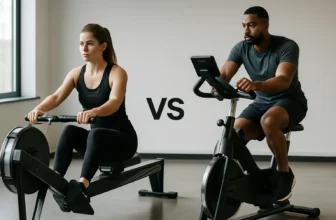
A treadmill is great if you love walking, incline work, or you want the simplest “show up and go” option. It is also a larger commitment in cost, space, and noise. An exercise bike is easier on joints, generally quieter, and perfect for short intervals or steady rides while watching a show. A rower gives you full-body conditioning and a strong training effect in short sessions, but it has a learning curve and needs space to store. An elliptical is joint-friendly and simple to use, but it can feel monotonous if you do not enjoy steady-state sessions.
If fat loss is the goal, the best anchor is the one you will use four times a week without negotiation. Ten to twenty minutes done consistently beats a machine that makes you feel guilty.
Strength training at home: the “big four” setup
If strength and body composition are your priority, think in movement patterns rather than random equipment. Your home gym should let you squat, hinge, push, and pull with progression.
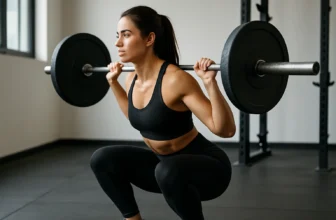
Dumbbells and a bench can cover all four patterns for most people. If you want a bigger strength ceiling, you can step up to a barbell and plates, especially if you have space for a rack. That is a serious upgrade because it allows heavier squats, bench press, and deadlift variations with safer loading and better long-term progression.
This is where trade-offs show up. A rack and bar setup is incredibly effective, but it requires space, stable flooring, and a plan for safety. If you train alone and lift heavy, safety arms are not optional. If your home has limited space, adjustable dumbbells and a sturdy bench can keep progress moving for a long time.
Functional training that keeps workouts fun
When motivation dips, variety can save your week. Functional tools also give you conditioning options that do not require a full cardio machine.
Battle ropes are a high-output finisher that works great in a garage or driveway. An agility ladder adds quickness work and is easy to store. A balance board can support ankle stability and core control. None of these replace strength basics, but they make your gym feel like a training space, not a storage corner.
If you like short, sweaty sessions, keep one “finisher” tool visible. When it is easy to grab, it becomes part of your identity: the person who gets it done.
Do not ignore the gear that makes you show up
Home gyms fail when the experience feels uncomfortable. That usually has nothing to do with willpower and everything to do with friction.
Supportive activewear that you actually like wearing helps more than people admit. If your shorts ride up or your shoes feel unstable, you will cut sessions short. Cross-training shoes are especially helpful for mixed workouts because they feel stable under load and still move well for conditioning.
Organization matters too. A simple rack for dumbbells, hooks for bands, and a dedicated spot for your mat keeps your gym “one minute away” instead of “ten minutes of cleanup away.”
Add supplements like you add equipment: for a specific job
A home gym is not only hardware. It is also recovery, energy, and consistency.
If you struggle to get moving, a pre-workout can help, but only if you keep dosing smart and do not turn it into a daily crutch. If muscle gain is the goal and you miss protein targets, a protein powder can be a practical fix. If weight management is the focus, some people prefer structured systems like keto-style stacks, while others do better with simpler appetite and habit support. Recovery products can help soreness and sleep quality, but the baseline is still training volume, hydration, and a routine you can repeat.
The rule is simple: supplements should support the plan you are already doing, not replace it.
A simple build order that prevents wasted money
If you want the cleanest path from empty corner to real training space, build in this order: flooring and comfort first, then strength basics, then cardio anchor, then accessories and upgrades.
Flooring first because it protects your home and lowers friction. Strength basics next because they deliver the fastest body composition return for the space. Cardio after that because it is easiest to overspend on. Accessories last because they are fun, and fun shopping can get ahead of the plan.
If you want a one-stop place to browse categories by goal, compare options, and catch rotating deals across equipment, activewear, and sports nutrition, you can explore curated picks at FitwellGoods.
Make it feel like a gym, not a reminder
The final step is not a purchase. It is a promise you can keep.
Pick two workouts you can repeat weekly for the next month, even when life gets busy. Put the first one on your calendar like a meeting. Keep your most-used tools visible and ready. Then let consistency earn the upgrades.
A home gym is not about having everything. It is about having just enough to make progress inevitable.