
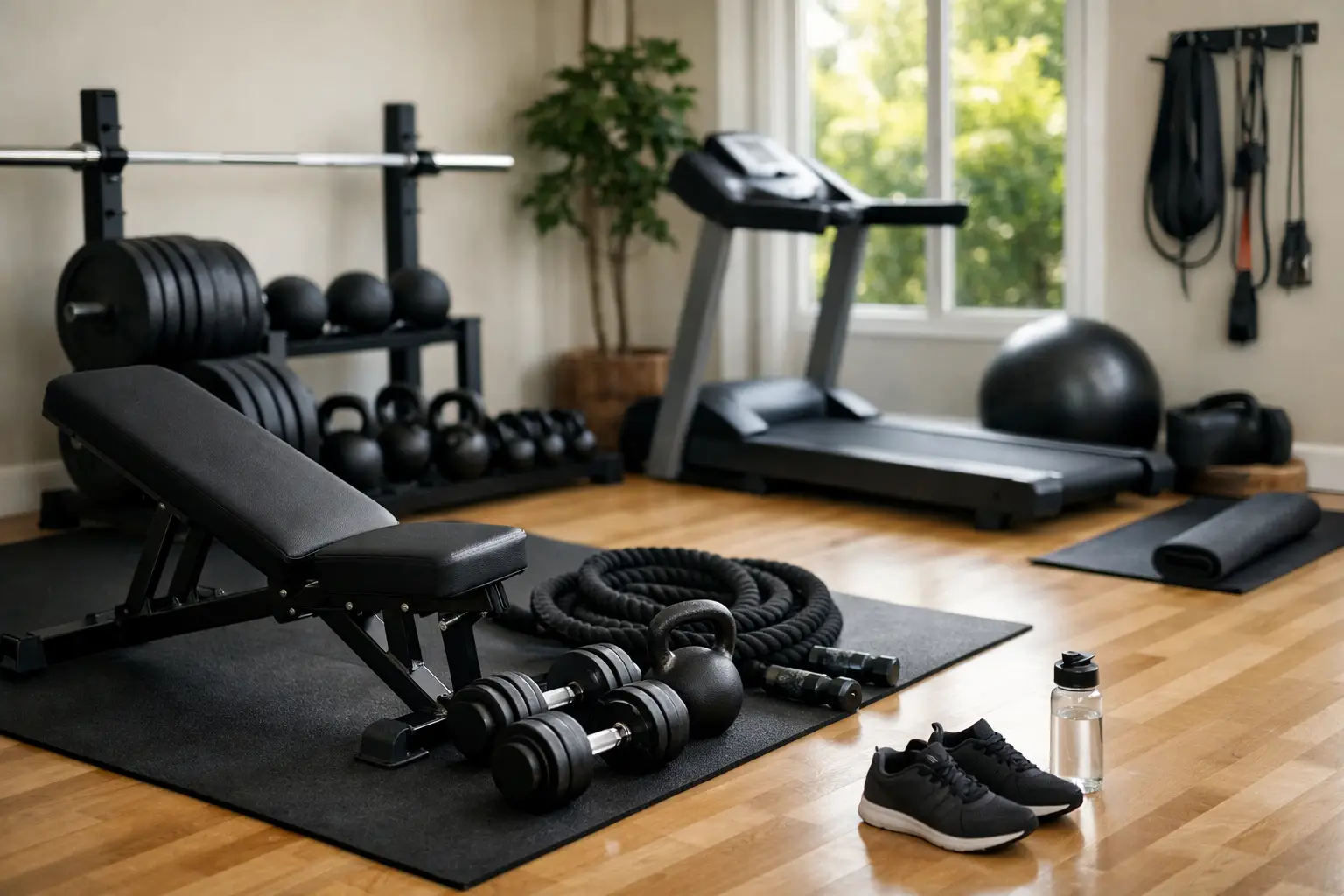
A home gym usually starts the same way – one good intention, one random pair of dumbbells, and a corner that somehow turns into a laundry zone by Friday. If you want a setup that actually helps you train, the goal is not to buy everything at once. The goal is to build a space you will use three months from now.
That changes how to start home gym planning from day one. You are not creating a showroom. You are creating a repeatable workout environment that fits your goals, your home, and your budget.
How to start home gym planning without wasting money
The fastest way to overspend is to shop by hype instead of by training style. A treadmill sounds great until you remember you hate running. A squat rack looks serious until you realize your current routine is mostly dumbbell circuits and mobility work.
Start with one question: what do you actually want this gym to do for you? Most people fall into one of three lanes. They want fat-loss support and steady cardio. They want strength and muscle-building. Or they want a flexible setup for short, efficient workouts before work or after the kids go to bed.
Your answer shapes everything else. If your main goal is weight loss and consistency, a bike, treadmill, rower, or elliptical may earn its footprint. If you want strength without filling a whole room, adjustable dumbbells, a bench, and resistance tools will go further than a massive machine. If you need versatility in a small apartment, compact functional gear wins.
This is also where budget needs to be honest. There is a big difference between a starter setup and a long-term buildout. Both can work. A smart starter gym can cost far less than a year of gym fees, but only if you avoid buying equipment that solves problems you do not have yet.
Pick the right space first
A better space beats more gear. You do not need a dedicated garage or basement, but you do need enough room to move safely and enough convenience that setting up a workout does not feel like a project.
A spare bedroom works well for strength and yoga-based training. A garage gives you more freedom for benches, racks, and cardio equipment, but it may need mats, ventilation, and temperature control. A living-room corner can absolutely work for beginners if the equipment stores cleanly and the floor is protected.
Think beyond square footage. Ceiling height matters if you plan to press weights overhead. Flooring matters if you will use kettlebells or adjustable dumbbells. Noise matters if you live in an apartment. Even lighting matters more than people think. Bright, clean spaces get used more often than dark, cluttered ones.
If you are building in a shared area, choose gear that can be moved or tucked away. That trade-off is real. A foldable bench and compact storage may be less impressive than a permanent station, but if it helps you train four times a week instead of once, it is the better setup.
Start with the equipment that gives you the most training value
When people ask how to start home gym shopping, they usually expect a giant checklist. In reality, the best setup starts with a few pieces that cover a lot of ground.
For strength training, adjustable dumbbells are one of the smartest buys you can make. They save space, let you progress over time, and work for presses, rows, squats, lunges, carries, and accessory work. Add an adjustable bench and your exercise options expand fast.
Kettlebells are another strong pick if you like dynamic training. They are great for swings, goblet squats, presses, and conditioning circuits. Resistance bands are inexpensive, portable, and surprisingly useful for warm-ups, assistance work, and travel days.
For cardio, choose the machine you are most likely to use consistently. This is where ego can cost you. The hardest-core option is not always the smartest one. Treadmills are familiar and effective, but they take up room and can be noisy. Bikes are joint-friendly and easy to use for intervals. Rowers train more of the body at once, but they are not everyone’s favorite. Ellipticals are often easier on the knees, though they usually need more floor space.
A good mat, foam roller, and a few recovery tools may not feel exciting, but they often make the difference between a gym that supports your whole routine and one that is only useful on your best days. Recovery is part of training, not a side note.
Build your home gym in phases
You do not need to buy your finished gym on day one. In fact, you probably should not. A phased build keeps your spending tied to your real habits instead of your ideal fantasy routine.
Phase one is the starter setup. Think adjustable dumbbells or kettlebells, a mat, bands, and maybe a bench. That gives you enough to train strength, conditioning, core, and mobility.
Phase two is where you add a cardio machine or a few specialty tools based on what you actually enjoy. Maybe that is a rowing machine because you want hard, efficient sessions. Maybe it is a treadmill because walking while watching a show keeps you consistent.
Phase three is for upgrades. A heavier set of weights, a stronger bench, better flooring, storage, lifting belts, or recovery gear can all make sense once the routine is already there. This is the point where shopping deals and bundles can really help, because you know what will get used instead of guessing.
That phased approach also leaves room for apparel, shoes, and supplements that support your training. If your workouts happen at 6 a.m., comfortable activewear and cross-training shoes are not extras. They are part of reducing friction. The same goes for a simple pre-workout, protein, or recovery product if those fit your goals and routine.
Match your gear to your routine
The best home gym is not the one with the most equipment. It is the one that matches the workouts you will repeat.
If you want three to four weekly strength sessions, prioritize progressive resistance. That means weights you can increase over time, a stable bench, and enough room to move. If your schedule is packed and you need 20-minute workouts, focus on gear that transitions quickly between exercises. Adjustable dumbbells, bands, and a timer can carry a lot of that work.
If cardio is your main driver, think about session length and intensity. A treadmill may be perfect if you want incline walks while answering emails or watching a show. A bike may be better if you prefer intervals and lower joint impact. It depends on what you can stick with when motivation is average, not just when motivation is high.
This is where comparison shopping helps. Looking at bestselling or trending categories can cut down decision fatigue, but your own workout pattern should still lead. Popular does not always mean right for your room, your body, or your goals.
Do not forget storage, setup, and recovery
A cluttered gym gets skipped. This is one of the least glamorous parts of the process, but it matters. Wall storage, dumbbell stands, baskets for bands, and a clear place for mats and rollers make the whole setup easier to maintain.
Keep frequently used items visible and easy to reach. If every workout starts with moving three boxes and unfolding equipment, friction builds fast. On the other hand, if your space is always ready for a quick set of presses, lunges, or intervals, training feels easier to start.
Recovery deserves dedicated space too. A foam roller, massage tool, mobility band, and water bottle station can make your gym feel complete without adding much cost. If better sleep, gut health, or body-composition support are part of your plan, your wellness routine should live alongside your training routine instead of competing with it.
Make your setup work for the long haul
A home gym is only a good investment if it keeps working after the newness wears off. That means choosing equipment that fits your next step, not just your first week. Adjustable options usually age better than one-use products. Durable basics usually beat flashy niche gear.
It also means giving yourself reasons to come back. Keep one area for your go-to workout. Rotate in one new challenge at a time. Use deals strategically instead of impulsively. If you are shopping for equipment, apparel, and supplements in one place, a site like FitwellGoods can make it easier to compare categories, spot hot picks, and build a setup around your actual goals instead of piecing everything together from five different carts.
The smartest home gym starts simple, feels easy to use, and grows with you. If you can create a space that removes excuses instead of adding decisions, you are already ahead – and that is where real progress starts.





[…] conditioning piece, your interval machine, your steady-state fat-loss option, or part of a full home-gym setup. The right resistance makes those sessions feel productive. The wrong one makes every workout feel […]