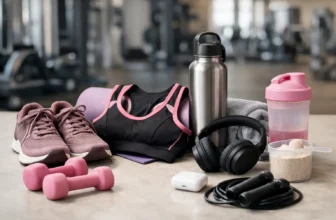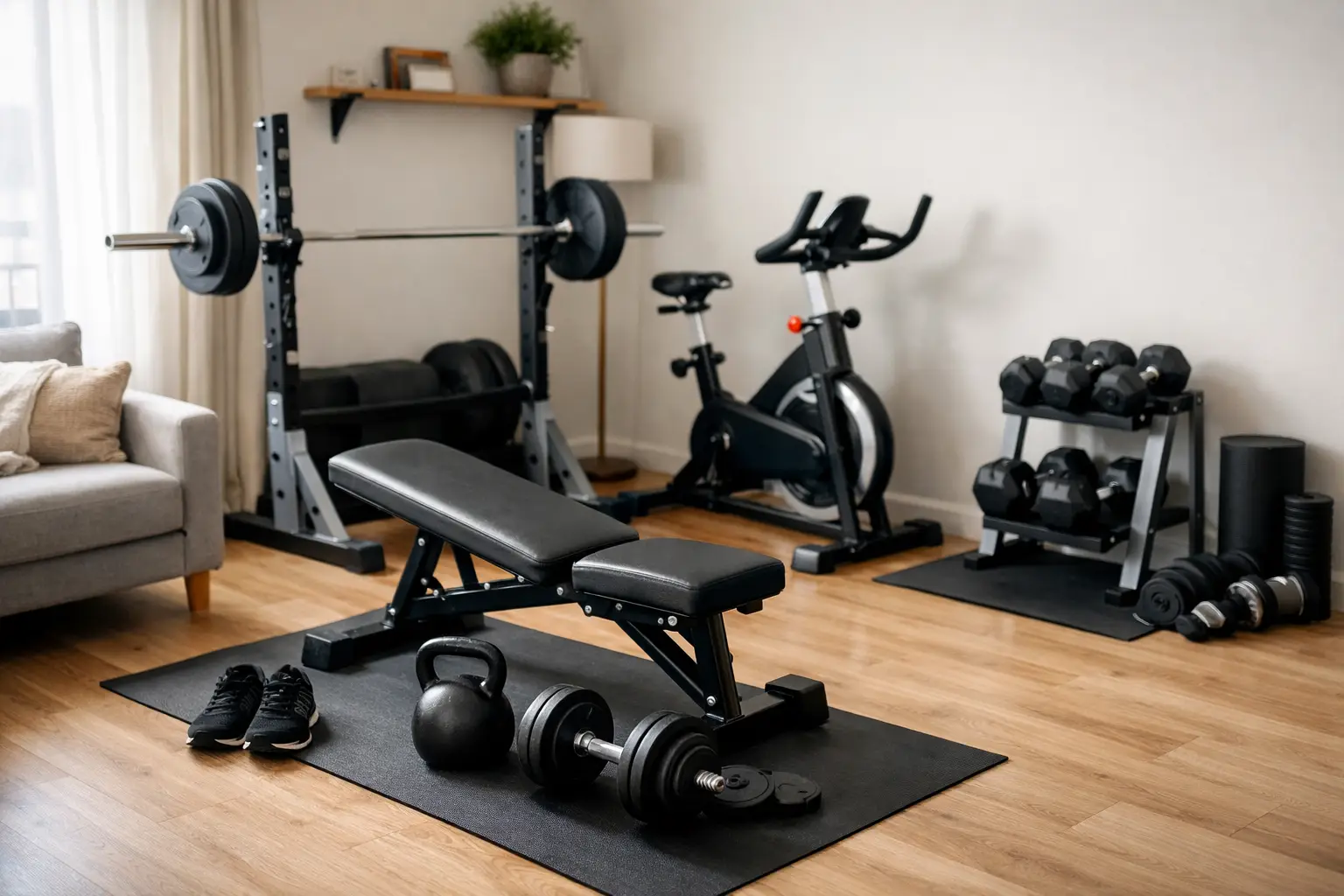
A spare bedroom is nice. A full rack, treadmill, and wall of plates? Even better. But most people training at home are working with a living-room corner, a bedroom wall, or the few feet between a couch and a coffee table. This small apartment gym setup example proves you can train for strength, fat loss, conditioning, and recovery without giving up your entire space.
The winning strategy is not buying the most equipment. It is choosing gear that earns its footprint, supports more than one movement, and can disappear when your workout is done. Start with your goal, measure the space you actually have, then build from the floor up.
Start With a Small Apartment Gym Setup Example That Works
Picture a 6-by-8-foot open area beside a bed or sofa. The foundation is a non-slip exercise mat, an adjustable dumbbell set, a medium-weight kettlebell, a set of resistance bands, and a compact adjustable bench that folds or stores upright. Add a jump rope, a foam roller, and a small storage bin, and you have a serious training zone that can be packed away in minutes.
This setup covers squat patterns, hinges, presses, rows, lunges, carries, core work, mobility, and short cardio finishers. That is a far better return on square footage than a single large machine that only does one job.
For a beginner, this is enough equipment to make progress for months. For an experienced lifter, it is a reliable second training space for busy weekdays, travel-like routines, or focused accessory work. Your exact mix depends on your primary goal, but the core principle stays the same: choose versatile tools before specialty tools.
Measure Before You Shop
A compact gym still needs safe clearance. Measure the floor area, ceiling height, doorway width, and the path between the storage spot and your workout spot. If you cannot comfortably extend your arms, hinge forward, or perform a reverse lunge without hitting furniture, the space is too tight for that movement.
Also think about your neighbors. Apartment-friendly training is not the same as silent training, but it does mean making smarter choices. Thick mats reduce vibration, controlled dumbbell sets prevent drops, and resistance bands create serious tension without a loud impact. A rowing machine or exercise bike may be practical if you have the floor plan and storage solution. A heavy treadmill may not be, especially in an upstairs unit.
Before adding cardio equipment, check your building rules, your flooring, and your willingness to move it. The best deal is not a deal if it becomes a clothes rack because it is too bulky to use.
Build Your Gear Around Your Main Goal
For strength and muscle
Adjustable dumbbells are the headline pick for a small-space strength setup. They replace a long line of fixed weights and let you progress through presses, rows, Romanian deadlifts, goblet squats, split squats, curls, and overhead work. Pair them with a compact bench and you can create a full-body program without a crowded room.
A kettlebell adds a different kind of training value. Swings, cleans, carries, and goblet squats build power, grip, and conditioning in short sessions. If storage is extremely limited, one moderately challenging kettlebell plus resistance bands can still create demanding workouts.
The trade-off is maximum load. If your goal is competitive powerlifting or very heavy barbell training, an apartment setup will eventually limit you. But for building muscle, improving movement quality, and getting stronger consistently, progressive dumbbells, bands, and smart exercise selection go a long way.
For fat loss and conditioning
You do not need a giant cardio machine to get your heart rate up. A jump rope, exercise mat, bands, and one kettlebell can deliver fast, high-output sessions. Think 30 seconds of swings, 30 seconds of push-ups, 30 seconds of bodyweight squats, then rest and repeat. The equipment cost stays low, and the setup time is nearly zero.
If low-impact cardio matters more, a compact exercise bike can be a better fit than jumping. It supports steady-state sessions, warm-ups, and intervals without the repeated impact that may bother joints or downstairs neighbors. A foldable bike makes sense for some apartments, but only if you will actually unfold it often enough to justify the storage space.
For weight-management goals, training works best alongside routines you can maintain. A stocked water bottle, protein-forward meals, and recovery support often matter more than adding another gadget. Keep the process simple enough to repeat when work gets busy.
For mobility, recovery, and lower-stress training
A small home gym should not be all intensity. Foam rollers, massage balls, light bands, and a comfortable mat take up almost no room and make it easier to recover between strength days. They are especially useful for desk workers who need quick movement breaks before or after a long day.
Use the mat for yoga flows, core work, stretching, and bodyweight circuits. Add a balance board only if it matches your routine and you have room to use it safely. Specialty recovery tools can be helpful, but they should support the basics rather than replace them: sleep, regular movement, protein, hydration, and a training plan you can sustain.
Set Up the Space So It Stays Usable
Your apartment gym should not look like a storage accident. Give every item a home. A low storage bench, vertical dumbbell stand, under-bed bin, or closed basket keeps equipment within reach while protecting the visual calm of your room.
Place the mat where you can roll it out without moving multiple pieces of furniture. Keep bands, a towel, and headphones in one grab-and-go container. If you need five minutes to find gear and rearrange the room, it becomes easier to skip the workout. If the space is ready in 60 seconds, consistency gets much easier.
A mirror can help with form, but it is optional. Good lighting, ventilation, and a phone stand for following a workout can be more useful in a tight layout. If you rent, avoid permanent wall-mounted storage unless your lease allows it. Freestanding and foldable gear gives you flexibility when it is time to move.
A Simple Weekly Routine for This Setup
With the equipment in this small apartment gym setup example, aim for three full-body strength workouts each week. On day one, use goblet squats, dumbbell floor presses, one-arm rows, Romanian deadlifts, and planks. On day two, choose reverse lunges, overhead presses, band pull-aparts, kettlebell swings, and dead bugs. On day three, repeat the first day with a few extra reps or a slightly heavier load.
Between strength sessions, fit in two 15- to 25-minute conditioning or mobility workouts. A bike ride, jump-rope intervals, brisk outdoor walk, yoga session, or band circuit all count. The point is not to punish yourself with daily max-effort workouts. It is to create a rhythm that improves energy, body composition, and confidence over time.
Track your reps, resistance, and how the session felt. Progress can mean adding five pounds, performing two more reps, improving control, or simply training one more day than last week. Those wins add up.
Shop Smart, Not Big
Start with your essential five: a mat, adjustable dumbbells, resistance bands, a kettlebell, and a storage solution. Add a bench when your budget and room allow. Then consider cardio equipment based on your actual habits, not the version of you who plans to train for an hour every morning.
FitwellGoods makes it easier to build by goal, whether you are comparing strength essentials, compact cardio options, activewear for home sessions, or recovery and nutrition favorites. Watch for bundle savings and hot picks, but protect your budget by prioritizing equipment you will use at least twice a week.
A small space does not require small goals. Clear a corner, choose gear with range, and make your next workout the easiest part of your day to start.